
Transform Your Balcony into a Green Retreat
Dreaming of lush greenery and vibrant blooms, even in a small urban space? With the right choices, cultivating apartment balcony plants can turn any compact outdoor area into your personal sanctuary. Many city dwellers find joy in creating a green oasis, whether they aim for calming colors, maximized space, or simply want to start gardening. Just like someone who moves into an apartment and yearns for a garden on their balcony, countless urban gardeners are discovering the possibilities.
To help you begin, here’s a quick comparison of plant options based on common balcony conditions:
- Sunny Balconies (6+ hours direct sun): Consider plants like lavender, geraniums, basil, rosemary, and strawberries. These love bright light.
- Part-Shade Balconies (3-5 hours direct sun): Fuchsia, New Guinea Impatiens, lettuce, cilantro, and chives thrive with some sun and some shade.
- Shady Balconies (less than 3 hours direct sun): Ferns, hostas, heuchera, begonias, and peace lilies are perfect for low-light spots.
- For Added Privacy: Golden bamboo (in containers), mandevilla, or jasmine can create a green screen.
- Low Maintenance Options: Succulents, lavender, and rosemary are hardy and drought-tolerant.
Understanding your balcony’s unique environment is the first step. This infographic highlights key factors to consider:
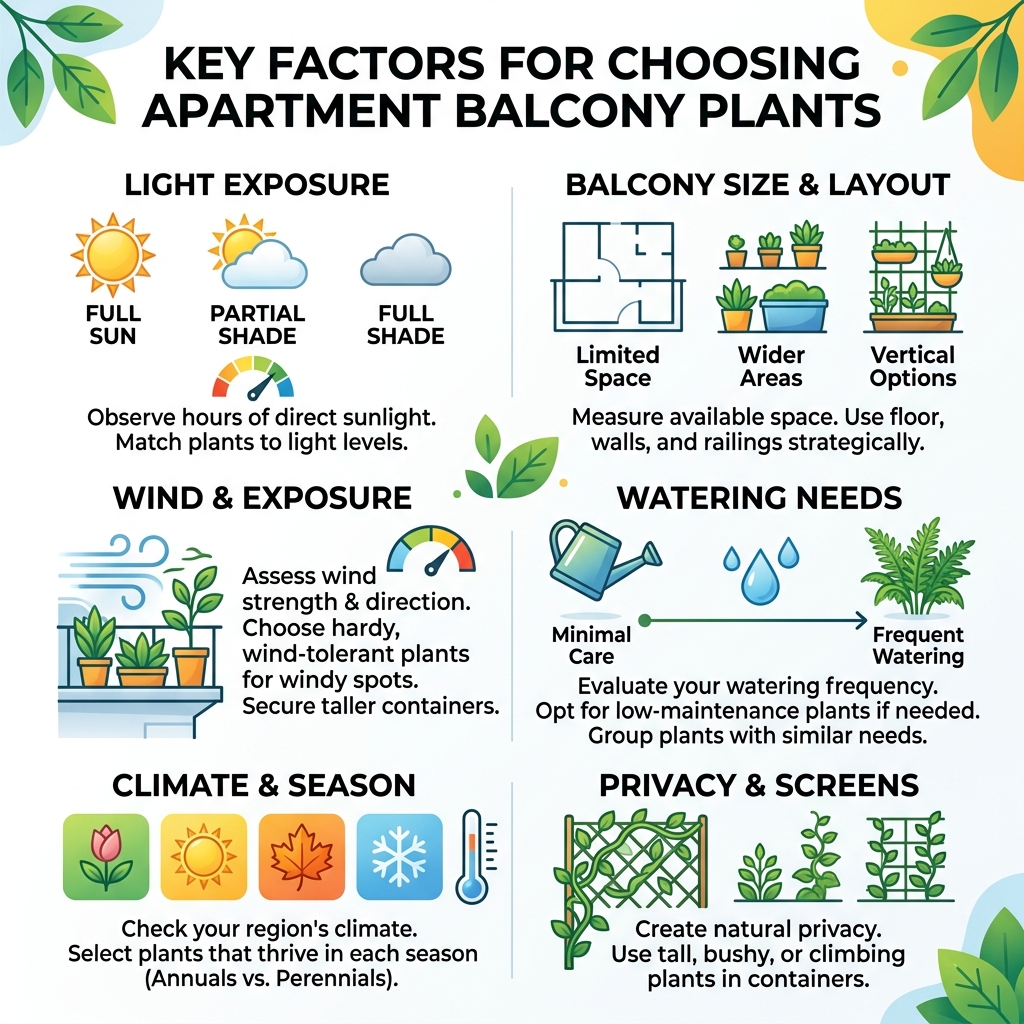
Assessing Your Space: The Key to Thriving Apartment Balcony Plants
Before you rush to the nursery and load up your cart, we need to talk about the “microclimate” of your balcony. Unlike a traditional backyard, a balcony is an elevated stage where wind, sun, and heat behave differently. Taking five minutes to observe your space can save you from the heartbreak of a withered fern or a sun-scorched hosta.

Sunlight Assessment
The golden rule of gardening is matching the plant to the light. Most plants fall into three categories:
- Full Sun: This means six or more hours of direct sunlight per day. If your balcony faces south, you likely have a “full sun” situation.
- Part Sun/Part Shade: This is roughly half of that, or about three hours of direct sunlight.
- Full Shade: This doesn’t mean a dark cave! It means bright, indirect light with less than two hours of direct sun.
According to 9 Colorful Plants That Will Thrive on Your Balcony, understanding these durations is the difference between a blooming hibiscus and a green stick in a pot.
Wind and Heat
The higher up you are, the windier it gets. High winds act like a giant hair dryer, sucking moisture out of the leaves and soil at record speed. If you are on the 7th floor or higher, you’ll want to choose sturdy plants like lavender or rosemary that can handle a breeze. Additionally, consider the “heat island” effect; brick walls and glass windows reflect heat, making your balcony significantly hotter than the ground level.
Safety and Regulations
Before you build a jungle, check your lease or building rules. There are three big “No-Nos” in the balcony world:
- Weight Limits: Soil and water are heavy. A large ceramic pot filled with wet dirt can weigh over 100 pounds. We recommend using lightweight resin or fiberglass pots to keep your balcony structurally sound.
- Building Regulations: Some buildings prohibit hanging pots over the railing for safety reasons. Always secure your containers.
- Fire Escapes: Never, ever block a fire escape. It’s not just a rule; it’s a life-saving necessity.
For more detailed tips on setting the stage, check out our guide on Creating a Balcony Garden Oasis.
Best Ornamental and Privacy Plants for Urban Balconies
Once you know your light levels, it’s time for the fun part: picking the stars of the show. Whether you want a wall of green to hide the neighbor’s laundry or a splash of color to brighten your morning coffee, there are plenty of apartment balcony plants that fit the bill.
Privacy and Structure
If you feel like you’re living in a fishbowl, Golden Bamboo is a fantastic solution. It grows quickly—reaching 8 to 20 feet—and provides a dense, rustling screen. Just be sure to keep it in a large, sturdy container (at least 24 inches wide) so it doesn’t become invasive.
For a softer look, 7 best plants for balconies — turn any space into a summer sanctuary suggests Jasmine or Mandevilla. These vining beauties can be trained up a trellis to create a living wall. Jasmine, in particular, offers a heavenly scent that is strongest in the evening.
Color and Fragrance
- Lavender: A balcony classic. It is drought-tolerant, wind-resistant, and smells like a Mediterranean vacation.
- Hydrangeas: Look for dwarf varieties like ‘Centennial Ruby™’ that stay compact but offer those giant, iconic blooms.
- Petunias and Geraniums: These are the workhorses of the balcony. They provide continuous color all summer long. We love “spiller” varieties that cascade over the edges of your pots.
Need help picking a palette? Explore our Balcony Garden Color Scheme Ideas for inspiration.
Low-Maintenance Apartment Balcony Plants for Shade
Don’t despair if your balcony is tucked between tall buildings. Some of the most beautiful foliage thrives in the shadows. Best Plants for Balcony: Sun, Shade, Privacy & Easy Care highlights these shade-dwellers:
- Ferns: The ‘Jurassic™’ series offers lush, prehistoric vibes.
- Hostas and Heuchera (Coral Bells): These are grown for their stunning leaves, ranging from lime green to deep purple.
- Caladium: These have heart-shaped leaves with incredible pink and white patterns.
- Begonias and New Guinea Impatiens: These provide pops of bright color even without direct sun.
Growing Your Own Food: Edible Apartment Balcony Plants
Who says you need an acre of land to be a farmer? You can harvest a surprisingly large amount of food from a few well-placed containers. The trick is choosing “patio” or “dwarf” varieties specifically bred for small spaces.
| Plant Type | Sunlight Requirement | Best Container Size |
|---|---|---|
| Cherry Tomatoes | 6-8 Hours (Full Sun) | 5 Gallon Pot |
| Lettuce/Greens | 3-4 Hours (Part Shade) | Shallow Window Box |
| Strawberries | 6+ Hours (Full Sun) | Hanging Basket |
| Peppers | 6+ Hours (Full Sun) | 2-3 Gallon Pot |
| Radishes | 4-6 Hours (Part Sun) | 1 Gallon Pot |
Balcony Veggie Stars
Tomatoes are the most popular choice. For the best results, we suggest Growing Cherry Tomatoes in Limited Space using determinate varieties that don’t grow into giant vines. If you have a larger pot, you can dive deeper into Growing Tomatoes in Containers on a Balcony.
Lettuce is perhaps the easiest edible to grow. Since it has shallow roots, it thrives in window boxes. We recommend checking out Balcony-Friendly Lettuce Varieties to find heat-resistant types that won’t turn bitter in the summer sun.
Essential Herbs for Your Apartment Balcony Plants Collection
Herbs are the ultimate “starter” plants. They are generally low-maintenance and provide an immediate reward for your cooking.
- Basil: The king of summer. It loves heat and sun. Learn How to Grow Basil in Small Pots to keep your pesto supply flowing.
- Rosemary and Thyme: These are tough, woody perennials that can handle wind and a bit of neglect.
- Mint: A survivor! However, mint is a bit of a bully; always grow it in its own pot so it doesn’t take over your other plants.
- Cilantro and Chives: These prefer the slightly cooler conditions of part-shade balconies.
For more layout inspiration, see our Balcony Herb Garden Layout Tips or explore the Best Herbs to Grow on a Balcony. If you have a screened-in area, you might even consider the Best Herbs for Indoor Balcony Gardens.
Maximizing Small Spaces with Vertical Gardening
When you run out of floor space, look up! Vertical gardening is the secret weapon of the urban gardener. By using walls and railings, you can triple your growing area.
Vertical Solutions
- Railing Planters: These sit directly on your balcony rail, perfect for flowers or herbs.
- Hanging Baskets: Excellent for strawberries or trailing flowers like lobelia. They keep the floor clear for your chair and table.
- Trellises: Use these for vining plants like jasmine or peas. A trellis placed 2-4 inches away from a railing can also act as a windbreak.
- Tiered Shelving: Simple wooden or metal plant stands allow you to stack pots vertically.
We have gathered some incredible Vertical Garden Ideas for Apartments to help you visualize the possibilities. You can also find the right gear in our list of Vertical Gardening Containers Perfect for Apartment Balconies and learn more about Maximizing Garden Space in Tiny Balconies.
Practical Maintenance: Containers and Watering Strategies
Maintaining apartment balcony plants requires a slightly different approach than traditional gardening. Because the plants are in pots, they rely entirely on you for food and water.
The Container Essentials
- Drainage is Non-Negotiable: Your pots must have holes. Without them, water sits at the bottom, and the roots will rot. If you find a beautiful pot without holes, use it as a “cachepot”—keep the plant in a plain plastic nursery pot inside the decorative one.
- Quality Potting Mix: Never use “dirt” from the ground. It’s too heavy and can contain pests. Use a high-quality, soilless potting mix. For extra lightness, we recommend adding 20-30% perlite.
- Weight Management: As mentioned in 8 Best Plants to Grow on a City Balcony, According to Garden Experts, resin and fabric grow bags are excellent lightweight alternatives to heavy clay.
Watering Wisdom
Balcony plants dry out fast. In the heat of summer, you might need to water twice a day.
- The Finger Test: Stick your finger an inch into the soil. If it’s dry, water it.
- Deep Watering: Water until it runs out of the drainage holes. This ensures the roots at the bottom get a drink.
- Self-Watering Systems: If you travel or are forgetful, self-watering pots or terracotta spikes can be lifesavers.
For more tips on small-scale care, check out How to Grow Plants in Small Pots on Your Balcony.
Fertilization and Pests
Potted plants exhaust the nutrients in their soil quickly. Use a balanced, liquid fertilizer every 2-3 weeks during the growing season. Keep an eye out for pests like aphids or spider mites. Since balconies are often sheltered, “good” bugs like ladybugs might not find your garden easily, so you may need to intervene with organic insecticidal soap.
Frequently Asked Questions about Balcony Gardening
How do I protect my plants from high winds?
High-altitude winds can be brutal. We suggest grouping your pots together; they create a little micro-environment that holds humidity and provides mutual support. Use heavier pots (like thick resin) for the base and secure any trellises to the railing with heavy-duty zip ties. As noted in 21 Balcony Garden Ideas for Beginners in Small Apartments, a slatted windbreak can also diffuse strong gusts without acting like a sail.
What are the best plants for a balcony with zero direct sun?
If you have a north-facing balcony or a deep overhang, you can still go green. Snake plants and ZZ plants are nearly indestructible in low light. For a softer look, ivy and certain varieties of hostas thrive in full shade. According to Best Plants for an Apartment Balcony:12 Easy Plants – Urban Gardening Ideas, ferns are also a top-tier choice for these conditions.
How do I manage watering without an outdoor tap?
Most apartments don’t have a hose bib on the balcony. For a few pots, a standard watering can works fine. If you have a larger garden, look into expandable hoses that can attach to your kitchen or bathroom sink. Plants for every kind of balcony – Plants & Flowers Foundation also recommends self-watering planters to reduce the frequency of your trips to the sink.
Conclusion
Starting an apartment garden is one of the most rewarding ways to embrace sustainable living and improve your mental well-being. Whether you start with a single pot of basil or a full-scale vertical jungle, the key is to observe your space and grow what you love.
At Finance Growth X, we believe that everyone deserves a green retreat, regardless of their square footage. For a complete walkthrough on getting started, don’t miss our guide on Transforming Your Balcony into a Green Oasis: A Guide for Beginners. Ready to dive deeper into urban aesthetics? Explore our Urban Garden Design category for more expert advice. Happy planting!
