
Your Quick Guide to the Best Edible Plants for Balcony Gardens
The best edible plants for balcony growing are ones that stay compact, thrive in containers, and reward you with a real harvest — even on a tiny terrace.
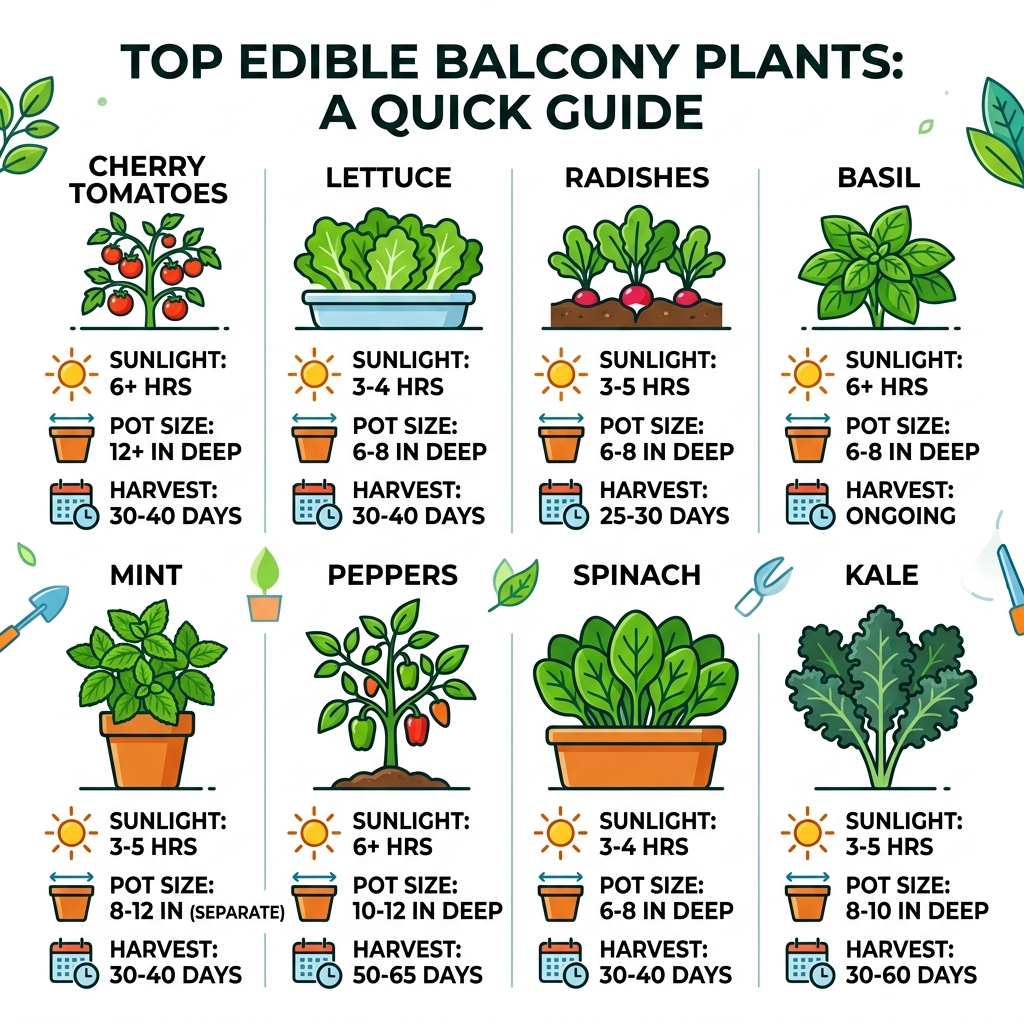
Here are the top picks at a glance:
| Plant | Min. Sunlight | Days to Harvest | Pot Size |
|---|---|---|---|
| Cherry Tomatoes | 6+ hours | 30-40 days | 12+ inches deep |
| Lettuce | 3-4 hours | 30-40 days | 6-8 inches deep |
| Radishes | 3-5 hours | 25-30 days | 6-8 inches deep |
| Basil | 6+ hours | Ongoing | 6-8 inches deep |
| Mint | 3-5 hours | Ongoing | 8-12 inches (separate pot) |
| Peppers | 6+ hours | 50-65 days | 10-12 inches deep |
| Spinach | 3-4 hours | 30-40 days | 6-8 inches deep |
| Kale | 3-5 hours | 30-60 days | 8-10 inches deep |
You don’t need a backyard to grow your own food. A small balcony — even just a few square feet — is enough to produce fresh herbs, salad greens, and ripe tomatoes all season long.
Gardening is also genuinely good for you. It reduces stress, connects you with nature, and gives you a rewarding hobby that pays off at the dinner table.
The best part? Many edible plants are now bred specifically for containers and compact spaces. So even beginners can get impressive results without much fuss.
Below, we’ll walk through the best plants to grow, what they need, and how to set your balcony up for success.
Why You Should Grow the Best Edible Plants for Balcony Spaces
When we think of gardening, we often picture rolling acres or sprawling suburban backyards. But for those of us living in urban environments, our “acreage” is often a few square feet of concrete overlooking the street. However, that small slice of outdoor space is prime real estate for a micro-farm.
Growing the best edible plants for balcony gardens offers a staggering Return on Investment (ROI). For instance, a single basil plant can yield over 20 harvests in a season. When you compare the cost of a seed packet to the price of those plastic clamshells of herbs at the grocery store, the ROI can reach upwards of 1,900%. Beyond the financial gains, the nutritional value of “pot to plate” dining is unmatched. Produce begins losing nutrients the moment it is harvested; when the travel distance is three steps from your kitchen to your balcony, you are getting the peak of vitamins and minerals.
There is also a profound mental health benefit. Research from organizations like the RHS suggests that gardening is a therapeutic escape from everyday stress. It allows us to connect with the natural rhythm of the seasons, providing a soothing hobby that rewards patience with flavor. For those just starting out, exploring easy vegetables for small urban spaces is the perfect way to build confidence and transform a sterile balcony into a lush, living sanctuary.
Top Varieties: The Best Edible Plants for Balcony Success
The secret to a thriving balcony garden lies in variety selection. We can’t simply plant a standard farm-sized pumpkin and expect it to behave. Instead, we look for “determinate” or “bush” varieties specifically bred for life in a pot. These plants are genetically programmed to stay compact while pouring all their energy into fruit production.
Cherry Tomatoes: The Best Edible Plants for Balcony Success
No balcony garden is truly complete without the “MVP” of the edible world: the cherry tomato. Unlike their massive heirloom cousins that can reach nine feet tall, compact varieties like ‘Tiny Tim’ or ‘Patio Princess’ stay small and manageable.
To succeed with growing tomatoes in containers on a balcony, you need to prioritize sunlight. Tomatoes are sun-worshippers, requiring at least 6 to 8 hours of direct light daily. If your balcony is south-facing, you’ve hit the jackpot. Use a pot at least 12 inches deep to ensure the roots don’t become cramped, and remember that tomatoes are thirsty—they may need watering twice a day during the peak of summer.
Leafy Greens: The Best Edible Plants for Balcony Shade
If your balcony is shaded by neighboring buildings or a roof overhang, don’t despair. Leafy greens like lettuce, spinach, and kale are the best edible plants for balcony spaces with limited sun. These “sprinters” of the vegetable world grow incredibly fast—often ready for harvest in just 30 to 40 days.
Lettuce and spinach only need about 3 to 4 hours of sunlight to thrive. In fact, they often prefer the cooler temperatures provided by partial shade, as intense afternoon sun can cause them to “bolt” (turn bitter and grow seeds). By choosing balcony-friendly lettuce varieties, you can enjoy a “cut and come again” harvest, where you simply snip off the outer leaves and let the center continue to grow.
High-ROI Herbs: Basil and Mint
Herbs are arguably the easiest entry point for any urban gardener. They take up very little space and offer the highest culinary impact. Sweet Basil is a sun-lover that thrives in the heat, while mint is a hardy perennial that is almost impossible to kill.
However, a word of caution: mint is an “invader.” It grows via underground runners and will quickly choke out any neighboring plants. We always recommend potting mint in its own separate container. For more detailed tips on maximizing your herb harvest, check out our guide on the best herbs to grow on a balcony.
Root Vegetables: The Best Edible Plants for Balcony Beginners
It is a common myth that you need deep soil in the ground to grow root crops. Radishes are the “impatient gardener’s dream,” often going from seed to salad in as little as 25 days. They require very little space and can be tucked into the corners of larger pots.
Carrots are also surprisingly successful in containers, provided you choose the right variety. Instead of long, tapering types, look for “thumb” or “round” varieties like ‘Thumbelina.’ These grow in a globe shape and are perfectly suited for pots that are only 8 to 10 inches deep. Learning about growing dwarf carrots in containers can turn a simple pot into a treasure chest of sweet, crunchy snacks.
Compact Peppers and Chilies
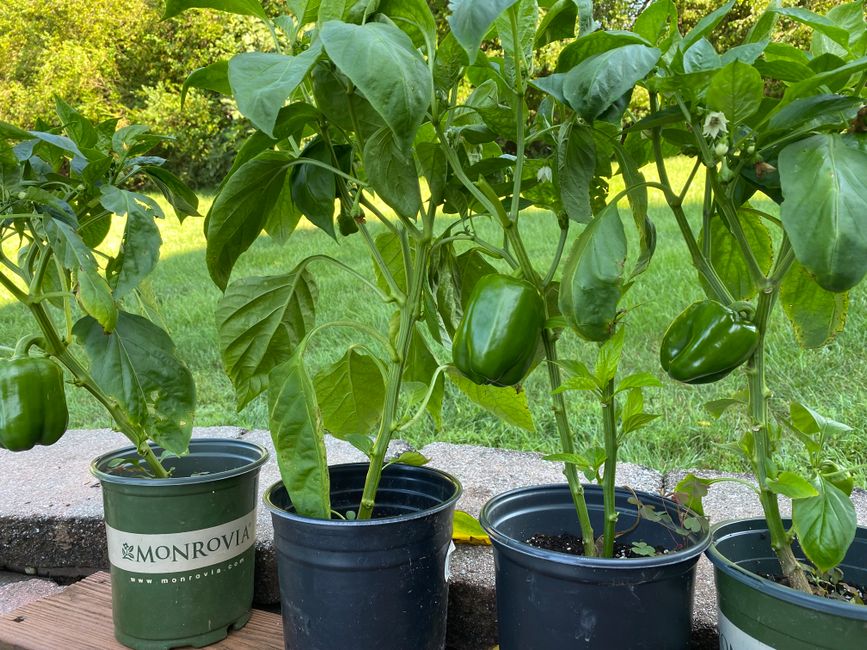
Peppers are ornamental as well as edible, adding splashes of red, yellow, and purple to your balcony decor. For small spaces, look for varieties like ‘Pot-A-Peno’ (a cascading jalapeño) or ‘Quickfire’ hot peppers.
Chilies like the ‘Quickfire’ reach only 10-12 inches in height but pack a punch with a Scoville rating of 40,000. If you prefer something sweet, ‘Miniature Yellow Bell’ peppers produce 2-inch fruits that are perfect for snacking. For the best results, we’ve compiled several urban gardening tips for peppers to help you manage everything from pollination to heat levels.
Essential Requirements and Maintenance Tips
Success on a balcony requires a bit more “engineering” than gardening in the ground. Because containers are isolated environments, we have to provide everything the plant needs—water, food, and the right “microclimate.”
Sunlight Mapping and Microclimates
Before buying a single seed, observe your balcony throughout the day. A “full sun” balcony receives 6+ hours of direct light, while “partial shade” means 3-5 hours. Use a sun-mapping app if you’re unsure. Also, be aware of wind; balconies on higher floors can be very windy, which dries out pots rapidly and can snap tall plants. Consider using the railing as a built-in trellis for support.
The Weight Factor
This is a critical safety step: check your balcony’s weight limit. Moist potting soil is surprisingly heavy, weighing around 80 pounds per cubic foot. A 10-gallon pot can easily exceed 100 pounds once watered. We recommend clustering heavy pots near the walls or structural corners of the balcony where the support is strongest.
Pot Sizes and Drainage
Never use garden soil in a pot; it’s too heavy and will compact, suffocating the roots. Instead, use a high-quality, lightweight potting mix. Ensure every container has drainage holes to prevent root rot.
| Vegetable | Recommended Pot Size | Minimum Depth |
|---|---|---|
| Radishes / Lettuce | 1-2 Gallon | 6 inches |
| Peppers / Bush Beans | 3-5 Gallon | 10 inches |
| Tomatoes / Eggplant | 5-10 Gallon | 12 inches |
Watering and Fertilizing
Containers dry out much faster than the ground. In the heat of summer, your best edible plants for balcony living might need water twice a day. A good rule of thumb is to stick your finger an inch into the soil; if it feels dry, it’s time to water.
Because nutrients leach out of the soil every time you water, you must fertilize regularly. We suggest a water-soluble organic fertilizer every two weeks to keep your plants productive. For specific advice on moisture-loving crops, see our balcony-friendly spinach planting guide.
Space-Saving Tech
To truly maximize a tiny space, think vertically. Vertical planters, hanging baskets, and railing boxes allow you to grow “up” instead of “out.” You can find the latest research on compact varieties through the National Garden Bureau, which highlights new hybrids designed specifically for these vertical systems.
Frequently Asked Questions
How much sunlight do balcony vegetables need?
Most fruiting vegetables (tomatoes, peppers, cucumbers) require at least 6 to 8 hours of direct sunlight. However, leafy greens and many herbs are perfectly happy with 3 to 5 hours of light. If you have a very shady balcony, stick to kale, spinach, and mint.
What are the easiest plants for beginners?
If you’re just starting, we recommend radishes, lettuce, and herbs like basil or chives. These plants are forgiving, grow quickly, and rarely suffer from major pest issues on a balcony. Radishes are particularly great because they provide a “win” in just three weeks, which is a great confidence booster!
Can I grow vegetables on a north-facing balcony?
North-facing balconies typically receive the least amount of light. While you won’t be able to grow sun-hungry tomatoes, you can still find success with “shade-tolerant” edibles. Focus on greens like Swiss chard, arugula, and kale. These plants actually stay tender longer when they aren’t subjected to the scorching afternoon sun.
Conclusion
At Finance Growth X, we believe that sustainable living and financial savvy go hand in hand. Growing the best edible plants for balcony spaces isn’t just about the fresh flavor—it’s about taking control of your food source and enjoying a high-ROI hobby that brings nature into your urban life.
Whether you start with a single pot of basil on a windowsill or a full vertical farm on your terrace, the key is to start small and learn as you go. The satisfaction of harvesting your own dinner is a reward that far outweighs the effort. For more inspiration on turning your small space into a productive haven, dive into our extensive resources on container gardening. Happy planting!
