
Why Balcony Flower Wind Resistance Is the Secret to a Thriving Urban Garden
Balcony flower wind resistance is the ability of plants and their containers to withstand constant gusts without toppling, snapping, or drying out — and it’s the single most important factor for apartment gardeners in exposed, high-rise spaces.
Best wind-resistant balcony flowers at a glance:
- Zonal Geraniums – leathery leaves, strong stems, season-long color
- Portulaca – low-growing, succulent foliage, thrives in full sun
- Marigolds – compact varieties handle even the worst gusts
- Gazanias – native to hot, dry, windy South Africa
- Lavender – woody stems, small leaves, drought-tolerant
- Pennisetum grasses – flexible stems that flow with the wind
- Scaevola – trailing habit, naturally exposed coastal plant
- Rosemary & Thyme – tough herbs that hold up in strong airflow
A windy balcony can make gardening feel like a losing battle. You pick out beautiful plants, arrange them carefully, and then one gusty afternoon undoes everything — snapped stems, dried-out soil, tipped pots.
But here’s the thing: wind doesn’t have to be the enemy.
The plants that struggle in wind are usually those with large, soft leaves and weak stems. They catch gusts like a sail and pay the price. The plants that thrive are built differently — they bend instead of break, conserve moisture instead of losing it, and stay low instead of acting like a weather vane.
Wind behaves differently on balconies than in open gardens. It tends to be constant and channeled — funneled between buildings, with no hedges or fences to break it up. That means balcony plants face more sustained stress than most garden plants ever do.
The good news? Once you know which plants and setups actually work, building a beautiful, colorful balcony garden in breezy conditions is absolutely doable.
What Makes a Plant Naturally Wind-Resistant?
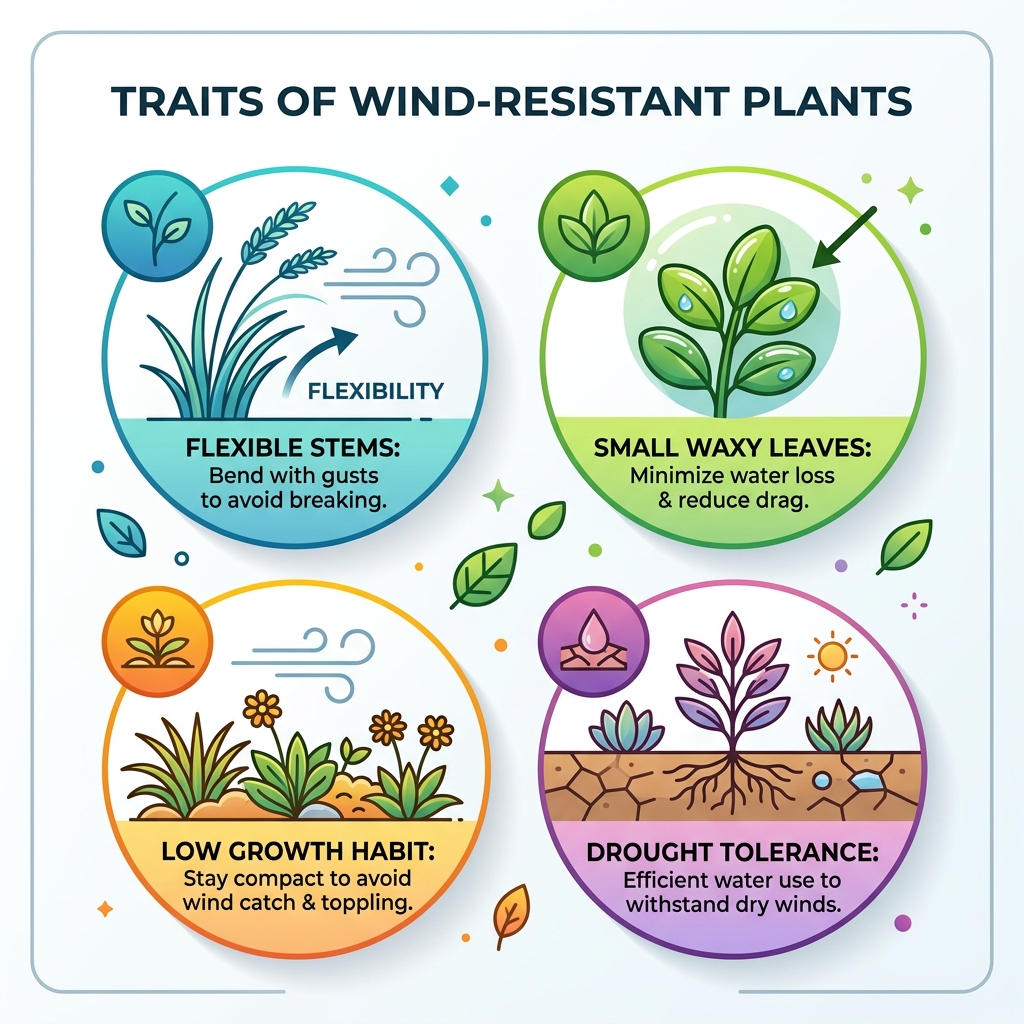
When we talk about balcony flower wind resistance, we are really talking about evolutionary survival. Plants that naturally thrive in open prairies, coastal cliffs, or high-altitude mountains have developed specific physical “superpowers” to deal with the breeze. Understanding these traits helps us choose the right candidates for our sky-high urban oases.
Flexible Stems
Think of the famous Aesop’s fable about the oak and the reed. The oak resists and breaks; the reed bends and survives. In balcony gardening, we want the reeds. Plants with flexible, slender stalks — like many ornamental grasses — don’t fight the wind. They flow with it. This reduces the physical stress on the plant’s “skeleton.”
Waxy and Small Leaves
Wind is a giant hair dryer for plants. It pulls moisture out of the leaves at an incredible rate. Plants with thick, waxy leaves (like Zonal Geraniums or succulents) have a built-in “sealant” that keeps moisture inside. Similarly, plants with tiny leaves (like Lavender or Thyme) have less surface area for the wind to grab, which prevents both physical tearing and rapid dehydration.
Low Profiles and Aerodynamic Forms
The closer a plant grows to the ground (or the soil line), the less leverage the wind has to pull it out of the pot. Low-growing or “prostrate” plants like Portulaca or certain types of Rosemary are naturally aerodynamic. They let the wind sail right over them.
For a deeper dive into setting up your first space, check out our guide on Transforming Your Balcony into a Green Oasis: A Guide for Beginners.
Top 10 Plants for Maximum Balcony Flower Wind Resistance
Choosing the right species is 90% of the battle. If you plant a giant, soft-leaved Canna Lily on a 20th-floor balcony, you’re going to have a bad time. Instead, look for these “garden warriors” that actually enjoy a bit of a breeze.

1. Zonal Geraniums (Pelargonium)
These are the undisputed champions of the window box. Unlike “seed” geraniums, Zonal varieties have leathery, broad leaves and incredibly strong petioles (the stalks that join the leaf to the stem). They provide season-long color and can handle significant gusts without losing their flower heads.
2. Pennisetum (Fountain Grass)
If you want movement and “whimsy,” Pennisetum is your go-to. Varieties like ‘Purple Fountain’ or ‘Sky Rocket’ have flexible stems that dance in the wind. They are virtually impossible for the wind to “break” because they offer so little resistance.
3. Gazanias (African Daisies)
Native to South Africa, these plants are built for harsh, sunny, and windy conditions. Their flowers close up when it’s cloudy or dark, protecting their delicate reproductive parts, and their foliage is often tough and silvery to reflect heat and resist wind-chill.
4. Portulaca (Moss Rose)
Portulaca is essentially a flowering succulent. It grows very low to the soil, and its leaves are thick and fleshy, storing water for days. It’s perfect for those exposed, full-sun spots where other flowers would shrivel.
5. Scaevola (Fan Flower)
Scaevola is a tough Australian native that loves to trail over the edges of pots. Because it evolved in coastal environments, it is naturally resistant to wind and even salt spray.
6. Calibrachoa (Million Bells)
While some series (like the Kabloom series) prefer a bit of shelter, many modern Calibrachoa hybrids are surprisingly resilient. They are “self-cleaning,” meaning the wind actually helps blow away old blooms, and their trailing habit keeps them tucked away from the strongest gusts. You can find more on Calibrachoa | UMN Extension or explore the Calibrachoa Kabloom Series.
7. Marigolds (Tagetes)
Stick to the shorter, more compact varieties like the ‘Bonanza’ or ‘Disco’ series. These are sturdy, have thick stems, and don’t get “floppy” when the wind picks up. They are often cited as the best flowering plants for the most challenging balconies.
8. Salvia
Many Salvia varieties have woody bases and slender, flexible flower spikes. They attract pollinators like hummingbirds and butterflies, even on breezy days.
9. Vinca (Catharanthus roseus)
Vinca looks like an impatiens but acts like a tank. It has glossy, thick leaves that resist water loss and can handle high heat and high airflow with ease.
10. Dichondra ‘Silver Falls’
This isn’t a flower in the traditional sense, but its shimmering silver foliage is breathtaking. It trails several feet and is so fine-textured that the wind passes through it like a ghost.
| Plant Name | Growth Habit | Wind Tolerance | Best Feature |
|---|---|---|---|
| Zonal Geranium | Upright/Mounded | High | Strong stems, bold color |
| Pennisetum | Upright/Arching | Very High | Beautiful movement |
| Portulaca | Low/Trailing | Very High | Succulent foliage |
| Gazania | Low/Clumping | High | Heat and drought-proof |
| Scaevola | Trailing | High | Salt and wind-resistant |
For more inspiration on how to arrange these beauties, visit our section on Urban Garden Design.
Hardy Herbs and Grasses for High-Rise Gusts
If you live in a high-rise, you know that the wind doesn’t just blow; it howls. For these extreme conditions, we recommend leaning into woody herbs and ornamental grasses.
Rosemary and Thyme are the MVPs here. Their stems are woody and tough, and their leaves are needle-like or tiny, which minimizes the surface area the wind can attack. Plus, they smell amazing every time the breeze brushes past them. Lavender is another excellent choice; it thrives in the well-drained, slightly dry conditions that wind often creates.
For grasses, consider Blue Fescue (Festuca glauca). It forms small, tidy blue mounds that are incredibly stable. Feather Reed Grass is also a “Northwind” favorite because it has a strong vertical form that doesn’t flop over, even in heavy storms.
Check out our Balcony Herb Garden Layout Tips to see how to position these tough plants.
Trailing Vines with High Balcony Flower Wind Resistance
Trailing plants are often safer in the wind than tall, upright ones because they “hug” the container or railing.
Lysimachia (Creeping Jenny) is a favorite for its vibrant lime-green color. It’s a vigorous grower that can handle a lot of airflow. Vinca major or Vinca minor offer tough, variegated leaves that don’t tear easily. If you want a more delicate look that is secretly tough, try Lotus Vine or Dichondra.
Using these in hanging baskets can be tricky, but if you secure the baskets well, they create a beautiful “curtain” of green. Read more at Small Space Gardening Made Easy with Hanging Baskets.
Choosing the Right Pots and Setup for Windy Conditions
You can have the most wind-resistant plant in the world, but if it’s in a lightweight plastic pot, the whole thing will be in your neighbor’s yard by Tuesday. Balcony flower wind resistance is just as much about the hardware as it is about the “greenware.”
Material Matters
- Concrete and Stone: These are the gold standard for windy spots. They are naturally heavy and very difficult to tip over.
- Heavy Ceramic: Stone and glazed ceramic pots provide excellent weight, though they can be brittle in freezing temperatures.
- Fiberglass: This is a great middle-ground. It’s incredibly strong and weather-resistant. While it’s lighter than concrete, you can add weight to the bottom (ballast) to make it stable.
Shape and Aerodynamics
Avoid tall, “trumpet-shaped” pots that are narrow at the base. These are top-heavy and act like sails. Instead, choose low and wide containers. A broad base provides a low center of gravity, making it much harder for a gust to catch the pot and flip it.
For those worried about weight limits on their balconies, we have some clever workarounds in our article on Lightweight Pots: The Ideal Solution for Urban Gardening.
Anchoring and Stability for Balcony Flower Wind Resistance
Sometimes weight isn’t enough. In high-exposure areas, you need to anchor your garden.
- Double-Potting: Place your plant in a standard plastic pot, then place that pot inside a much larger, heavier decorative planter. Fill the gap with gravel or heavy stones. This adds weight and provides an extra layer of insulation for the roots.
- Ballast: Always put a layer of heavy river stones or large gravel at the bottom of your pots before adding soil. This keeps the weight concentrated at the base.
- Bracing Systems: Use brackets, straps, or heavy-duty zip ties to secure planters directly to the balcony railing.
- Pot Feet and Non-slip Pads: These prevent “creeping.” Believe it or not, the vibration from constant wind can cause pots to slowly walk across a smooth balcony floor. Pot feet or rubber pads keep them firmly in place.
For more on securing your setup, see Vertical Gardening Containers Perfect for Apartment Balconies.
Essential Maintenance and Installation Tips
Maintaining a windy balcony garden requires a slightly different approach than a sheltered backyard.
Watering: The 24-Hour Rule
Wind accelerates evaporation. Even if the sun isn’t particularly hot, a steady breeze can bone-dry a pot in hours. We recommend checking soil moisture daily. A good rule of thumb: if the top inch of soil feels dry, water it. For thirsty plants like Calibrachoa or Hibiscus, you might even need to water twice a day during peak summer gusts. You can find more care tips on Calibrachoa Growth & Care Guide.
Regular Pruning and Deadheading
Keep your plants compact. The “leggier” a plant gets, the more leverage the wind has. Regularly “pinch back” stems to encourage bushier, sturdier growth. Also, stay on top of deadheading (removing spent flowers). This keeps the plant’s energy focused on staying healthy rather than producing seeds.
Strategic Grouping
Don’t leave a single pot out in the middle of the balcony like a lone soldier. Group your pots together. This creates a “microclimate” where the plants protect each other, reducing the wind speed in the center of the group. Place your toughest, heaviest plants (like large grasses or shrubs) on the outer edges to act as a natural windbreak for the more delicate flowers inside.
For more detailed advice, check out our Gardening Tips and consider using Balcony Privacy Screens for Gardening as a stylish windbreak.
Frequently Asked Questions about Windy Balcony Gardening
Which flowers are best for coastal windy balconies?
Coastal balconies face the double whammy of wind and salt spray. You need plants that are “salt-tolerant.” Oleander is a classic choice (just keep it away from pets as it’s toxic). Succulents like Agave or Sedum handle salt very well. Sea Thrift (Armeria maritima) is another beautiful, low-growing flower that evolved specifically for windy, salty cliffs.
For styling these unique spots, look at Creative Container Arrangements for Tiny Spaces.
How do I stop my pots from blowing over?
The best defense is a heavy offense. Use pots made of concrete or heavy stone. If you must use lighter pots, fill the bottom third with heavy rocks. You can also use “anchoring straps” or specialized brackets that bolt the pot to the balcony floor or railing. For more tips on small-pot stability, see How to Grow Plants in Small Pots on Your Balcony.
What are common mistakes in balcony flower wind resistance?
The biggest mistake is using cheap, lightweight plastic pots without anchoring them. Another common error is choosing “top-heavy” plants like standard (tree-form) roses or tall sunflowers that act like sails. Finally, many gardeners forget that wind dries plants out faster than sun — neglecting the watering can is a recipe for crispy leaves!
Explore more Space-Saving Ideas for Urban Gardens to avoid these pitfalls.
Conclusion
At Finance Growth X, we believe that every urban space has the potential to become a lush, green sanctuary. While wind presents a unique challenge, it shouldn’t stop you from enjoying the mental and physical benefits of gardening. By selecting plants with natural balcony flower wind resistance, investing in stable containers, and staying diligent with watering, you can create a resilient garden that doesn’t just survive the breeze — it dances in it.
Ready to start your journey? Dive deeper into Container Gardening and turn your breezy balcony into a thriving green oasis today!
