
Can You Really Grow Eggplants on a Balcony? (Yes — Here’s How)
Balcony garden eggplant care is simpler than most people think, and the results can be stunning — glossy, plump fruit hanging from a lush plant right outside your door.
Here’s a quick overview of what it takes:
- Container: Use a 5-gallon pot (or larger) with drainage holes
- Sunlight: At least 6-8 hours of direct sun per day
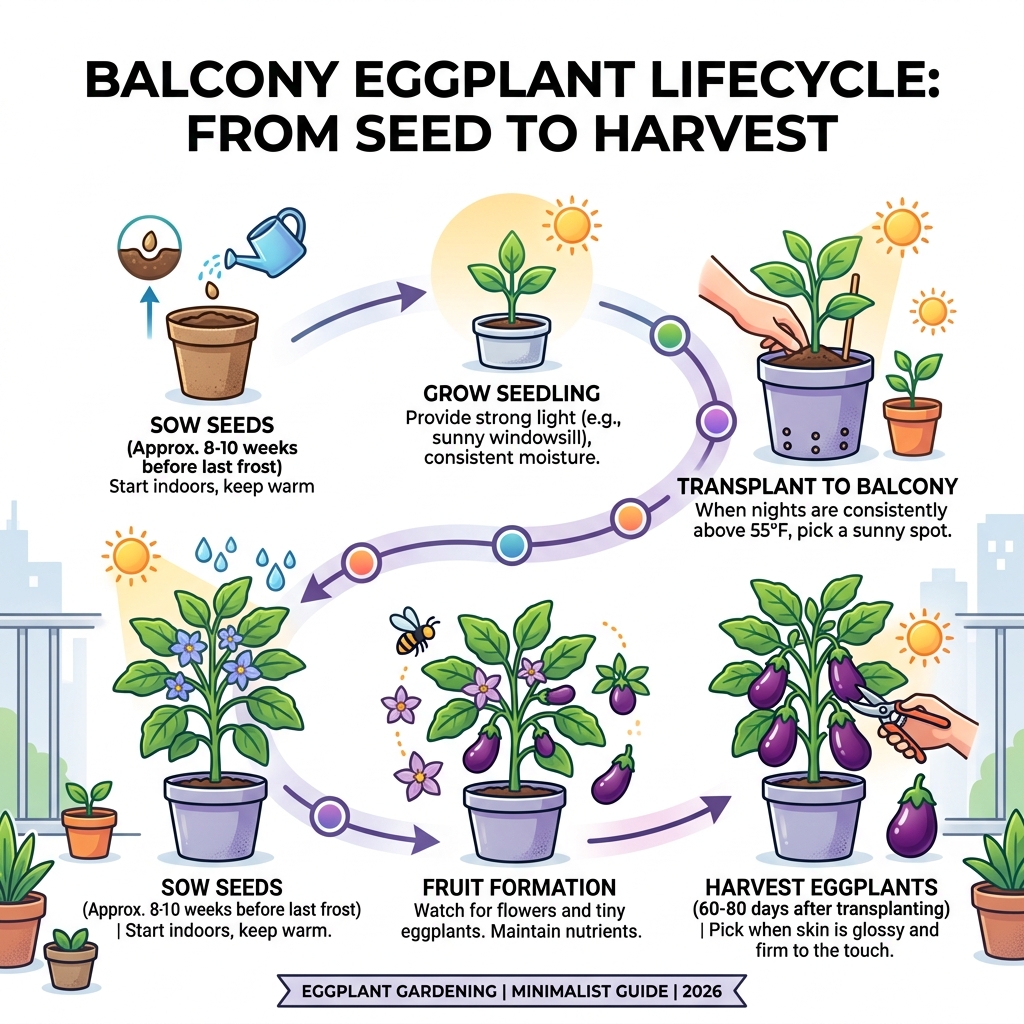
- Temperature: Plant out when nights stay above 55°F
- Watering: Keep soil consistently moist but never soggy
- Feeding: Fertilize every 2-3 weeks — eggplants are heavy feeders
- Best varieties: Compact types like Patio Baby, Fairy Tale, or Ichiban
- Harvest: 60-80 days after transplanting, when skin is glossy and firm
That’s the short version. But getting great results — the kind where your plant produces a dozen or more fruits all summer — takes a bit more know-how.
Eggplants are warm-season vegetables that love heat. They’re actually perennials in warm climates, though most gardeners treat them as annuals. The good news for balcony growers? Containers warm up faster than garden soil, which gives your plants a head start. A dark-colored pot in full sun can raise soil temperature by 10 degrees or more compared to in-ground growing — a real advantage when you’re working with a small space.
If you’ve ever looked at your balcony and thought it was too small or too limited to grow real food, eggplants might just change your mind.
Why Your Balcony is the Perfect Spot for Eggplants
We often hear from urban dwellers who worry their small outdoor space isn’t enough for “real” farming. In reality, your balcony is often a better environment for eggplants than a traditional backyard garden. When Creating a Balcony Garden Oasis, you are essentially building a controlled microclimate.
One of the biggest advantages of a balcony is heat retention. Concrete, brick, and glass reflect warmth, and because eggplants are tropical natives, they thrive in that extra heat. Using dark-colored pots further boosts this effect, absorbing sunlight to keep the roots cozy.
Furthermore, growing in containers provides a natural barrier against soil-borne diseases like Verticillium wilt, which can plague traditional garden beds for years. On a balcony, you start with fresh, sterile potting mix every time. You also gain the benefit of pest isolation; while flea beetles can still fly up to your terrace, many ground-crawling pests won’t ever find your plants. When Designing a Compact Vegetable Garden, you can utilize vertical space by staking your eggplants, ensuring you get a massive harvest without sacrificing floor space.
Essential Balcony Garden Eggplant Care: Pots, Soil, and Sun
The foundation of successful balcony garden eggplant care starts with the right equipment. While you might see small “decorative” pots at the store, eggplants need room to breathe. According to How to Grow and Care for Eggplant in Containers, a minimum of a 2-gallon pot is required for dwarf varieties, but a 5-gallon pot is the gold standard for healthy root development and high yields.
Drainage is non-negotiable. Eggplants hate “wet feet,” so ensure your pots have ample drainage holes. If you’re worried about weight on your balcony, look into Lightweight Pots: The Ideal Solution for Urban Gardening. Fabric pots (like Smart Pots) are excellent because they provide superior aeration and prevent roots from circling.
When it comes to the “floor” of your garden, Choosing the Best Potting Mix for Your Container Garden is your most important investment. Never use standard garden soil; it’s too heavy and will compact in a pot, suffocating the roots. Use a high-quality, organic potting mix amended with compost.
Selecting the Best Varieties for Balcony Garden Eggplant Care
Not all eggplants are created equal. If you try to grow a massive ‘Black Beauty’ in a small pot, you might end up frustrated. Instead, look for compact or “patio” varieties specifically bred for container life.
- Patio Baby: An AAS winner that produces dozens of egg-sized purple fruits on a tiny, 18-24 inch plant.
- Fairy Tale: A stunning variety with striped purple and white fruit. It’s highly productive and stays very compact.
- Ichiban: A Japanese variety that grows upright and produces long, slender fruits. In warm climates, a single Ichiban plant can yield over a dozen fruits.
- Hansel and Gretel: These are twin varieties (one purple, one white) that produce clusters of finger-sized fruit.
Learning How to Grow Plants in Small Pots on Your Balcony becomes much easier when the genetics of the plant are on your side. Much like Compact Zucchini Varieties for Apartments, these specialty eggplants prioritize fruit production over massive leaf growth.
Mastering Sunlight and Temperature for Balcony Garden Eggplant Care
Eggplants are the ultimate sun worshippers. To get those “massive” results, your balcony needs to provide 6 to 8 hours of direct sunlight daily. If your space is partially shaded, you can still succeed, but the fruit will take longer to ripen. Check out our guide on Proper Sunlight Exposure for Balcony Gardening to map out your balcony’s “hot spots.”
Temperature is the other half of the equation. Do not be in a rush to put your plants outside! Eggplants are incredibly sensitive to cold. We recommend waiting until:
- Soil temperatures are consistently above 60°F.
- Nighttime air temperatures stay reliably above 55°F.
If a surprise cold snap hits, bring your pots inside or use a row cover. According to A Seasonal Guide to Planting in Urban Balconies, timing your planting with the local frost-free date is the difference between a thriving plant and a stunted one.
Watering and Feeding for Maximum Yields
Because containers dry out faster than the ground, watering is the most frequent task in balcony garden eggplant care. During the peak of summer, you may need to water your eggplants every single morning. The goal is to keep the soil “wrung-out sponge” moist. Inconsistent watering leads to “blossom-end rot” (a sunken, leathery spot on the bottom of the fruit) or bitter-tasting flesh.
We suggest using Easy and Efficient Watering Techniques for Balcony Gardeners, such as self-watering containers or saucers to help maintain moisture levels. To Prevent Root Rot in Pots: A How-To Guide, always check the top inch of soil with your finger before adding more water.
Eggplants are “heavy feeders,” meaning they need a lot of nutrients to build those big, glossy fruits. They particularly crave nitrogen for leaf growth and phosphorus/potassium for fruiting.
| Fertilizer Type | Pros | Cons |
|---|---|---|
| Organic Compost | Improves soil structure, slow-release | Lower nutrient concentration |
| Slow-Release Granules | Set it and forget it (lasts 2-3 months) | Less control over immediate needs |
| Liquid Fish Emulsion | Fast-acting, great for a “boost” | Can be smelly on a balcony |
When Using Organic Fertilizers in Balcony Gardening, don’t forget the calcium! Adding a bit of lime to your potting mix helps prevent the aforementioned blossom-end rot. We recommend a balanced organic fertilizer at planting, followed by a liquid feed every two weeks once flowers appear.
Troubleshooting Pests and Supporting Heavy Fruit
Even on a high-rise balcony, pests can be an issue. The #1 enemy of the eggplant is the flea beetle — tiny black insects that jump like fleas and leave “shotholes” in the leaves. While healthy plants can usually tolerate some damage, heavy infestations can kill young seedlings. Dealing with Pests in Your Balcony Garden: Effective Solutions often involves using neem oil or floating row covers early in the season.
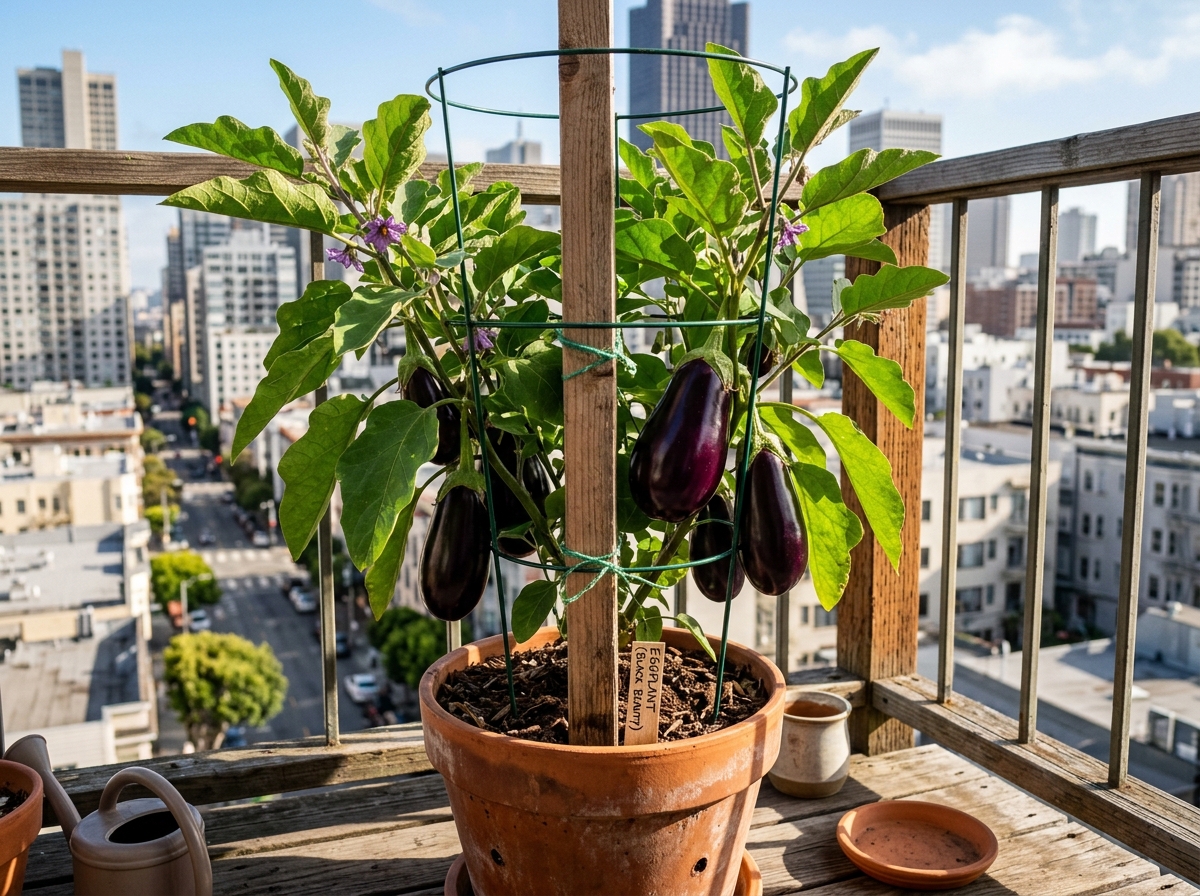
As your fruit grows, the branches will become heavy. Unlike peppers, which have somewhat sturdy stems, eggplant branches can easily snap under the weight of a 1-pound fruit. According to Growing eggplant in home gardens | UMN Extension, you should install stakes or small tomato cages at the time of planting. Driving a stake into a pot later in the season can damage the sensitive root system.
To Maximize Your Harvest: Balcony Container Irrigation Tips, keep an eye out for yellowing leaves, which could signal overwatering or a nitrogen deficiency. If you notice the plant wilting despite moist soil, it could be Verticillium wilt — unfortunately, there is no cure for this, and the plant should be disposed of (not composted) to prevent spread.
Harvesting Your Homegrown Bounty
This is the moment we’ve been waiting for! Knowing when to harvest is an art. Many beginners wait too long, wanting the fruit to get as big as possible. However, overripe eggplants become dull, seedy, and bitter.
Ripeness Indicators:
- The Shine Test: The skin should be high-gloss. If it starts to turn dull, it’s overripe.
- The Thumb Test: Press the skin gently. If the indentation fills back up quickly, it’s ready. If the skin is hard and doesn’t indent, it’s underripe. If the indentation stays, it’s overripe.
- Size: Check the specific variety’s mature size (e.g., 2-3 inches for ‘Patio Baby’ or 10 inches for ‘Ichiban’).
Always use pruning shears or a sharp knife to harvest. Never pull the fruit, as you’ll likely damage the plant’s brittle branches. Leave about an inch of the green stem (calyx) attached to the fruit.
Eggplants are one of the Best Balcony Vegetables for Summer because they produce continuously if you keep harvesting. For storage, they are best used fresh but will keep in the refrigerator for about a week. Because they are Easy Vegetables for Small Urban Spaces, you’ll soon have enough to try everything from classic Parmesan to grilled skewers.
Frequently Asked Questions about Balcony Eggplants
Why are my eggplant flowers falling off without producing fruit?
This is called “blossom drop.” It’s usually caused by temperature stress — either nights below 55°F or days above 95°F. It can also happen due to a lack of pollination or too much nitrogen fertilizer (which makes the plant grow leaves but forget to make fruit). If you have The Art of Growing Vegetables in Limited Sunlight Balconies, ensure your plant isn’t getting “leggy” from a lack of light, which also causes flower drop.
Do I need to hand-pollinate balcony eggplants?
Eggplants are self-pollinating, meaning a single flower has both male and female parts. However, they usually rely on wind or bees to “vibrate” the pollen loose. On a sheltered balcony, there might not be enough wind or insects. You can help by gently shaking the plant daily or using a small paintbrush to swirl inside the flowers.
Can I reuse container soil for eggplants next year?
It’s tempting, but we generally advise against it for eggplants. They are susceptible to soil-borne diseases that can overwinter in the dirt. To maintain Critical Balcony Garden Soil Maintenance Techniques, it’s best to rotate your crops. If you grew eggplants this year, grow greens or beans in that soil next year. If you must reuse it, remove the top few inches and refresh it with a large amount of new compost and organic fertilizer.
Conclusion
At Finance Growth X, we believe that a lack of space should never be a barrier to enjoying the incredible flavor of homegrown produce. Mastering balcony garden eggplant care is a rewarding journey that turns a simple apartment terrace into a productive Urban Garden Design.
By choosing the right compact varieties, providing plenty of heat, and staying consistent with your watering and feeding, you can grow “massive” eggplants that rival any backyard garden. It just takes a bit of DIY spirit and the right knowledge. Are you ready to start Transforming Your Balcony into a Green Oasis: A Guide for Beginners? Grab a 5-gallon pot, find a sunny spot, and get planting — your future eggplant parmesan is waiting!
