
Fresh Cucumbers From Your Balcony Are Closer Than You Think
Balcony planters for cucumber are one of the smartest ways to grow fresh produce in a small outdoor space — no yard required.
Here are the best options to consider right now:
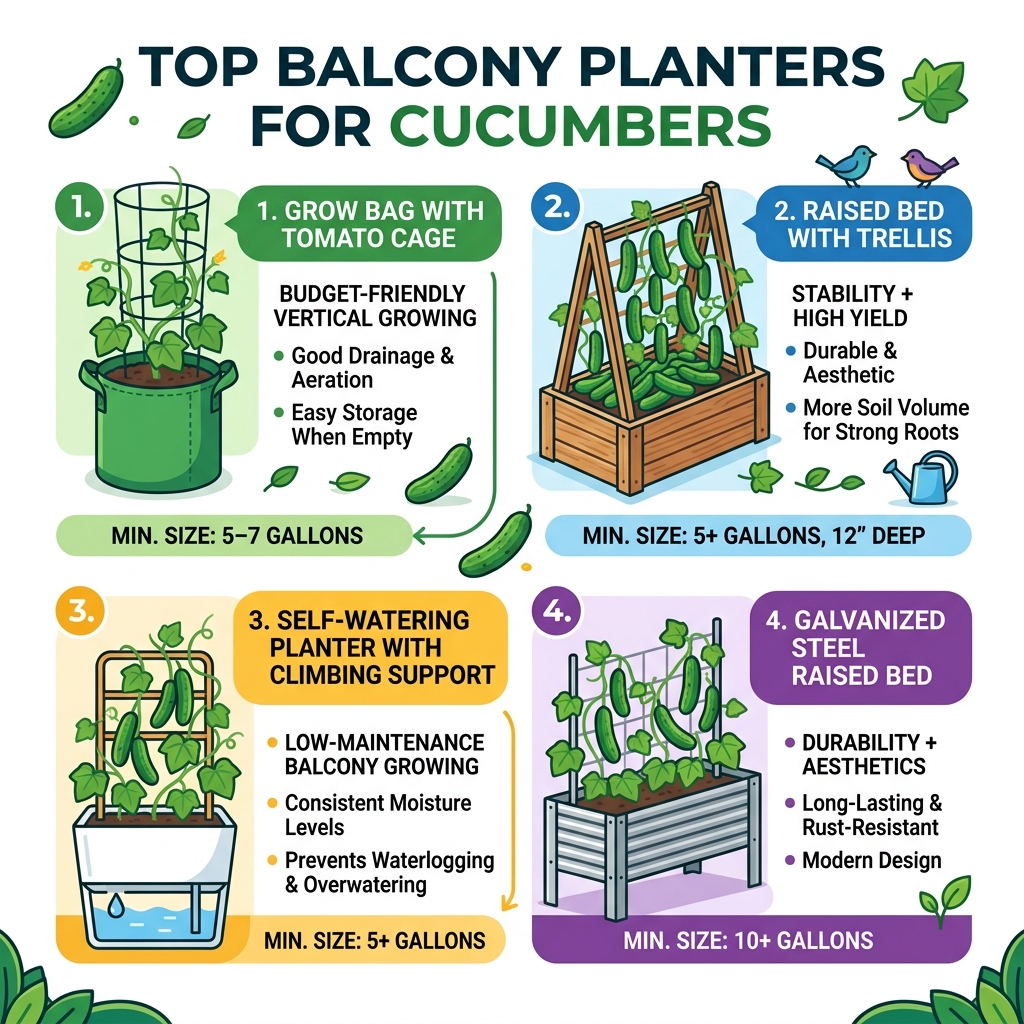
| Planter Type | Best For | Min. Size Needed |
|---|---|---|
| Grow bag with tomato cage | Budget-friendly vertical growing | 5–7 gallons |
| Raised bed with trellis | Stability + high yield | 5+ gallons, 12″ deep |
| Self-watering planter with climbing support | Low-maintenance balcony growing | 5+ gallons |
| Galvanized steel raised bed | Durability + aesthetics | 10+ gallons |
Cucumbers are one of the most rewarding vegetables you can grow in containers. They climb vertically, so they naturally suit small spaces like balconies. With the right planter, a sunny spot, and a simple trellis, you can harvest fresh cucumbers from July through October.
The catch? Not every planter works. Cucumbers need at least 5 gallons of soil volume, good drainage, and vertical support to thrive. Without these, plants struggle and yields suffer.
This guide cuts through the noise. It covers the top-rated planters, what features actually matter, and how to set everything up for a healthy harvest — even if your balcony is tiny.
Essential Features of Balcony Planters for Cucumber
When we look for the perfect balcony planters for cucumber, we aren’t just looking for a pretty pot. Cucumbers are heavy feeders and thirsty travelers. They have specific physiological needs that, if met, will reward you with a bounty of crunchy snacks. If ignored, you’ll likely end up with a withered vine and a lot of disappointment.
Size and Depth: The 5-Gallon Rule
First and foremost, size matters. A cucumber plant’s root system needs room to stretch. Research suggests that a minimum of 10 liters (about 2.6 gallons) is the absolute baseline, but for a thriving plant, we recommend at least 5 to 7 gallons (roughly 20 to 25 liters) of soil per plant. If you are getting started with gardening balcony planter boxes for beginners, more soil acts as a buffer, keeping moisture levels more consistent.
The planter should be at least 12 inches deep. This allows for proper root expansion and provides enough weight at the base so that when your cucumber vine reaches six feet in height, a stiff breeze doesn’t topple the whole setup.
Self-Watering Reservoirs
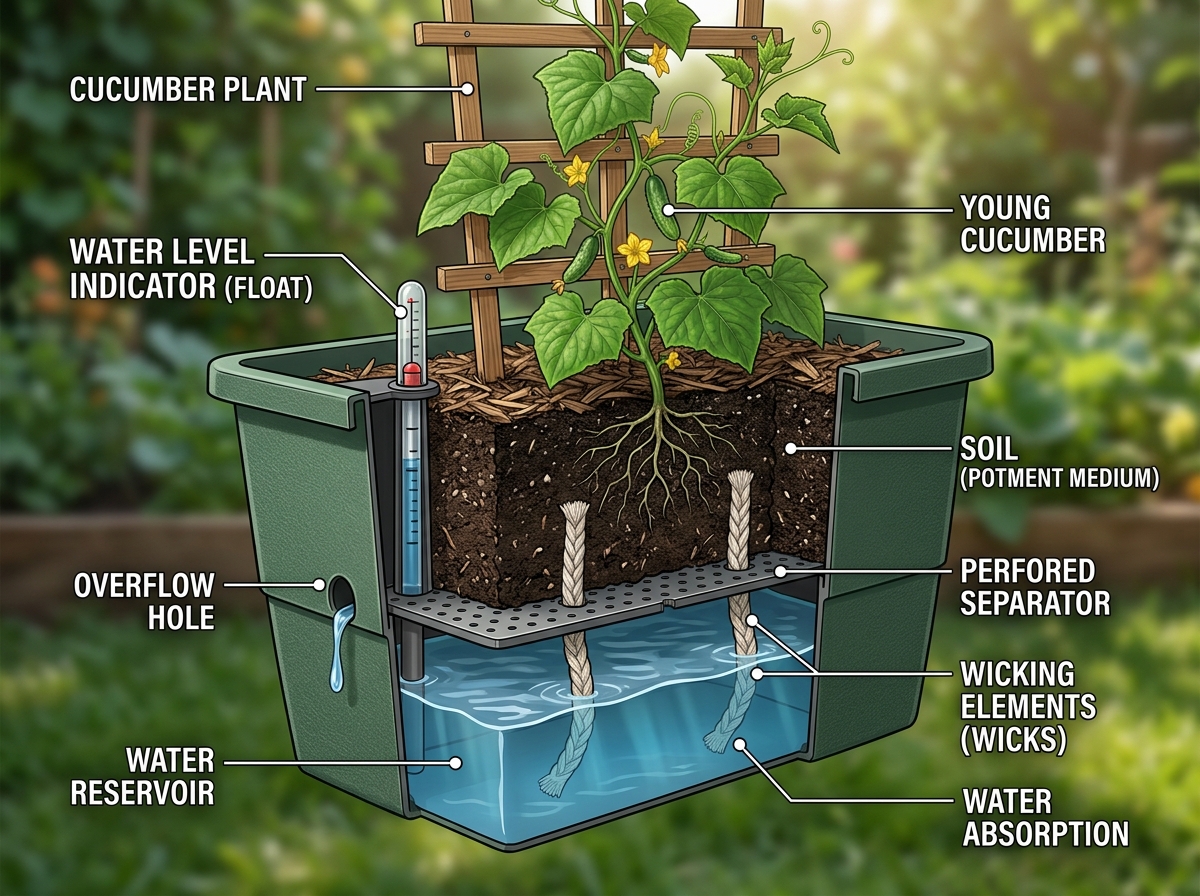
Cucumbers are roughly 95% water. If the soil dries out completely, the fruit can become bitter or the plant may stop producing altogether. This is why self-watering planters are a game-changer for balcony gardeners. These systems typically feature:
- A Water Reservoir: Often holding between 4 and 5 liters of water.
- Wicking Systems: These pull water up into the soil as the plant needs it.
- Overflow Holes: To ensure you don’t accidentally drown the roots during a rainstorm.
Using a system like this means you might only need to “water” every few days rather than every few hours during a heatwave.
Material Matters: UV-Resistance and Food Safety
Since your balcony likely gets a lot of sun (cucumbers need 6–8 hours of direct light), the material of your planter is vital. We look for UV-resistant, food-grade plastics (like high-quality Polypropylene). Standard black plastic pots can absorb too much heat, potentially cooking the roots in mid-July. Light-colored or UV-stabilized materials reflect more light and stay cooler.
Drainage and Aeration
Never skip the drainage. If your planter doesn’t have holes, you must drill them. Standing water leads to root rot, which is the fastest way to kill a cucumber vine. Some modern options, like fabric grow bags, offer “air pruning,” which prevents roots from circling and encourages a denser, healthier root system.
Top-Rated Balcony Planters for Cucumber Varieties
Choosing the right hardware depends on your balcony’s layout and your budget. With over 560 results for cucumber planters available on major platforms, we’ve narrowed down the categories that actually perform.
Grow Bags with Integrated Cages
For those on a budget or with limited storage space, grow bags are phenomenal. A popular setup involves a 17.7-gallon grow bag paired with a 47-inch tomato cage.
- Pros: Excellent aeration, easy to store in winter, and very affordable.
- Cons: They dry out faster than plastic, so they require more frequent watering if they don’t have a reservoir.
Raised Garden Beds with Trellises
If you have a bit more floor space, a raised garden bed with a built-in trellis is the “gold standard.” Models like the LINEX or MQFORU raised beds often feature a 4.5-star rating for a reason. They provide a stable environment and a sturdy climbing aid. These are excellent for compact container garden setups for small spaces because they keep the vines contained and moving upward rather than sprawling across your balcony floor.
Specialized Urban Gardening Sets
There are premium options designed specifically for cucumbers, such as the “Curt Cucumber” series. These are often all-in-one kits that include:
- A 20L soil capacity (perfect for one plant).
- A 5L integrated water tank.
- A flexible climbing aid (sometimes using cords and hooks that can be wall-mounted). These are fantastic because they take the guesswork out of the setup. They are compact, elegant, and engineered for the exact nutrient and water needs of a single vining plant.
Comparison: Grow Bags vs. Raised Beds
| Feature | Grow Bags + Cages | Raised Beds + Trellis |
|---|---|---|
| Portability | High (handles included) | Low to Medium |
| Durability | 2–3 seasons | 5–10+ seasons |
| Root Health | Air-pruning (Excellent) | Standard (Good) |
| Price | $ (Budget-friendly) | $$$ (Investment) |
| Aesthetics | Functional/Industrial | Decorative/Polished |
For those looking to maximize every inch of the railing, you might also consider balcony railing planters for vegetables, though these are typically better suited for “bush” varieties rather than heavy vining types.
How to Optimize Your Balcony Planters for Cucumber Growth
Once you have your balcony planters for cucumber in place, the real work begins. You are essentially creating a tiny, self-contained ecosystem.
The Perfect Potting Mix
Do not use “garden soil” from the ground. It is too heavy and will compact in a container, suffocating the roots. Instead, use a high-quality potting mix rich in organic matter (compost). A good mix should be loose, air-permeable, and have a pH between 6.0 and 6.8. We recommend amending your mix with a slow-release organic fertilizer at the start of the season.
Fertilizer and NPK Ratios
Cucumbers are hungry. They need a steady supply of nutrients to produce fruit.
- Early Growth: Use a balanced fertilizer (like a 10-10-10 or 7-7-7).
- Flowering/Fruiting: Switch to a mix higher in Potassium (K) and Phosphorus (P) but lower in Nitrogen (N). Too much nitrogen at this stage will give you beautiful leaves but zero cucumbers.
- Weekly Feeding: Many successful balcony gardeners use a liquid kelp fertilizer or a homemade nettle brew every two weeks once the plant starts flowering.
Sunlight and Placement
Your balcony’s orientation is key. A south-facing balcony is the “holy grail” for cucumbers, providing the 6 to 8 hours of direct sun they crave. If your balcony is wind-swept, try to place the planter in a sheltered corner. High winds can tatter the large leaves and dry out the soil rapidly. Knowing how to grow plants in small pots on your balcony effectively involves managing these environmental factors.
Vertical Training and Pruning
Cucumbers love to climb. As the vines grow, gently “train” them by weaving the tendrils around your trellis or cage.
- A-Frame Trellises: These allow you to grow plants on both sides and even plant shade-loving greens (like spinach) underneath.
- Pruning: To keep the plant healthy, remove any yellowing leaves at the base to improve airflow. This helps prevent powdery mildew, a common fungal issue in humid balcony environments.
Pollination Tips
If you are high up in an apartment building, you might notice a lack of bees. To ensure fruit, you have two choices:
- Choose Parthenocarpic Varieties: Varieties like ‘Diva’ or ‘Picolino’ don’t need bees to set fruit. They are perfect for urban environments.
- Hand Pollinate: Use a small paintbrush to transfer pollen from the male flowers (thin stems) to the female flowers (which have a tiny baby cucumber at the base).
Frequently Asked Questions About Balcony Cucumber Planters
What is the best size for balcony planters for cucumber?
For optimal growth, we recommend a planter that holds at least 5 to 7 gallons of soil and is at least 12 inches deep. While you can technically grow a cucumber in a smaller pot, you will be fighting a losing battle against dehydration. Larger containers provide a more stable root temperature and hold moisture longer. This is similar to the requirements for growing cherry tomatoes in limited space, where root volume directly correlates to your harvest size.
Are self-watering balcony planters for cucumber worth the investment?
Absolutely. Cucumbers are notoriously sensitive to inconsistent watering. If the soil goes from bone-dry to soaking wet repeatedly, the fruit can crack or turn bitter. Self-watering planters use a reservoir and wicking system to provide “on-demand” moisture. This is especially helpful if you work long hours or travel. We’ve found that these systems significantly reduce the stress on the plant, much like when growing tomatoes in containers on a balcony.
How do I handle assembly and international shipping for cucumber planters?
Most modern balcony planters are designed for “tool-free” assembly. For example, the Curt Cucumber or LINEX models typically snap together in under 15 minutes.
Regarding shipping, many top-rated options ship globally. If you are ordering from Europe, for instance, many specialized gardening stores offer quick delivery to countries like Lithuania, often arriving within 2–5 working days. Always check the packaging durability in customer reviews; you want a seller that uses reinforced cardboard to ensure your trellis arrives straight and your plastic isn’t cracked.
Conclusion
At Finance Growth X, we believe that sustainable living starts right outside your sliding glass door. You don’t need an acre of land to experience the joy of a fresh harvest. By choosing the right balcony planters for cucumber, you are setting yourself up for a summer filled with crisp, home-grown produce that tastes infinitely better than anything from a grocery store.
Whether you opt for a high-tech self-watering system or a simple grow bag with a sturdy trellis, the key is to start. Vertical gardening is not just a space-saver; it’s a way to bring a little bit of nature into the urban jungle.
Ready to expand your green thumb? Explore more container gardening tips on our blog and turn your balcony into a productive paradise today!
