
Unlocking Your Balcony’s Potential: The Best Vegetable Garden Picks
Transforming a small urban space into a thriving food source is easier than you think. If you’re looking to create the best balcony vegetable garden, you’re in the right place. Even with limited space, you can enjoy fresh, homegrown produce right outside your door.
Here are some of the top vegetable picks for a successful balcony garden:
- Cherry Tomatoes: Choose compact varieties like ‘Tiny Tim’ or ‘Tumbling Tom’ for high yields in pots.
- Radishes: These grow incredibly fast, often ready in just 25-30 days.
- Leafy Greens: Lettuce, spinach, arugula, and Swiss chard thrive in containers and can tolerate some shade.
- Herbs: Basil, mint, parsley, and rosemary offer a huge return on investment and culinary delight.
- Peppers: Compact sweet or hot pepper varieties are well-suited for pots.
- Bush Beans: Look for bush varieties that don’t need extensive trellising.
Growing vegetables on your balcony is like creating a little garden paradise in the sky. It’s a rewarding way to bring greenery and fresh flavors into your urban home. You don’t need a huge backyard to harvest delicious ingredients.
This guide will help you select the right plants, containers, and techniques to make your balcony a productive and beautiful oasis. Get ready to enjoy the taste of vegetables grown just steps from your kitchen.
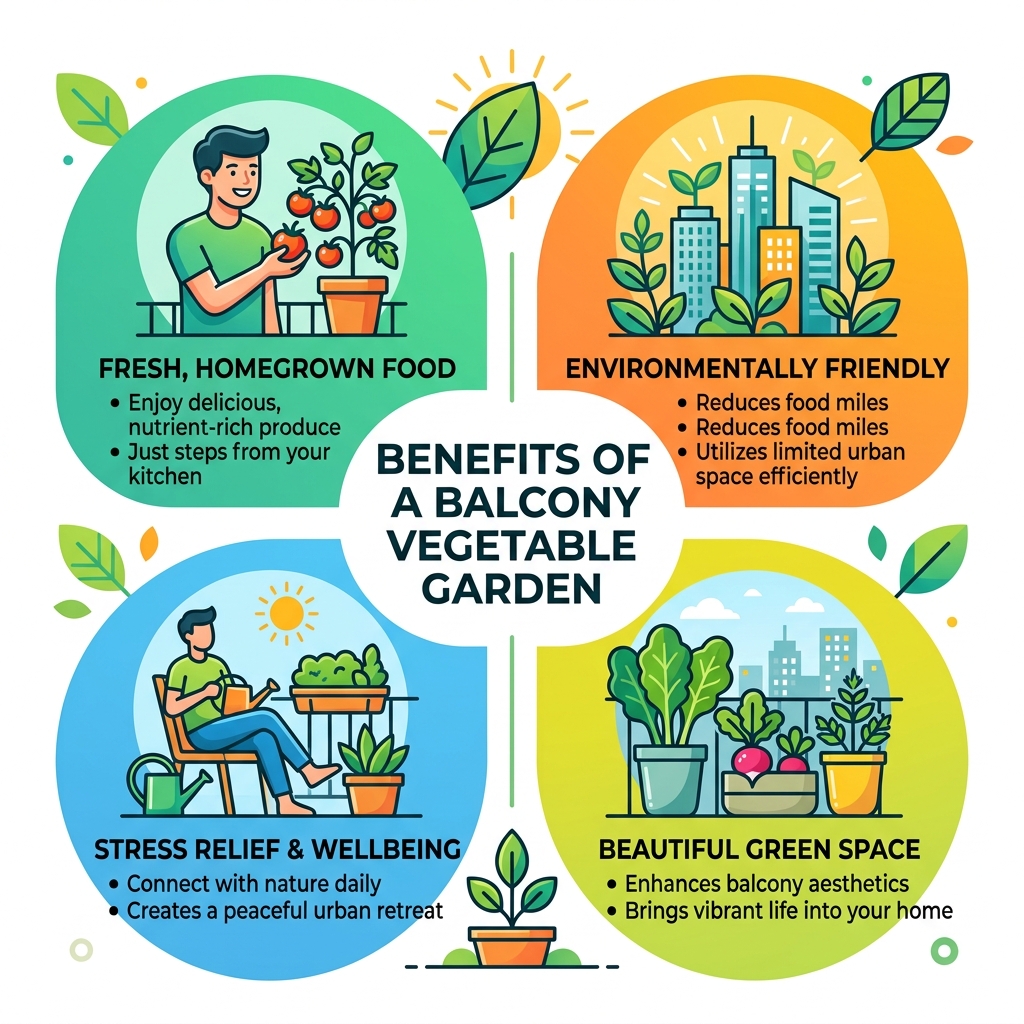
Top Plant Picks for the Best Balcony Vegetable Garden
When we talk about the best balcony vegetable garden, we aren’t just looking for plants that survive; we want plants that thrive and provide a tangible reward for our efforts. Urban farming is all about efficiency—maximizing every square inch of that concrete ledge or wooden deck.
Cherry Tomatoes: The Vertical Goldmine
If there is one king of the balcony, it is the cherry tomato. Unlike their massive beefsteak cousins that require heavy cages and sprawling space, cherry tomatoes are perfectly adapted for life in a pot. Varieties like ‘Tiny Tim’ or ‘Tumbling Tom’ are specifically bred for small spaces. In fact, a single ‘Tumbling Tom’ plant in a hanging basket can produce hundreds of sweet fruits throughout the summer. For those navigating tight quarters, Growing Cherry Tomatoes in Limited Space offers a deep dive into keeping these productive plants manageable.
Radishes: The Impatient Gardener’s Dream
If you are new to this or perhaps a bit impatient, radishes are your best friend. The ‘Cherry Belle’ variety is legendary because it can go from seed to salad in just 25 to 30 days. Because they have shallow root systems, they don’t need massive, heavy pots. A simple 6-inch deep container is enough to yield a peppery harvest.
Salad Greens: The Gift That Keeps on Giving
We love salad greens because they are the ultimate “cut-and-come-again” crop. By harvesting just the outer leaves of your lettuce, spinach, or arugula, the plant continues to produce from the center. This ensures a steady supply of greens for months. For a list of specific seeds that won’t bolt the moment the sun hits them, check out our guide on Balcony-Friendly Lettuce Varieties.
Herbs: The 1,900% ROI Secret
Did you know that growing herbs like basil can yield over a 1,900% return on investment? When a tiny plastic package of fresh basil costs $3–4 at the grocery store, one $5 plant that provides 20+ harvests per season is a financial no-brainer. Herbs like mint, parsley, and cilantro are excellent introductory plants because they thrive in tight quarters and require very little interference. To learn more about setting up your first herb station, visit our Balcony Gardening Guide.

Matching Vegetables to Your Balcony Sunlight
One of the most common mistakes we see urban farmers make is fighting against their balcony’s natural light. Every balcony has a microclimate. Before you buy your first bag of soil, we recommend doing a “sun audit.” Use a compass or an app to track how many hours of direct light hit your space.
South-Facing: The Solar Powerhouse
If your balcony faces south, you have hit the jackpot for fruiting crops. These spots typically receive 6 to 8 hours of direct sun. This is the ideal environment for heat-lovers like tomatoes, eggplants, and peppers. If you’re looking to turn up the heat, our Urban Gardening Tips for Peppers will help you manage these sun-hungry plants.
North-Facing: The Cool Retreat
Don’t despair if your balcony is north-facing or heavily shaded by other buildings. While you might struggle with tomatoes, you can grow world-class leafy greens. Spinach, kale, and chard actually prefer these cooler, shadier spots because it prevents them from turning bitter. For those in the shade, our Balcony-Friendly Spinach Planting Guide is an essential resource.
East/West-Facing: The Balanced Middle
East-facing balconies get gentle morning sun, while west-facing spots get the intense afternoon heat. Both are great for “all-rounders.” You can grow beans, peas, and even root vegetables like carrots. If you’re planning for the warmer months, see our list of the Best Balcony Vegetables for Summer.
Essential Setup: Containers, Soil, and Structural Safety
To build the best balcony vegetable garden, you need a solid foundation. You can’t just dig up dirt from a local park and put it in a pot; that soil is too heavy and often full of pests or pathogens.
Choosing the Right Pot
The material of your container matters more than you might think. Here is a quick breakdown:
| Container Type | Pros | Cons | Best For |
|---|---|---|---|
| Terracotta | Breathable, classic look | Heavy, dries out very fast | Herbs, Mediterranean plants |
| Plastic/Resin | Lightweight, retains moisture | Can overheat in direct sun | Tomatoes, Peppers |
| Fabric Pots | Air-prunes roots, lightweight | Can look messy, dries fast | Root veggies, Potatoes |
If you are short on floor space, Balcony Railing Planters for Vegetables are a fantastic way to utilize the perimeter of your space.
The “Soil” Secret
In container gardening, we use “potting mix,” not “garden soil.” A lightweight mix ensures that roots can breathe and water can drain. A pro-level DIY recipe we recommend is 40% coconut coir, 30% compost, 20% perlite, and 10% vermiculite. This blend stays fluffy and nutrient-rich.
Vertical Gardening and Space Hacks
When you can’t grow out, grow up! Vertical gardening uses trellises, wall pockets, and stackable planters to triple your growing area. Climbing peas and pole beans are perfect for this. For a masterclass in layout, check out Designing a Compact Vegetable Garden.
Structural Safety: Don’t Overload!
This is the most important part of balcony gardening. Moist potting soil is heavy—roughly 80 pounds per cubic foot. A standard 10-gallon container can weigh about 107 pounds once watered. We recommend staying under 60% of your balcony’s rated weight capacity. Cluster your heaviest pots near the walls or over structural beams rather than at the very edge. For more on the economics and safety of containers, visit Maximizing ROI with Balcony Container Gardening.
Expert Care and Maintenance Strategies
A successful garden isn’t built in a day; it’s maintained in minutes. We suggest a “30-second daily check.” Walk out with your coffee, stick your finger in the soil, and look for any yellowing leaves or unwanted guests. Small adjustments are much easier than trying to save a dying plant. For more quick-start tips, see our guide on Easy Vegetables for Small Urban Spaces.
Watering and Nutrient Management for the Best Balcony Vegetable Garden
Watering is the number one reason balcony gardens fail. Pots dry out much faster than the ground.
- Ollas: These buried clay pots can reduce evaporation by 50–70% by seeping water directly to the roots.
- Morning Watering: Always water in the morning. This allows the leaves to dry and prevents fungal diseases.
- Fertilizing: Container plants need more “food” because nutrients wash out with every watering. Use a water-soluble 20-20-20 fertilizer or organic fish emulsion. This is especially important for root crops—learn more at Growing Dwarf Carrots in Containers.
Pest Control and Space Optimization for the Best Balcony Vegetable Garden
Even on a high-rise, pests like aphids can find your plants. We use the “Bouncer Strategy”—companion planting. By planting marigolds or basil near your tomatoes, you create a natural repellent system.
If you love squash but hate the space they take up, look for Compact Zucchini Varieties for Apartments here. You can also find tips for keeping your leafy greens pest-free in our guide on Urban Balcony Gardening for Kale.
Frequently Asked Questions about Balcony Gardening
What vegetables should be avoided on a balcony?
While we love the “can-do” spirit, some plants are just not meant for life on a ledge. We recommend avoiding:
- Asparagus: It takes years to establish and requires deep, permanent beds.
- Corn: It needs to be planted in large blocks for pollination and grows too tall for most windy balconies.
- Large Pumpkins: Their vines can reach 20 feet, which might end up visiting your neighbor three floors down!
How do I calculate the weight limit of my balcony?
Most modern balconies are built to handle about 50–100 pounds per square foot, but you should always check your building’s HOA rules or lease agreement. A 10-gallon pot with wet soil hits that 107 lb mark easily. Use lightweight resin pots and “soilless” mixes (like peat or coir) to keep the weight down.
Can I grow vegetables year-round on a balcony?
Yes! While summer is peak season, you can transition to cold-hardy crops like kale and leeks in the fall. During winter, you can move your operation indoors using LED grow lights or focus on microgreens. For a full calendar, check out Easy Vegetables for Year-Round Growing.
Conclusion
Creating the best balcony vegetable garden is about more than just food; it’s about reclaiming a piece of nature in the concrete jungle. Whether you start with a single pot of basil or a full vertical farm, the joy of harvesting your own dinner is unmatched. At Finance Growth X, we believe sustainable living and urban farming are the keys to a healthier, more rewarding lifestyle.
Ready to get your hands dirty? Start your journey with our container gardening guide and turn your balcony into the urban oasis you’ve always dreamed of. Happy planting!
