
Why Your Potting Mix Weight Can Make or Break Your Balcony Garden
Lightweight potting mix is a specially formulated growing medium designed to weigh significantly less than traditional soil while still giving roots the drainage, aeration, and nutrients they need.
Quick answer — what makes a potting mix lightweight?
- Perlite — volcanic glass that adds drainage and cuts weight
- Coconut coir — fibrous coconut husk material that retains moisture without getting waterlogged
- Sphagnum peat moss — light, airy organic matter that holds nutrients
- Composted bark — improves structure and porosity
- Lime — balances pH without adding bulk
These ingredients replace heavy garden soil, which can compact, suffocate roots, and strain hanging hooks.
If you’ve ever noticed a wrought iron hook slowly bending under a large hanging basket, soil weight is almost certainly the culprit. A saturated traditional potting mix can push a 9-inch hanging pot to a dangerous load. Lightweight mixes solve this problem from the ground up — literally.
For balcony gardeners working with limited space, this matters even more. Every gram counts when your planters are suspended in the air or stacked on a weight-limited terrace.
The Science of a Lightweight Potting Mix: Why Weight Matters
When we talk about soil “weight,” we are really talking about bulk density. Traditional garden soil or heavy potting mixes are dense, meaning they have very little “pore space” for air and water to move. This density makes them incredibly heavy, especially when they are wet. In contrast, a high-quality lightweight potting mix is designed to maximize porosity.
Research into professional-grade mixes shows just how much of a difference these ingredients make. For instance, a specialized lightweight mix like Fort Light weighs approximately 762 lbs per cubic yard. While that sounds like a lot, it is significantly lighter than traditional soil blends. This reduction in weight is primarily achieved by adding large amounts of perlite—a popped volcanic mineral that looks like tiny Styrofoam balls but acts as a powerhouse for drainage.
Choosing the right medium is the first step in choosing the best potting mix for your container garden. If you use standard “topsoil” in a pot, it will likely turn into a heavy, muddy brick that suffocates your plants. A lightweight blend stays “fluffy,” ensuring that even when fully saturated, the weight remains manageable for both the plant’s roots and your home’s infrastructure.
Reducing Stress on Hanging Planters
One of the most practical reasons we recommend these mixes is for hanging basket safety. We’ve all seen it: a beautiful 9-inch or 12-inch hanging pot suspended from a wrought iron hook that is starting to show a visible bend. This is a “hook failure” waiting to happen.
Consider the math of a typical hanging setup. A 45-quart bag of a standard professional lightweight mix might weigh only 40 lbs, while a smaller 20-quart bag often weighs around 19 lbs. When you compare this to traditional peat bales that can weigh upwards of 60 lbs for similar volumes, the safety benefits become clear.
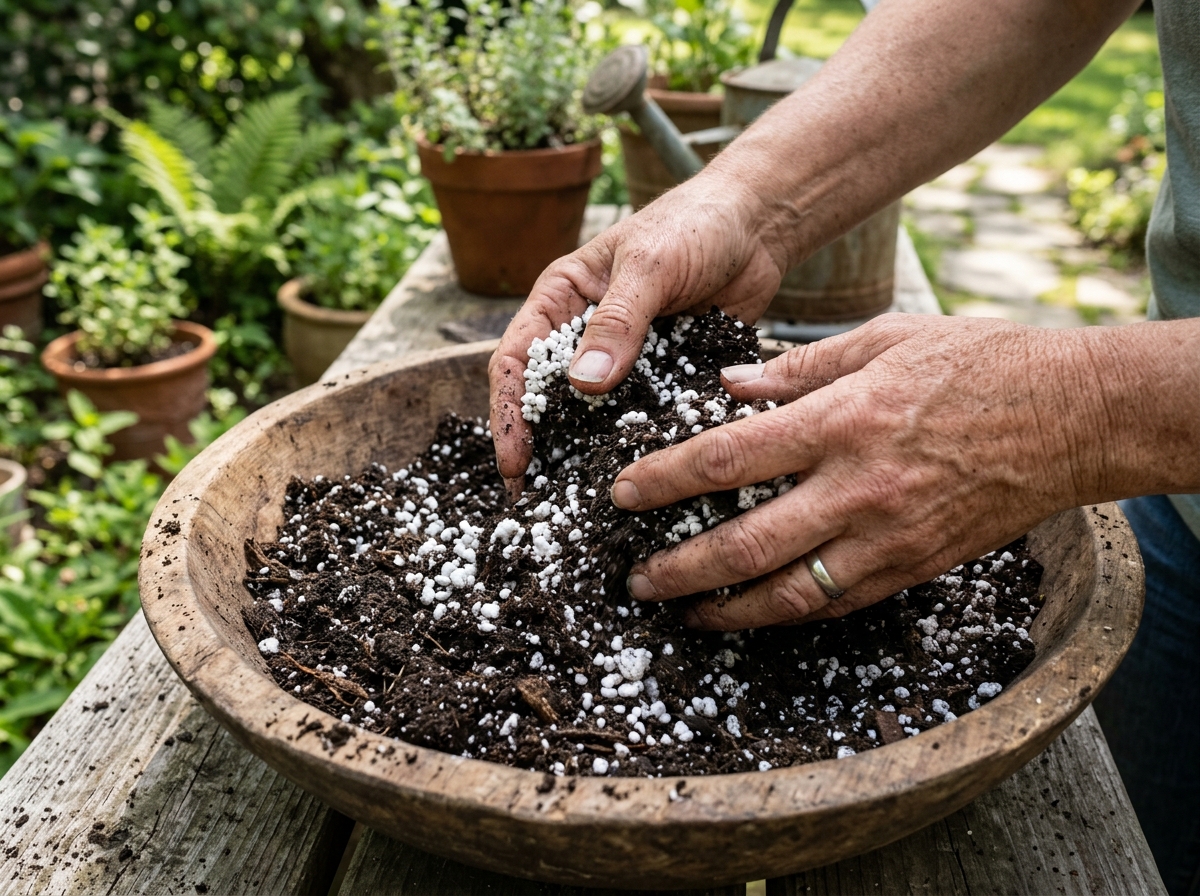
Table: Traditional Soil vs. Lightweight Mix Weights (Approximate)
| Soil Type | Weight per Cubic Yard | Best Use Case |
|---|---|---|
| Traditional Topsoil | 2,000+ lbs | In-ground landscaping |
| Standard Potting Soil | 1,200 – 1,500 lbs | Large floor containers |
| Lightweight Potting Mix | 700 – 800 lbs | Hanging baskets, seedlings |
| Compressed Coir (Expanded) | ~600 lbs | Balcony gardens, indoors |
If you are dealing with massive pots that require a huge soil volume, you can use “displacement hacks” to save even more weight. We often suggest placing empty, capped plastic milk jugs or an overturned smaller plastic pot at the bottom of deep containers. Since most annuals and houseplants have a relatively shallow root depth, they don’t need three feet of soil. Filling the bottom third with lightweight plastic fillers reduces the total weight load on your balcony or hanging hooks without sacrificing plant health.
Key Ingredients: Coconut Coir, Perlite, and Peat Moss
What exactly is inside that bag of lightweight potting mix? It isn’t just “dirt.” In fact, most professional mixes are “soilless,” meaning they contain no actual mineral soil. Instead, they rely on a blend of high-performance organic and mineral components.
- Coconut Coir: This is the “secret sauce” of modern gardening. Derived from the outer husks of coconuts, coir is a sustainable alternative to peat moss. It has an incredible ability to hold water while remaining airy.
- Perlite: These white grains are essential for porosity. They create tiny air tunnels in the mix, preventing compaction and ensuring oxygen reaches the roots.
- Sphagnum Peat Moss: A classic ingredient known for its low pH and excellent nutrient-holding capacity. It provides the “body” of many mixes like Baccto Lite or Esbenshade’s Professional blends.
- Pine Bark & Lime: Finely ground bark adds structure and long-term stability, while lime is added to balance the natural acidity of peat and coir.
- Mycorrhizae and Biological Boosters: Many premium mixes, such as those featuring “SuperRoot Booster” or “MycoActive Technology,” include beneficial fungi. These microbes form a partnership with plant roots, helping them absorb water and nutrients more efficiently, which is a major win for container-grown plants.
Benefits of Coconut Coir in a Lightweight Potting Mix
Coconut coir has revolutionized how we think about soil weight and sustainability. One of the coolest ways to buy coir is in compressed blocks, like the Coco Terro brand. A small, rigid block weighing very little can expand dramatically when water is added. For example, a single 10L compressed block can yield 10 liters of usable soil—enough to fill several medium pots—while being much easier to carry than a 60-lb bale of peat.
The expansion process is almost magical. You simply place the block in a bucket, add about 3 liters of water, and watch it grow. This “clean” material is naturally uniform and provides a perfect base for critical balcony garden soil maintenance techniques. Because coir is a byproduct of the coconut industry, it is also considered a more sustainable, renewable resource than peat moss, which takes centuries to form in bogs.
Best Plants and Preparation Techniques
Not all plants need the same environment, but a lightweight potting mix is a versatile “all-purpose performer” for most container varieties.
Which Plants Thrive in Light Mixes?
- Spider Plants: These hardy favorites love the aeration provided by perlite-heavy mixes.
- Aglaonema (Chinese Evergreen): These plants prefer a mix that stays moist but never soggy; the coconut coir in lightweight blends is perfect for them.
- Seedlings and Annuals: Because the texture is so fine and “fluffy,” it’s ideal for starting vegetables and annuals from seed. Professional growers often use mixes like Fort Light specifically for smaller-celled trays where heavy soil would simply clog the drainage holes.
- Hanging Vines: Delicate vines and trailing flowers benefit from the fast drainage, preventing the root rot that often plagues hanging baskets.
When using these mixes for organic gardening, look for certifications like VOF (Vermont Organic Farmers) or NOP (National Organic Program) standards. These ensure the ingredients are approved for certified organic production, which is vital if you’re growing herbs or vegetables on your balcony. For more on matching plants to soil, see our guide on choosing the best potting mix for your container garden-2.
How to Prepare Your Lightweight Potting Mix
You shouldn’t just pour dry mix into a pot and add a plant. Because many of these ingredients (especially peat and coir) can be “hydrophobic” (water-repelling) when bone-dry, preparation is key.
Step 1: The Warm Water Prep A few hours before you plan to plant, place your lightweight potting mix in a large bucket. Add warm water and mix it thoroughly. Warm water penetrates the fibers of coir and peat much faster than cold water. This “stabilizes” the soil so it doesn’t wash out of the drainage holes the first time you water your plant.
Step 2: Check the Moisture The mix should feel like a wrung-out sponge—moist to the touch but not dripping. This ensures an optimal environment for tender new roots.
Step 3: Fertilizer Integration Many commercial mixes, like Miracle-Gro or Baccto Lite, come pre-charged with slow-release fertilizer that can feed plants for 4 to 6 months. If your mix is a “base” mix without nutrients, this is the time to blend in your organic amendments or compost.
Frequently Asked Questions about Lightweight Soil
Why is my hanging basket hook bending?
Hook bending is almost always a result of weight stress. A standard 12-inch hanging basket filled with traditional soil can weigh over 20 lbs when dry and nearly 40 lbs when fully saturated with water. Most decorative wrought iron hooks are not rated for that kind of sustained load. To prevent hook failure, switch to a lightweight potting mix and use lightweight fillers (like crushed soda cans or plastic pots) in the bottom of the container to reduce the total soil volume.
Can I use lightweight mix for vegetables?
Absolutely! In fact, it is often superior for container-grown vegetables. The high air capacity and enhanced drainage promote vigorous root growth, which leads to better nutrient uptake. If you are growing heavy feeders like tomatoes, just ensure your mix includes a slow-release fertilizer or that you top-dress with compost regularly, as very light mixes can sometimes leach nutrients faster than dense ones.
How do I expand a compressed potting block?
Expanding a block is easy and entertaining (great for kids!).
- Place the dry block (e.g., a 10L Coco Terro block) in a 5-gallon bucket.
- Add approximately 3 liters of water.
- Wait 10–15 minutes. The coir will hydrate and expand to fill the bucket.
- Fluff the soil with a garden trowel to ensure uniform moisture. It’s now ready to use!
Conclusion
At Finance Growth X, we believe that successful gardening starts with a solid foundation. Understanding the physical properties of your soil isn’t just for scientists—it’s for anyone who wants to keep their plants healthy and their balcony hooks straight. By choosing a lightweight potting mix rich in coconut coir and perlite, you are giving your plants the perfect balance of moisture and air.
Whether you are starting seeds in small trays or hanging lush ferns from your terrace, the right mix makes all the difference. For more tips on maintaining your urban oasis, explore our more info about container gardening services to see how we can help your garden thrive. Happy planting!
