
You Don’t Need a Big Yard to Grow Real Food
A compact vegetable garden is one of the most rewarding things you can grow — even if all you have is a balcony, a patio, or a few square feet of outdoor space.
Here’s a quick answer to get you started:
- Best vegetables for small spaces: Tomatoes (patio/dwarf), lettuce, radishes, bush beans, peppers, herbs, chard, and cucumbers
- Minimum sunlight needed: 6-8 hours for fruiting crops; 2-4 hours for leafy greens and herbs
- Best containers: 5- to 10-gallon pots with drainage holes; fabric grow bags work great too
- Best soil: High-quality potting mix — never garden soil (too heavy, poor drainage)
- How much can you grow? A 5×5-foot bed can produce at least 200 pounds of vegetables; one expert grew 180 pounds from a small balcony alone
The good news? You don’t need land, a green thumb, or a big budget to make this work.
Urban gardeners around the world are growing staggering amounts of fresh food from balconies, patios, windowsills, and tiny yards. Mark Ridsdill Smith, a self-taught small-space gardening expert, harvested 180 pounds of produce — including 63 pounds of tomatoes — from a small balcony in his second year of container gardening.
That’s not an outlier. That’s what’s possible when you use the right approach.
This guide walks you through everything: which varieties to grow, how to set up your containers, how to maximize every inch of space, and how to keep your plants healthy all season long.
Choosing the Best Varieties for Your Compact Vegetable Garden
When we talk about a compact vegetable garden, success starts with the seeds. You can’t just plant a standard pumpkin vine that wants to crawl 20 feet across a field and expect it to behave on a balcony. We need to look for “space-efficient” genetics.
In the gardening world, look for keywords like “patio,” “dwarf,” “determinate,” “bush,” or “compact.” These varieties are bred specifically to provide high yields on smaller frames.
Top Compact Vegetables for Small Spaces
- Tomatoes: For tiny spaces, we recommend “patio” or “dwarf” varieties. Unlike indeterminate tomatoes that grow into massive vines, dwarf varieties usually top out at around 4 feet. Growing cherry tomatoes in limited space is particularly effective because they produce fruit quickly and abundantly.
- Carrots: Standard carrots need deep soil, but growing dwarf carrots in containers like the “Atlas” or “Parisian” varieties allows you to harvest round, gourmet roots in pots as shallow as six inches.
- Peppers: Most peppers grow well in pots, but smaller sweet peppers often produce more fruit per plant than large bell peppers when space is constrained.
- Eggplant: Look for the “Casper” variety. It is often less bitter and more forgiving during hot summers than traditional large purple varieties.
- Okra: If you love okra but don’t have room for 8-foot stalks, try “Baby Bubba.” It stays under 3 feet tall but produces full-sized pods in about 53 days.
- Greens: Swiss chard is a powerhouse. It’s an “edible ornamental” that looks beautiful in a pot and provides harvests for months.
For a deeper dive into selecting the right plants, the book Small-Space Vegetable Gardens by Andrea Bellamy offers an A–Z guide on 60 of the best edible plants for diminutive settings.
Essential Setups: Containers, Soil, and Sunlight
The foundation of your compact vegetable garden is the environment you create for the roots. In a small space, you are the “weather” and the “soil provider.”
Selecting the Right Containers
Size matters, but so does drainage. We cannot stress this enough: your pots must have holes. If they don’t, your plants will literally drown.
- 8-10 Gallon Containers: These are the gold standard for fruiting plants like tomatoes, peppers, and cucumbers.
- 5-Gallon Pails: These are budget-friendly and perfect for a single pepper plant or a grouping of herbs.
- Fabric Grow Bags: These are excellent because they “air-prune” roots, preventing the plant from becoming root-bound and ensuring better aeration.
Starting a Small-Space Vegetable Garden requires thinking about accessibility. We suggest placing pots near your kitchen door. If you can see your herbs while you’re cooking, you’re more likely to use them! For more details on specific hardware, check out our guide on compact container garden setups.
The Soil Secret: Potting Mix vs. Garden Soil
Never use soil from your backyard in a container. It is too heavy, it will compact into a brick, and it likely contains pests or weed seeds. Instead, use a high-quality potting mix.
Many successful small-space gardeners use “Mel’s Mix,” a famous Square-Foot Gardening blend consisting of:
- 1/3 Coarse Vermiculite (for moisture retention)
- 1/3 Peat Moss or Coconut Coir (for aeration)
- 1/3 Blended Compost (for nutrients)
Maximizing Sunlight
Sunlight is the fuel for your garden. Before you plant, observe your space. How many hours of direct sun does it get?
| Vegetable Type | Sun Requirement | Examples |
|---|---|---|
| Fruiting Crops | 6-8+ Hours | Tomatoes, Peppers, Squash, Eggplant |
| Root Crops | 4-5 Hours | Carrots, Beets, Radishes, Potatoes |
| Leafy Greens/Herbs | 2-4 Hours | Lettuce, Spinach, Kale, Mint, Parsley |
If your balcony is shaded by trees or buildings, focus on greens and herbs. If you have a scorching south-facing driveway, go all-in on tomatoes and peppers.
Maximizing Yield with Vertical and Intensive Layouts
In a compact vegetable garden, we don’t plant in long, straight rows. Rows are for tractors; blocks are for people. By planting in “blocks” or “grids,” we eliminate wasted path space and keep the soil covered, which reduces weeds.
The Power of Square-Foot Gardening
The Square-Foot Garden Layout Plan is a game-changer for beginners. By dividing a 4×4 or 4×7-foot bed into 1×1-foot squares, you can manage each “mini-plot” individually. For example, in a single square foot, you can grow:
- 1 Tomato plant
- 4 Lettuce heads
- 9 Spinach plants
- 16 Carrots
This intensive method ensures no space is wasted. When you’re designing a compact vegetable garden, think about how you can layer these squares to maximize your harvest.
Succession and Intercropping
We want our garden to be a revolving door of food.
- Succession Planting: As soon as you harvest your spring radishes, don’t leave that square empty. Immediately add a scoop of compost and plant a summer crop like bush beans.
- Intercropping: Plant fast-growing crops (like radishes) in the same space as slow-growing crops (like peppers). By the time the pepper plant needs the extra room, the radishes are already in your salad bowl.
Vertical Gardening in a Compact Vegetable Garden
When you run out of floor space, look up. Vertical gardening allows us to grow “vining” plants in a fraction of the footprint.
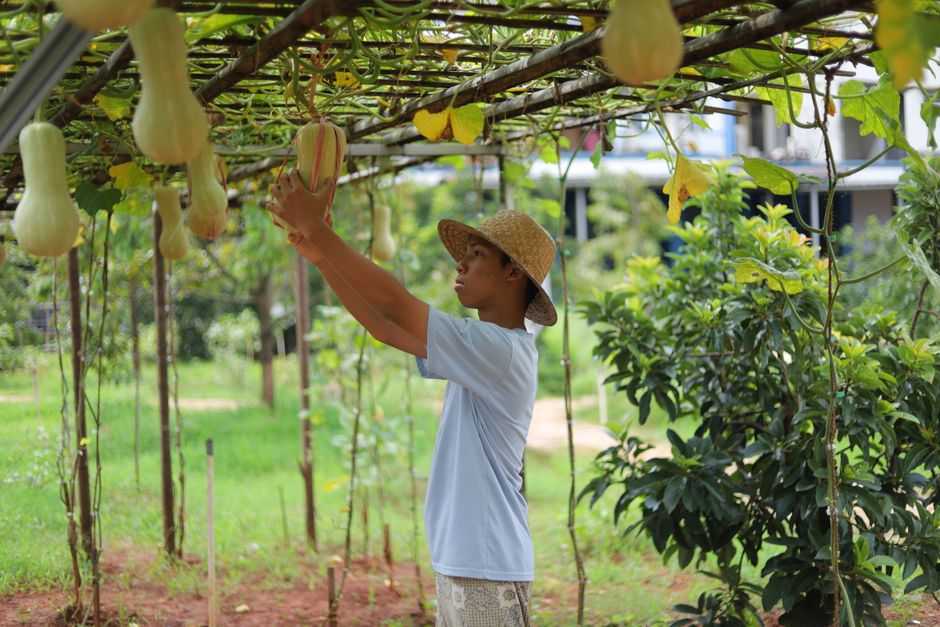
Using trellises, A-frames, or even simple strings attached to a wall can transform your garden.
- Climbing Beans: Pole beans produce more food over a longer period than bush beans and take up almost no ground space.
- Malabar Spinach: This is a heat-loving vine that tastes like spinach and looks beautiful climbing a trellis.
- Cucumbers: Growing cucumbers vertically keeps the fruit off the ground, preventing rot and making them easier to harvest.
For those with the smallest of spaces, maximizing garden space in tiny balconies often involves using wall shelves or hanging baskets for strawberries and herbs.
Watering and Fertilizing Your Compact Vegetable Garden
Container gardens dry out much faster than the ground. In the heat of summer, a small pot might need water twice a day. We recommend watering at the “root zone” rather than over the leaves to prevent disease.
Because containers have limited soil, the plants will quickly eat up all the available nutrients.
- Slow-release nutrients: Mix these into your potting soil at the start of the season.
- Liquid feeding: Every two weeks, give your plants a “snack” of organic liquid fertilizer or compost tea.
- Worm Castings: These are “black gold” for a compact vegetable garden. Adding a handful of worm castings to your pots provides a gentle, long-term nutrient boost.
If you are focusing on salads, check out our tips on balcony-friendly lettuce varieties to see how specific watering needs vary for tender greens.
Frequently Asked Questions about Compact Gardening
How much food can I realistically grow in a small space?
You would be surprised! A well-managed 5×5-foot bed can produce a minimum of 200 pounds of vegetables in a single season. If you are using containers on a balcony, the results are just as impressive. Mark Ridsdill Smith logged 180 pounds of produce from his balcony, proving that urban spaces can be incredibly productive. The key is choosing high-yield crops like tomatoes, greens, and beans.
What are the most common beginner mistakes in small gardens?
- Overcrowding: It’s tempting to squeeze in “just one more” tomato, but poor airflow leads to pests and disease. Follow the spacing guides!
- Using Garden Soil: As mentioned, backyard dirt will suffocate container roots.
- Inconsistent Watering: Letting a pot dry out until the plant wilts and then flooding it stresses the plant, often leading to “blossom end rot” in tomatoes.
- Light Deficiency: Trying to grow sun-loving peppers in a shady corner will result in lots of leaves but zero fruit.
How do I start a compact garden on a tight budget?
You don’t need fancy ceramic pots to grow food. We love upcycling!
- Food-grade buckets: Ask local bakeries or restaurants for their empty 5-gallon pails. Just wash them and drill drainage holes.
- DIY Soil: You can save money by making your own potting mix using bulk compost and coconut coir.
- Seed Saving: Choose “heirloom” or “open-pollinated” varieties. This allows you to save seeds from your best plants to use again next year for free.
- Homemade Compost: Even a small apartment can host a “wormery” (vermicomposting) to turn kitchen scraps into high-end fertilizer.
Conclusion: Small Space, Big Impact
Starting a compact vegetable garden is about more than just the food. It’s a step toward sustainability, a boost for your mental health, and a way to build community. There is something profoundly satisfying about eating a salad you grew three feet from your kitchen table.
Whether you start with a single pot of basil on a windowsill or a 4×4 raised bed in your backyard, the important thing is to just start. You will learn more in one season of “doing” than in years of reading.
Ready to dig in? Start your journey with our container gardening guide and discover how Finance Growth X can help you grow more with less. Happy gardening!
