
You Don’t Need a Backyard to Grow Your Own Food
Starting an easy apartment vegetable garden is simpler than most people think. Here’s what you need to get going:
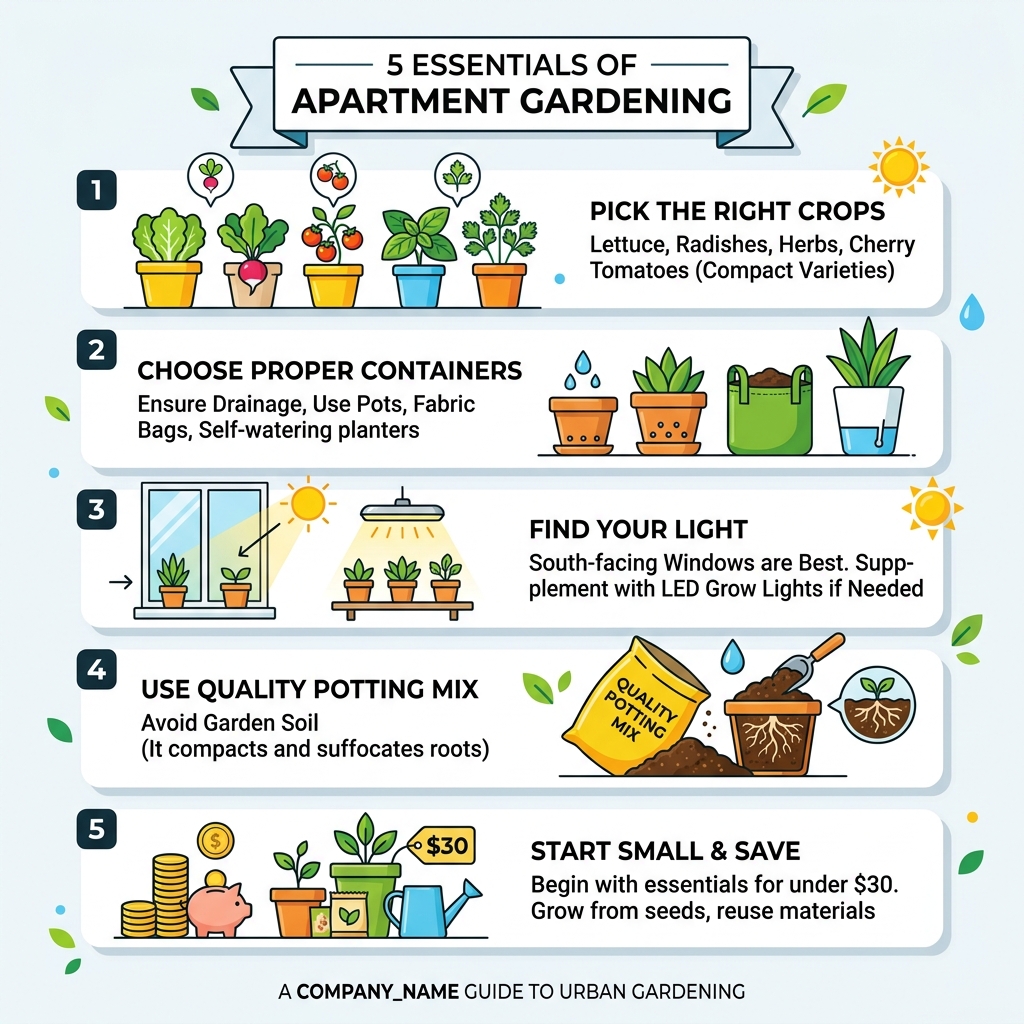
The 5 quickest ways to start:
- Pick the right crops – Lettuce, radishes, herbs, and cherry tomatoes all thrive in small containers
- Choose proper containers – Use pots with drainage holes, fabric grow bags, or self-watering planters
- Find your light – South-facing windows are best; add an LED grow light if needed
- Use quality potting mix – Never use garden soil in containers; it compacts and suffocates roots
- Start small – You can get going for under $30 with just a few pots and some seeds
Millions of people are moving into apartments, and that number keeps growing. Yet most renters assume gardening is off the table without a yard.
It’s not.
Fresh herbs on your windowsill. Cherry tomatoes ripening on your balcony. Lettuce ready to harvest in three weeks. All of this is possible in a small urban space, even if you’ve never grown anything before.
Beyond the food itself, there’s a real mental health benefit too. Research into horticultural therapy shows that tending to indoor plants can reduce stress and improve your mood – something any city dweller can appreciate.
Whether you have a sun-drenched balcony, a single south-facing window, or just a kitchen counter with a grow light, this guide will show you exactly how to build a productive and beautiful apartment garden from scratch.
Choosing the Best Crops for an Easy Apartment Vegetable Garden
When we first start an easy apartment vegetable garden, the temptation is to try and grow everything we see in the grocery store. However, success in small spaces comes down to choosing “compact” or “dwarf” varieties. These are plants specifically bred to stay small while still producing a high yield.
In the United States, demand for apartments is at an all-time high, with 4.6 million new units needed by 2030. As more of us move into these spaces, learning which easy vegetables for small urban spaces work best is a vital skill.
For beginners, we recommend starting with crops that offer “instant gratification.” Radishes, for instance, can be ready to harvest in as little as 25 days! Lettuce is another winner, often ready in just 3 to 4 weeks. If you are looking for something more substantial, growing cherry tomatoes in limited space is incredibly rewarding, as one plant can produce hundreds of fruits over a season.
| Vegetable | Days to Harvest | Container Size (Min) | Light Needed |
|---|---|---|---|
| Radishes | 25-30 days | 6 inches deep | 6+ hours |
| Lettuce | 30-45 days | 6 inches deep | 4-6 hours |
| Spinach | 40-50 days | 6 inches deep | 4-6 hours |
| Cherry Tomatoes | 60-80 days | 5 gallons | 8+ hours |
| Green Onions | 20-30 days | 6 inches deep | 6+ hours |
Top Herbs and Leafy Greens for Your Easy Apartment Vegetable Garden
Herbs and leafy greens are the “bread and butter” of apartment gardening. They don’t require deep soil, and many can tolerate slightly less light than fruiting vegetables.
- Basil: This is a must-have. It loves warmth and light. To keep it bushy, we recommend pinching off the top leaves regularly. This prevents it from flowering and encourages more leaf growth.
- Mint: Mint is so vigorous it can actually be invasive in a traditional garden, but in a container, it’s perfect. Just give it its own pot so it doesn’t crowd out other plants.
- Lettuce: There are many balcony-friendly lettuce varieties like ‘Salad Bowl’ or ‘Oakleaf’. We love the “cut and come again” method—simply snip the outer leaves for your salad and let the center keep growing.
- Kale: If you want a resilient plant, urban balcony gardening for kale is the way to go. It handles temperature swings well and provides a steady harvest of nutrient-dense greens.
- Spinach: Similar to lettuce, spinach thrives in cooler spots and shallower pots. Keep the soil consistently moist for the best flavor.
- Microgreens: These are essentially “teeny” versions of vegetables harvested just days after sprouting. They are incredibly easy to grow on a kitchen counter and are packed with nutrients.
High-Yield Compact Vegetables for Your Easy Apartment Vegetable Garden
If you have a bit more sun (6-8 hours), you can move into root vegetables and fruiting plants. The key here is depth and support.
- Carrots: You don’t need a deep field for carrots. By growing dwarf carrots in containers, you can harvest sweet, crunchy roots in pots as shallow as 8 inches. Look for varieties like ‘Paris Market’ or ‘Little Finger’.
- Zucchini: While standard zucchini plants are huge, there are compact zucchini varieties for apartments like ‘Patio Star’ that stay small but still produce full-sized squash.
- Peppers: Both bell and chili peppers are great for pots. We suggest urban gardening tips for peppers like using 2-3 gallon containers and ensuring they stay in your sunniest spot.
- Radishes: As mentioned, these are the speed-demons of the garden. They are perfect for kids or impatient adults because they grow so fast.
- Strawberries: A window box of strawberries is both beautiful and delicious. We recommend balcony-friendly strawberries for urban gardeners like Alpine varieties, which are compact and produce fruit all summer.
Essential Supplies: Setting Up Your Garden on a Budget
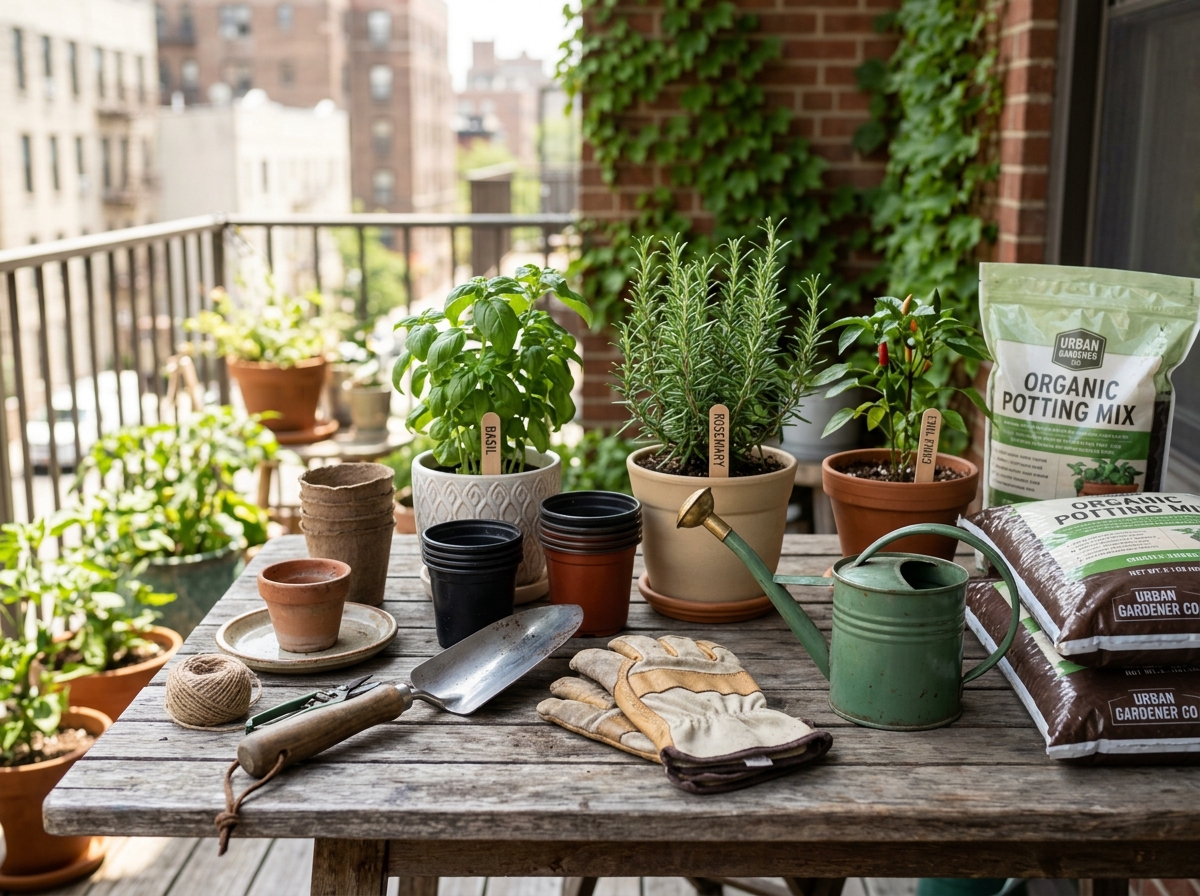
One of the biggest myths about gardening is that it’s expensive. In reality, a budget under $30 can get you started with lettuce and spinach for fresh salads.
The $30 Starter Kit
If you are a total newbie, here is your shopping list:
- Two or three 6-inch pots (or repurposed plastic containers with holes drilled in the bottom).
- A small bag of high-quality potting mix.
- Packets of lettuce and radish seeds.
- A simple watering can (or a recycled milk jug).
Potting Mix vs. Garden Soil
This is the most common mistake beginners make. Never use soil from the ground in an apartment garden. Garden soil is too heavy; it will compact in a pot, suffocating the roots and preventing water from draining. It also often contains pests and weed seeds.
Instead, use a “potting mix.” These are soil-less blends made of peat moss, coconut coir, perlite, and vermiculite. They are lightweight, sterile, and designed to hold just the right amount of moisture. For upper-floor apartments, lightweight mixes are also easier to carry and put less stress on balcony weight limits.
Choosing the Right Containers
Your container choice depends on your space and the plant’s root system.
- Drainage: This is non-negotiable. Every pot must have holes in the bottom. Without them, water sits at the bottom, causing root rot—the #1 killer of indoor plants.
- Fabric Grow Bags: These are fantastic for balconies. They are lightweight, affordable, and they “air-prune” roots, which prevents the plant from becoming root-bound.
- Railing Planters: If you are short on floor space, balcony railing planters for vegetables are a great way to use the perimeter of your balcony.
- Self-Watering Pots: These have a reservoir at the bottom. They are perfect if you tend to forget to water or if you live in a hot climate where pots dry out quickly.
Lighting Requirements for an Easy Apartment Vegetable Garden
Light is the “fuel” for your plants. Most vegetables need at least 6 to 8 hours of direct sunlight daily to produce fruit.
- Natural Light Assessment: Spend a day observing where the sun hits your apartment. South-facing windows provide the strongest, most consistent light. North-facing windows are usually too dim for most vegetables.
- The 1.5x Rule: Indoor plants generally need about 1.5 times the amount of light that an outdoor plant needs because glass filters out some of the sun’s intensity.
- LED Grow Lights: If your apartment is dim, don’t worry! Modern LED grow lights are energy-efficient and can mimic the sun. For fruiting plants like tomatoes, we recommend 12-15 hours of light per day on an automatic timer.
- Winter Adjustments: In the winter, days are shorter and the sun is lower. You may need to increase your grow light time to 14-18 hours to prevent your plants from becoming “leggy” (tall, thin, and weak).
Maximizing Space: Vertical Gardening and Hydroponics
In an apartment, your “real estate” is limited. We have to think vertically. By designing a compact vegetable garden, you can turn a tiny 4×6 foot balcony into a massive producer.
Vertical Solutions
- Tiered Shelving: A simple wire rack or a wooden plant stand allows you to stack pots. Put the sun-loving tomatoes on top and the shade-tolerant lettuce on the bottom.
- Trellises: Climbing plants like peas, beans, and cucumbers can grow up a wall rather than across the floor. This saves valuable square footage.
- Hanging Planters: These are perfect for trailing plants like strawberries or cherry tomatoes (look for the ‘Tumbler’ variety).
Hydroponics and Smart Gardens
If you don’t want to deal with soil at all, hydroponic kits like Aerogardens are a game-changer. These systems grow plants in water enriched with nutrients.
- Pros: Plants often grow 30-50% faster than in soil, there’s no mess, and the lights are built-in.
- Cons: Higher initial cost and they require electricity. For many urban dwellers, a countertop hydroponic herb garden is the easiest way to ensure year-round fresh flavors without ever getting their hands dirty.
Maintenance and Troubleshooting: Keeping Your Plants Alive
Once your garden is set up, the real work begins. But don’t let that scare you—maintenance in an apartment garden is usually just a few minutes a day.
Watering Techniques
Overwatering is the most common way beginners kill their plants. We recommend the “Finger Test.” Stick your finger about an inch or two into the soil. If it feels dry, water it. If it feels damp, wait a day.
- Drainage: Always water until you see it coming out of the bottom of the pot. This ensures the entire root ball gets hydrated.
- Frequency: In the heat of summer, a small pot on a balcony might need water twice a day. Indoors, it might only need water once a week.
Fertilizing
Because pots have a limited amount of soil, the nutrients get washed out every time you water. To keep your best balcony vegetables for summer happy, you’ll need to feed them.
- Liquid Fertilizer: A water-soluble fertilizer applied every two weeks is usually enough.
- Organic Options: Compost tea or fish emulsion are great organic choices, though they can be a bit smelly for indoor use!
Air Circulation and Humidity
Indoor air can be very dry, especially in winter. Most plants prefer about 50% humidity. You can use a small humidifier or place your pots on a tray filled with pebbles and water. Also, don’t forget a small fan! Air circulation mimics the wind, which strengthens the stems of your plants and prevents diseases like powdery mildew.
Pest Control
Even on the 10th floor, pests can find your garden.
- Inspection: Check your plants every time you water. Look under the leaves for tiny bugs.
- Ladybugs: These are nature’s pest control. If you have an aphid problem on your balcony, a few ladybugs will clear it up in no time.
- Neem Oil: For indoor pests, a spray made of neem oil is a safe, organic way to handle most issues.
Frequently Asked Questions about Apartment Gardening
How much weight can my balcony handle?
This is a serious question for any apartment gardener. Most modern balconies are rated for 40-60 lbs per square foot. A 10-gallon pot filled with wet soil can weigh up to 50 lbs. If you have 10 of these in a small area, you could be pushing the limits.
- Pro Tip: Distribute weight along the edges of the balcony or near the load-bearing walls. Use lightweight pots (like plastic or fabric) and lightweight potting mix to keep the total weight down.
Can I grow vegetables in an apartment during winter?
Yes! You can achieve easy vegetables for year-round growing by moving your garden indoors.
- Microgreens and Sprouts: These don’t need much light and can be grown on a kitchen counter all winter.
- Grow Lights: With a good LED setup, you can grow lettuce, kale, and herbs inside even when there’s snow on the ground.
- Temperature: Keep your plants away from drafty windows or heating vents, which can dry them out or freeze them.
How do I prevent pests in an indoor garden?
The best defense is a good offense.
- Sterile Soil: Always use a fresh, high-quality potting mix to avoid bringing “hitchhikers” from the outside.
- Yellow Sticky Traps: These are great for catching fungus gnats and whiteflies.
- Quarantine: If you buy a new plant from a nursery, keep it away from your other plants for a week to make sure it doesn’t have any hidden pests.
Conclusion
At Finance Growth X, we believe that gardening is one of the most rewarding hobbies you can take up. It’s not just about the food—though a sun-warmed cherry tomato is a treat you can’t buy in a store. It’s about the mental wellness, the connection to nature, and the satisfaction of being a little more self-sufficient.
You don’t need a farm to be a farmer. You just need a pot, some dirt, and a little bit of sunshine. Whether you start with a single pot of basil or a full-scale balcony farm, the most important step is just to begin.
Ready to get your hands dirty? Start your container garden today and see how much your life can bloom in just a few square feet. Happy harvesting!
