
Why Every Apartment Renter Needs a Balcony Screen Cover
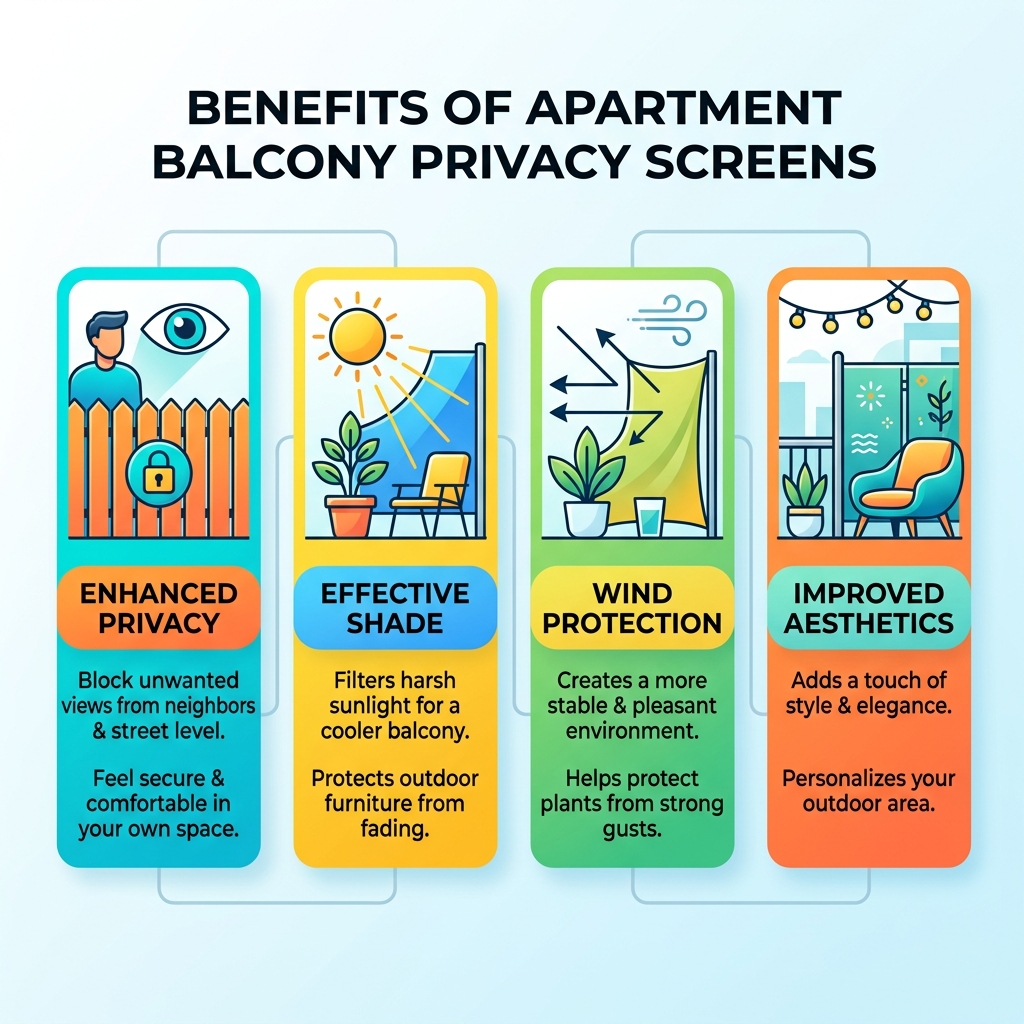
A balcony screen cover for apartment living is one of the easiest upgrades you can make to your outdoor space. It blocks nosy neighbors, cuts harsh sunlight, and turns an exposed ledge into a place you actually want to spend time.
The most popular balcony screen cover options for apartments are:
- HDPE mesh screens – affordable, UV-resistant, attaches with zip ties
- Artificial ivy panels – decorative and private, no tools needed
- Fabric screens (polyester/canvas) – soft look, good sun and wind blocking
- Reed or bamboo fencing – natural aesthetic, easy to roll out
- Retractable awnings – adjustable coverage, premium price point
- Wooden or metal decorative panels – stylish, more permanent feel
Most options cost between $15 and $135 and require zero drilling — ideal for renters.
The difference between a balcony you ignore and one you love is often just a single screen. Whether your goal is privacy from neighbors, shade on a hot afternoon, or a greener-looking backdrop for your plants, there is a screen type that fits your space, your budget, and your lease agreement.
This guide walks you through every option — from cheap mesh rolls to premium retractable setups — so you can pick the right one with confidence.
Popular Types of Privacy Screens
When we look for the perfect balcony screen cover for apartment use, the sheer variety can be overwhelming. Major retailers like Wayfair list over 12,000 items, while Walmart offers hundreds of specialized covers. To help you narrow it down, we’ve categorized the most effective styles based on material and function.

HDPE Mesh Screens
High-Density Polyethylene (HDPE) is the gold standard for durability. These screens are essentially heavy-duty “shade cloths.” They are incredibly popular because they are breathable, meaning they won’t act like a sail during a windstorm. Brands like LOVE STORY and iCover dominate this space, often boasting ratings of 4.5 stars or higher across thousands of reviews.
Artificial Ivy and Greenery
If you want a “secret garden” vibe without the maintenance of real plants, artificial ivy is your best friend. These panels usually consist of plastic leaves woven into a plastic or willow grid. They provide excellent 90-95% opacity and instantly soften the industrial look of metal railings.
Wooden and Natural Reed Panels
For a more organic aesthetic, many apartment dwellers opt for bamboo or reed fencing. These come in rolls that you simply unfurl against your railing. If you prefer something more substantial, 100% FSC-certified cedar wood slat screens are available. These are “no-dig” solutions that can hide eyesores like AC units while providing a high-end look.
Retractable Awnings and Side Screens
For those who want privacy on demand, retractable options are a premium choice. A side awning can be pulled out when you’re enjoying a coffee and tucked away when you want an unobstructed view. Some models even feature 360-degree rotation and infinite tilt, such as the “Active” series, which won design awards for its versatility.
Metal and Decorative Panels
Laser-cut metal panels (often powder-coated aluminum) offer a modern, artistic touch. These are usually freestanding or can be zip-tied to railings. They are the most durable option, resisting warping, rotting, and splitting over many years.
Choosing the Best Materials for Your Balcony Screen Cover for Apartment
Selecting the right material isn’t just about looks; it’s about how the screen handles the sun, rain, and wind. We recommend looking closely at the “GSM” (grams per square meter), which indicates the density and quality of the fabric.
| Feature | HDPE Mesh | Polyester Fabric | Cedar Wood | Metal (Aluminum) |
|---|---|---|---|---|
| Durability | High | Medium | High (if stained) | Very High |
| Breathability | Excellent | Low | Medium | High (if slatted) |
| UV Resistance | 90-95% | 95% | Natural | Total |
| Maintenance | Low (Hose off) | Medium (Washable) | High (Restain) | Very Low |
| Opacity | 85-90% | 95-100% | 80-90% | 70-100% |
Key Material Insights
- 185 GSM vs. 270 GSM: A standard screen like the Junkogo uses 185 GSM HDPE, which is great for general use. However, “Economy” mesh screens can go up to 270 GSM, offering a much thicker feel and higher wind resistance.
- UV Resistance: Look for screens that offer at least 90% UV blockage. This doesn’t just protect you; it prevents the screen itself from becoming brittle and cracking in the sun.
- Fire Safety: If you live in a high-rise or a region with strict fire codes, look for B1 Certification. This European standard indicates the material is flame retardant, which is a significant safety plus for apartment complexes.
- Weatherproofing: Polyester (often Oxford fabric) is frequently coated to be water-repellent, making it great for blocking rain. HDPE, conversely, is permeable, letting water pass through so it doesn’t “puddle” or put too much weight on your railing.
Renter-Friendly Installation and Measurement
The biggest fear for any renter is losing their security deposit. Fortunately, almost every balcony screen cover for apartment use is designed for “no-drill” installation.
Measuring for Your Balcony Screen Cover for Apartment
Before you click “buy,” you need precise numbers. Most standard screens come in sizes like 3′ x 10′ or 3.5′ x 16.5′.
- Railing Height: Measure from the top rail to the bottom. We suggest buying a screen that is 1-2 inches shorter than the railing to prevent the bottom from dragging and collecting dirt.
- Total Length: Run your tape measure along the entire perimeter. If you have corners, add an extra 2-3 inches to allow the material to wrap comfortably around the posts.
- Gap Clearance: Check the distance between your vertical slats. This helps you determine where the grommets (the metal reinforced holes) will line up.
Installing a Balcony Screen Cover for Apartment Railing
The most common tool-free method involves heavy-duty cable ties (zip ties) and ropes.
- The Zip Tie Method: Most products, like the 3′ x 15′ Cubilan screen, include a pack of 50-100 zip ties. Pass the tie through the brass grommet and around the railing. Pro Tip: Don’t pull them 100% tight until all ties are in place. This allows you to center the screen perfectly.
- Rope Attachment: If you prefer a softer look, many screens include a long nylon rope. You can “sew” the screen onto the railing by looping the rope through the grommets and over the top rail.
- Stability Checks: Once installed, give the screen a firm tug. It should be taut but have a tiny bit of “give” to handle wind gusts.
For those looking to combine privacy with a bit of nature, check out our guide on balcony privacy screens for gardening to see how screens can support climbing plants.
Maintenance and Legal Considerations
Even the best balcony screen cover for apartment life needs a little TLC to last more than one season.
Maintenance Tips
- Cleaning: Most HDPE and polyester screens can be cleaned with a simple mix of mild detergent and water. Use a soft sponge or a low-pressure garden hose. Avoid aggressive chemicals that can strip the UV coating.
- Longevity: If you live in an area with heavy snow or hurricanes, we recommend taking the screen down during the off-season. This prevents the fabric from stretching or the grommets from tearing under extreme weight.
- Wood Care: If you choose cedar panels, apply a fresh coat of stain every 6 months to prevent graying and cracking.
Legal and HOA Rules
Before you install, check your lease. Some Homeowners Associations (HOAs) or building managements have “Uniformity Rules.” This means they might require all balcony covers to be a specific color (usually black, grey, or beige) to maintain the building’s curb appeal.
- Wind Load: In high-rise apartments, wind is a major safety factor. Ensure your screen is “breathable” (mesh) so it doesn’t blow off and become a hazard to people below.
- Permanent Fixtures: Always stick to zip ties or ropes. Screwing anything into the building’s exterior or the railing is usually a violation of rental agreements.
Frequently Asked Questions
Can balcony screens withstand high winds?
Yes, if you choose the right type. Mesh screens (HDPE) are designed with small holes that allow wind to pass through, significantly reducing the pressure on your railing. Solid fabric screens act more like sails and should be monitored or removed during high-wind warnings.
Are balcony privacy screens legal for all apartments?
Not necessarily. While most are renter-friendly because they aren’t permanent, some buildings prohibit anything that changes the exterior appearance. Always check your “Rules and Regulations” document or ask your property manager first.
How do I clean my balcony screen?
For most mesh and fabric screens, a bucket of soapy water and a hose-down is sufficient. If you have artificial ivy, you can use a feather duster or a damp cloth to remove city dust and pollen.
Conclusion
At Finance Growth X, we believe your apartment should be your sanctuary. Adding a balcony screen cover for apartment living is a low-cost, high-impact way to reclaim your privacy and enhance your outdoor comfort. Whether you choose the rugged durability of an HDPE mesh, the lush look of artificial ivy, or the versatility of a retractable awning, the right screen turns a public-facing ledge into a private retreat.
Remember to measure twice, check your building’s rules, and prioritize UV-resistant materials for the best results. For more tips on transforming your small outdoor space, don’t miss our deep dive into balcony privacy screens for gardening. Happy decorating!
