
Why Growing Herbs on a Balcony Is Easier Than You Think
Growing herbs on a balcony is one of the simplest ways to add fresh flavor to your cooking — even with just a few square feet of outdoor space.
Here are the hardiest herbs to start with, ranked for beginners:
| Herb | Sunlight Needed | Difficulty | Notes |
|---|---|---|---|
| Chives | Partial shade OK | Very easy | Perennial, very forgiving |
| Mint | Partial shade OK | Very easy | Keep in its own pot |
| Thyme | 6+ hours | Easy | Drought-tolerant |
| Rosemary | 6+ hours | Easy | Woody, long-lived |
| Basil | 6+ hours | Easy-moderate | Warm temps required |
| Parsley | 3-4 hours OK | Easy | Moist soil preferred |
| Oregano | 6+ hours | Easy | Keep in its own pot |
The key rule: match your herb to your balcony’s actual sun hours before buying anything.
Most people kill their first herb plants not from neglect — but from buying the wrong plant for the wrong spot. A south-facing balcony can support almost any herb. A north-facing one? Stick to mint, chives, and parsley.
The good news: you don’t need much to get started. Two or three pots, the right potting mix, and a herb that suits your light conditions is genuinely all it takes.
Choosing the Best Herbs for Growing Herbs on Balcony
When we think about growing herbs on balcony spaces, we first need to understand the two main “families” of herbs. Not all plants want the same treatment. Some thrive on neglect and hot sun, while others will wilt if they miss a single afternoon drink.
To help you decide what to plant, we’ve broken down the most common choices into two categories:
| Feature | Mediterranean Herbs | Soft-Stemmed Herbs |
|---|---|---|
| Examples | Rosemary, Thyme, Sage, Oregano | Basil, Cilantro, Parsley, Chives |
| Water Needs | Low (let soil dry out) | Moderate (keep soil moist) |
| Soil Preference | Gritty, well-draining | Rich, moisture-retaining |
| Sunlight | 6-8+ hours (Full Sun) | 4-6 hours (Partial Sun OK) |
If you are looking for specific recommendations, check out our guide on the best herbs to grow on a balcony to see which varieties fit your culinary style.
Mediterranean Perennials
These are the “tough guys” of the herb world. If your balcony feels like a sun-baked oven in the summer, these are the plants for you.
- Rosemary: A woody perennial that can live for years. It loves intense light and doesn’t mind a bit of wind.
- Thyme: Extremely drought-tolerant. In fact, overwatering is the quickest way to kill it.
- Sage: Known for its beautiful silvery-green foliage, it prefers arid soil and can even survive light frosts.
- Lavender: While technically a shrub, it’s a balcony favorite for its scent. It requires excellent drainage—think “sandy” rather than “mucky.”
Soft-Stemmed Annuals and Perennials
These herbs are often the workhorses of the kitchen. They grow fast, but they are a bit more “dramatic” about their watering schedule.
- Chives: Perhaps the most indestructible herb. We recommend learning how to grow chives in small pots because they handle partial shade and return year after year.
- Basil: The king of summer. It loves heat but hates cold. If you want a lush supply for pesto, see our tips on how to grow basil in small pots.
- Cilantro (Coriander): A bit finicky because it “bolts” (goes to seed) in high heat. Learn how to grow cilantro in pots by keeping it in a slightly cooler, shadier spot on your balcony.
- Mint: The ultimate invasive spreader. Never plant mint in a shared container with other herbs. It will colonize the soil with the determination of a landlord collecting rent! Always give mint its own dedicated pot.
Essential Setup: Sunlight, Containers, and Soil
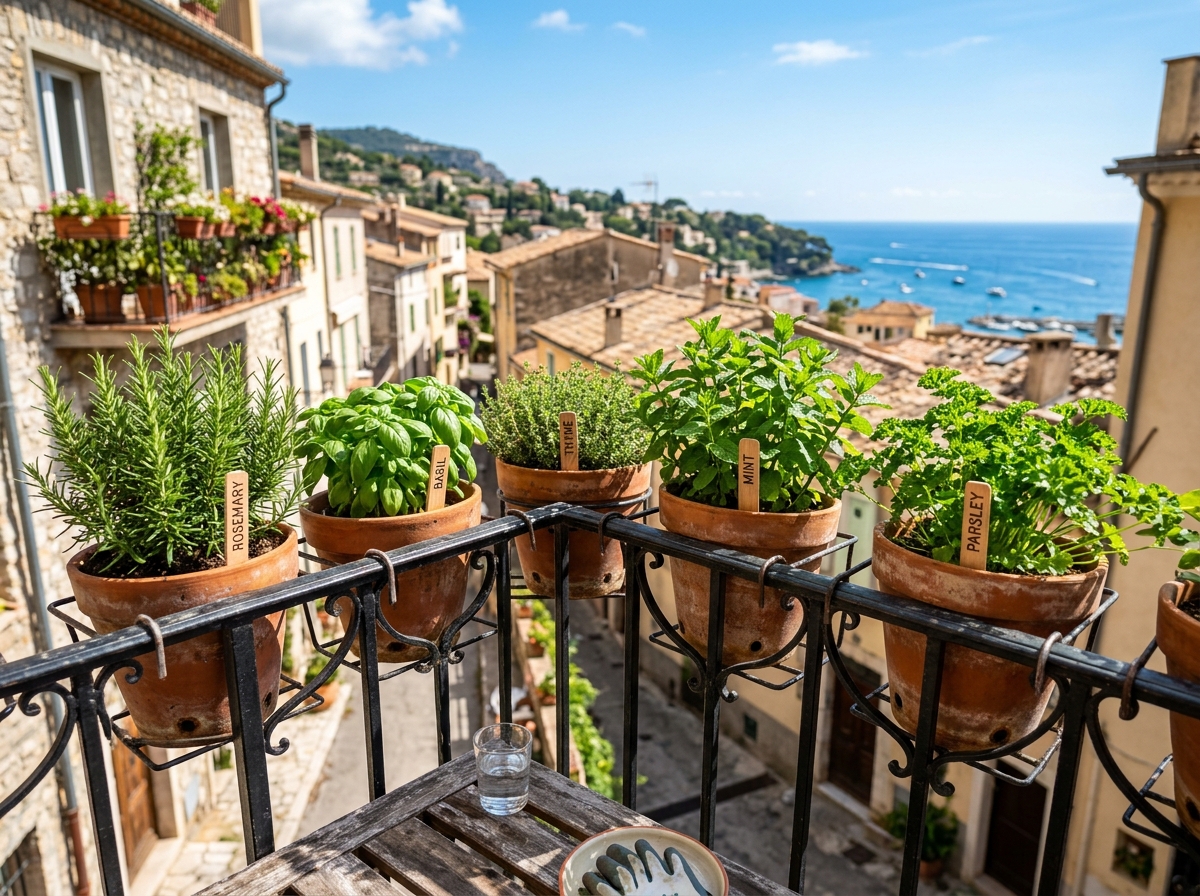
Success in growing herbs on balcony settings starts with the foundation. Unlike plants in the ground, container herbs are entirely dependent on you for their environment.
Maximizing Sunlight for Growing Herbs on Balcony
Sunlight is the “fuel” for your herbs’ essential oils—the stuff that makes them smell and taste great.
- The 6-Hour Rule: Most culinary herbs need at least 6 hours of direct sunlight. South-facing balconies are the “gold standard” for this.
- East vs. West: East-facing balconies get gentle morning sun (great for parsley and chives), while west-facing balconies get intense afternoon heat (perfect for rosemary and oregano).
- Shady Solutions: If your balcony is north-facing or blocked by buildings, don’t despair. You can still grow mint, wild garlic, and lemon balm. For more ideas, visit our list of the best herbs for indoor balcony gardens.
Ideal Containers for Growing Herbs on Balcony
The material of your pot matters more than you might think.
- Terracotta: These are porous and “breathe,” which prevents root rot. They are perfect for Mediterranean herbs that like to dry out.
- Self-Watering Containers: If you travel often or tend to forget your plants, you should thrive with thyme self-watering containers for herbs. These have a reservoir at the bottom that keeps soil moisture consistent.
- Railing Planters: These are excellent space-savers. They clip directly onto your balcony rail, putting your herbs at waist height for easy harvesting.
- Grow Bags: Made of fabric, these are lightweight and provide excellent aeration for roots, though they do dry out faster than plastic or ceramic.
Vertical and Small-Space Layouts
If your balcony is tiny, think vertically! You can create your own vertical herb garden on your balcony using tiered shelving or wall-mounted pockets.
A few balcony herb garden layout tips include placing your “sun-hungry” plants like basil on the top shelves and “shade-tolerant” plants like mint on the bottom where they might be slightly sheltered.
Maintenance, Pruning, and Winter Protection
Once your garden is set up, a weekly ten-minute maintenance routine will keep it thriving.
Harvesting and Pruning Techniques
The biggest mistake beginners make is being “too nice” to their plants. Most herbs actually want to be cut.
- The 1/3 Rule: Never harvest more than one-third of the plant at a time. This ensures the herb has enough foliage left to photosynthesize and regrow.
- Node Snipping: Always cut just above a “node” (where new leaves are sprouting). This encourages the plant to branch out, leading to bushier growth rather than a single tall, “leggy” stem.
- Flower Pinching: If you see your basil or cilantro starting to flower, pinch those buds off immediately! Once a herb flowers, the leaves often become bitter as the plant puts all its energy into making seeds.
- Yield Maximization: Regular pruning herbs for increased yield in balcony gardens is the secret to a never-ending supply.
Troubleshooting Pests and Wind
Balconies present unique challenges, specifically wind. High-rise balconies can act like wind tunnels, drying out soil in hours and physically damaging tender leaves.
- Wind Buffers: Use sturdy, heavy planters (like ceramic or stone) that won’t blow over. If it’s very windy, place your most fragile plants (like basil) against the wall or behind a larger, sturdier plant like a rosemary bush.
- Aphid Control: If you see tiny green bugs on your stems, don’t panic. You can often blast them off with a strong stream of water or use a diluted insecticidal soap or neem oil spray.
Overwintering Hardy Herbs
In cold climates, your balcony herbs need a winter plan.
- Hardiness Zones: Understanding your local hardiness zone is essential for knowing which plants can stay outside. Mint, chives, and sage are quite hardy. Rosemary and thyme can survive light freezes but may need help.
- Protection: Wrap large pots in burlap or bubble wrap to insulate the roots.
- Indoor Transition: Tender annuals like basil will die at the first frost. If you want to keep them, move them inside to a sunny windowsill before the temperature drops below 50°F (10°C).
Frequently Asked Questions about Growing Herbs on Balcony
Which herbs can be planted together?
We recommend grouping herbs by their “thirst.” Plant Mediterranean herbs (Rosemary, Thyme, Sage) together in one large trough because they all love dry, gritty soil. Plant moisture-lovers (Parsley, Chives, Basil) together in another. Always keep mint isolated in its own pot, or it will eventually kill its neighbors.
How often should I water balcony herbs?
There is no set schedule because evaporation rates change daily. Use the finger test: stick your finger an inch into the soil. If it feels dry, water it. If it’s still damp, wait. During summer heatwaves, you may need to water every single morning.
What is the easiest herb for beginners?
Chives and Mint are the undisputed champions of ease. They are incredibly forgiving of lighting mistakes and irregular watering. Another great hack is supermarket pot splitting. Those “living herbs” you buy at the grocery store are actually 10-15 tiny plants crammed into one tiny pot. If you take them home, gently tease them apart, and repot them into 3 or 4 larger containers with fresh soil, they will “bounce back” and thrive for months!
Conclusion
At Finance Growth X, we believe that sustainable urban gardening is one of the most rewarding investments you can make for your health and your kitchen. Growing herbs on balcony spaces isn’t just about the food; it’s about the daily joy of watching something grow right outside your door. Whether you start with a single pot of mint or a full vertical wall of aromatics, you are taking a step toward a more flavorful, self-sufficient lifestyle.
Ready to dig in? Start your journey with our Container Gardening Guide and transform your balcony into a thriving oasis today!
