
Why the Best Soil for Cucumbers in Pots Makes or Breaks Your Harvest
The best soil for cucumbers in pots is a lightweight, well-draining mix rich in organic matter, with a pH between 6.0 and 6.8. Here’s a quick summary before we dive in:
| What Matters | What to Use |
|---|---|
| Base mix | High-quality potting soil (never garden soil) |
| Organic matter | Compost or vermicompost (25-30% of mix) |
| Drainage | Perlite or rice hulls mixed in |
| pH range | 6.0 to 6.8 (slightly acidic) |
| Pot size | At least 5 gallons; 10+ gallons is ideal |
| Soil depth | Minimum 12 inches |
Cucumbers are heavy feeders. They’re also surprisingly fussy about their roots. Too much water sitting at the bottom and they rot. Too little organic matter and they produce bitter, stunted fruit. The wrong pH and they simply can’t absorb the nutrients you give them.
For balcony and patio gardeners, this is even more critical. You’re working with a fixed volume of soil in a container. There’s no deeper ground for roots to escape to. Every cubic inch of that mix has to do its job.
One gardener summed it up well: every time their potted cucumbers failed, it started with the soil. Not bugs. Not sun. The soil.
The good news? Getting it right isn’t complicated or expensive. It’s about balance — drainage, moisture, nutrients, and pH working together.
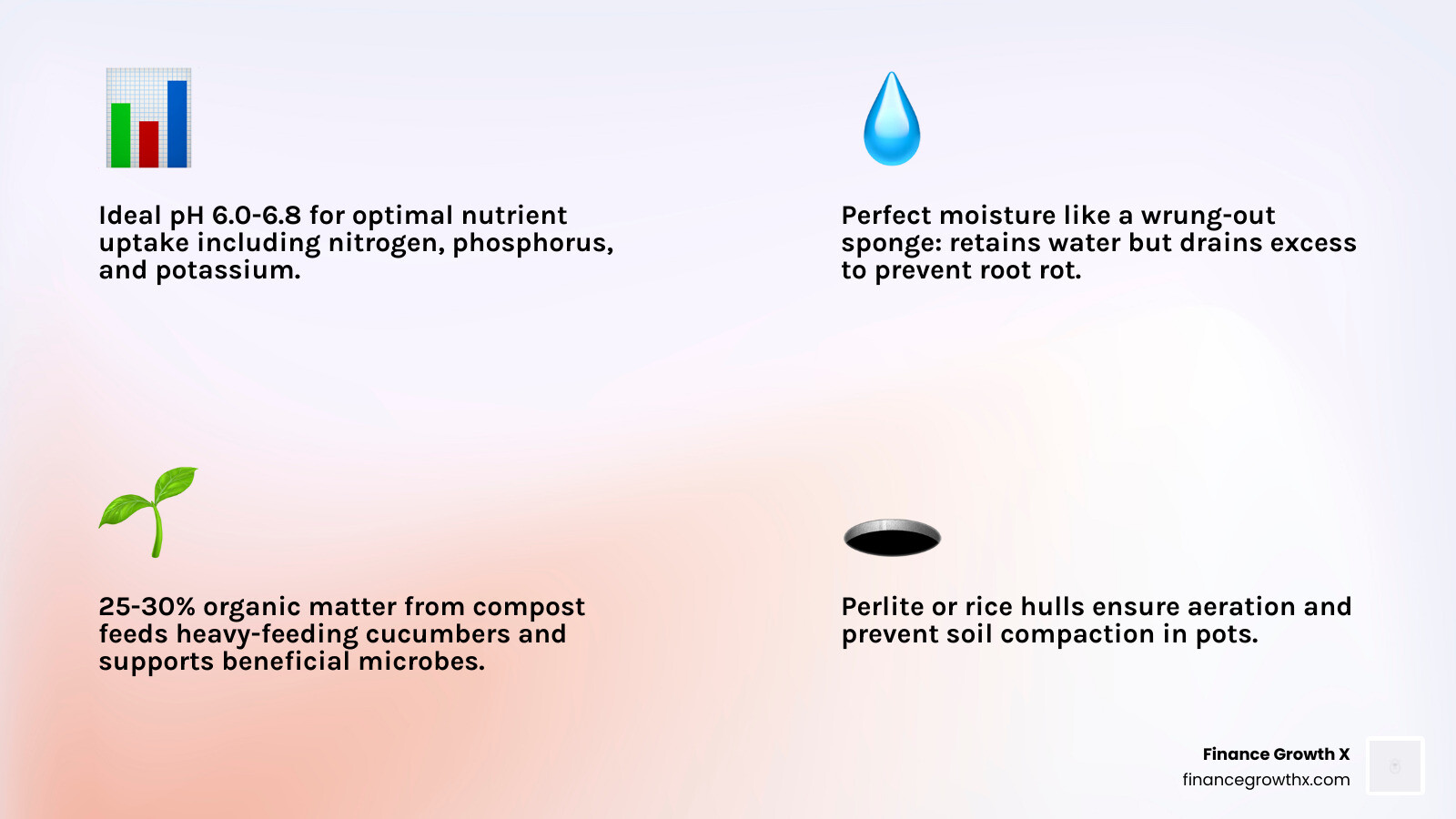
Key Characteristics of the Best Soil for Cucumbers in Pots
When we talk about the best soil for cucumbers in pots, we aren’t just talking about “dirt.” In fact, actual garden dirt is the last thing you want to put in a container. Real soil from your backyard is too heavy, contains pathogens, and compacts into a brick when watered in a pot, suffocating the roots.
Instead, we need a specialized medium that mimics the perfect loamy environment. Ideal cucumber soil should feel like a wrung-out sponge: dark, crumbly, and moist but not dripping. It needs to be “living soil,” meaning it’s packed with microorganisms that help convert organic matter into plant food.
The golden rule for cucumber success is a pH range of 6.0 to 6.8. This slightly acidic to neutral window is the “sweet spot” where nutrients become chemically available to the plant’s roots. If the pH drops too low (acidic) or climbs too high (alkaline), the plant might be sitting in a pile of fertilizer but unable to “eat” any of it. This leads to yellowing leaves and a disappointing harvest. To keep your plants healthy, it is vital to Prevent Root Rot in Pots: A How-To Guide by ensuring the texture remains airy and never waterlogged.

Understanding Soil pH and Nutrient Availability
Cucumbers are the “divas” of the vegetable world. They demand a high-performance diet to produce those crunchy fruits. Because they grow so fast—often going from seed to harvest in just 60 days—they need immediate access to several key players:
- Nitrogen (N): This is the fuel for leafy, green growth. Without it, your vines will look pale and stunted.
- Phosphorus (P): Essential for strong root systems and the production of flowers.
- Potassium (K): This is the “immune system” nutrient. It helps the plant resist disease and ensures the fruit develops a crisp texture.
- Magnesium and Manganese: These micronutrients are often overlooked but are essential for photosynthesis. A deficiency in magnesium often shows up as yellowing between the leaf veins.
In a container, these nutrients wash out every time you water. That’s why the best soil for cucumbers in pots must have a high “cation exchange capacity,” which is just a fancy way of saying the soil needs to be good at holding onto these nutrients so they don’t just disappear out the drainage holes.
The Importance of Drainage and Texture
If you’ve ever seen a cucumber plant wilt even though the soil is wet, you’ve likely witnessed root suffocation. Roots need to breathe oxygen just as much as leaves need CO2.
To achieve the perfect texture, we look for ingredients like perlite (those little white “popcorn” bits) or vermiculite. These create tiny air pockets in the mix. For those looking for sustainable alternatives, rice hulls or coco coir are fantastic for maintaining a loose structure. Good drainage ensures that water moves through the pot uniformly, moistening every root without leaving “dead zones” of stagnant water. When you are Choosing the Best Potting Mix for Your Container Garden, always prioritize aeration to prevent the dreaded root rot.
Choosing Between Commercial Mixes and DIY Recipes
Should you buy a bag at the store or channel your inner scientist and mix your own? Both have their merits. Commercial mixes are convenient and usually sterilized (meaning no weed seeds or fungus gnats), while DIY mixes allow you to control the exact nutrient density and sustainability of your ingredients.
| Feature | DIY Soil Mix | Commercial Potting Soil |
|---|---|---|
| Cost | Lower (if buying bulk ingredients) | Higher per quart |
| Control | Total control over amendments | Pre-balanced but fixed |
| Convenience | Requires mixing and storage space | Ready to use immediately |
| Sterilization | Must be done manually (solarization) | Usually pre-steamed/sterile |
| Sustainability | Can use local rice hulls/compost | Often relies on peat moss |
Many commercial mixes rely heavily on peat moss, which is excellent for moisture retention but can be quite acidic and is often harvested unsustainably. If you go the commercial route, look for mixes that incorporate coco coir or biochar for a more eco-friendly footprint. We’ve found that Choosing the Best Potting Mix for Your Container Garden 2 often comes down to how much time you have to manage supplemental feeding.
The Ultimate DIY Recipe for the Best Soil for Cucumbers in Pots
If you want the absolute highest yield—we’re talking 20+ cucumbers per plant—this “foolproof” recipe is what we recommend. It balances drainage, moisture, and “living” nutrition:
- 4 Parts High-Quality Potting Soil: This provides the basic structure.
- 2 Parts Aged Compost or Vermicompost: This is your slow-release engine. Ensure your vermicompost is at least 60 days old to avoid “burning” sensitive young roots.
- 1 Part Perlite: For maximum aeration.
- 1 Part Rice Hulls or Coco Peat: This helps with moisture retention without compaction.
- Optional Boosters: Add a handful of neem cake to deter soil-borne pests and a tablespoon of kelp meal for trace minerals.
This mix ensures that the organic matter stays around 25-30%. Going higher than that can actually cause salt buildup or drainage issues, so resist the urge to plant in 100% compost!
What to Look for in Commercial Potting Soil for Cucumbers in Pots
If you’re shopping at the garden center, don’t just grab the cheapest bag. For cucumbers, look for these specific labels:
- OMRI-Listed: This ensures the mix is certified organic and free from synthetic chemicals.
- Moisture Control: Some brands use coir-based technology to help manage the “wet-dry” cycle, which is perfect for thirsty cucumbers.
- Lightweight Medium: Pick up the bag. If it feels like a heavy bag of rocks, it’s likely too dense. It should feel light, almost like it’s filled with feathers.
- Slow-Release Fertilizer: Many premium mixes include a “starter” charge of nutrients that will feed your plants for the first 4-6 weeks.
Essential Amendments and Pot Selection for Maximum Yield
You could have the best soil for cucumbers in pots, but if the pot is too small, the plant will never reach its potential. Soil volume is directly correlated to harvest size.
For bush varieties, a 5-gallon container (about 12 inches wide) is the minimum. However, for vining varieties, we strongly suggest a 10-gallon pot or a container at least 24 inches across. Cucumbers have expansive root systems that like to spread wide and shallow. A larger volume of soil also acts as a “buffer” against temperature swings and drying out.
Ensure your pot has plenty of drainage holes. If it doesn’t, get a drill out! We also love fabric pots (grow bags). They “air-prune” the roots, preventing the plant from becoming root-bound and ensuring a much denser, healthier root system. For more on setup, check out The Ultimate Guide to Growing Cucumbers in Containers.
Improving Soil with Organic Amendments
If you are reusing soil or using a basic mix, you can “supercharge” it with these amendments:
- Worm Castings: Often called “black gold,” these add beneficial microbes and gentle nitrogen.
- Biochar: This “forever” amendment provides a permanent home for microbes and helps the soil retain nutrients for years.
- Aged Manure: Excellent for in-ground gardens, but use sparingly in pots to avoid odors and potential “hot” nutrient spikes.
- Kelp Meal: Provides over 60 trace minerals that improve the flavor and “crunch” of your cucumbers.
Supporting Vertical Growth and Trellising
The soil’s job doesn’t end at the roots—it has to anchor the plant. Vining cucumbers can reach 6 to 8 feet in length. If they grow on the ground, they are susceptible to soil-borne diseases like powdery mildew.
By using a trellis or cage, you improve airflow and keep the fruit off the soil. This leads to straighter, cleaner cucumbers and makes harvesting a breeze. When planting, install your support before you put the plant in the soil to avoid damaging the roots later. This vertical strategy is essential for maximizing yield in small spaces like balconies.
Maintaining Optimal Soil Conditions Throughout the Season
Once your cucumbers are planted in the best soil for cucumbers in pots, the work shifts to maintenance. In a container, the environment changes rapidly. A hot afternoon can raise the soil temperature to over 90°F, which stresses the roots and can lead to bitter fruit.
Watering and Fertilizing Strategies
Cucumbers are about 95% water. If the soil dries out, the plant produces a compound called cucurbitacin, which makes the fruit taste bitter.
- Watering: Check the soil daily. Stick your finger in up to the second knuckle; if it feels dry, water deeply until it runs out the bottom.
- Fertilizing: Even the best potting mix runs out of nutrients after about 6 weeks. Switch to a liquid kelp or a balanced organic liquid fertilizer every 2 weeks once the plant starts flowering. Avoid high-nitrogen fertilizers at this stage, or you’ll get a beautiful green vine with zero cucumbers!
For those with limited time, Critical Balcony Garden Soil Maintenance Techniques like self-watering reservoirs can be a lifesaver.
Preventing Heat Stress and Root Rot
In extremely hot climates (like Tucson or parts of the South), the sun can literally “cook” the roots through the walls of the pot.
- Shade the Container: Use a piece of cardboard or a larger empty pot to shade the container itself, while keeping the plant’s leaves in the sun.
- Mulching: Add a 2-inch layer of straw or shredded bark to the top of the soil. This keeps the root zone cool and prevents water evaporation.
- Morning Sun: If possible, position your pots to get 6-8 hours of morning sun and afternoon shade during the hottest months.
Frequently Asked Questions about Cucumber Soil
Can I reuse potting soil for cucumbers?
Yes, but with caution! You should never reuse soil if your previous plants had diseases like bacterial wilt or heavy pest infestations. To refresh soil, remove the top 4 inches, mix in 25% fresh compost, and add a slow-release organic fertilizer. Every 2-3 seasons, it’s best to start fresh or use the old soil for less fussy ornamental flowers.
How do I test soil drainage in my pots?
Before you plant, fill your pot with your chosen mix and pour a gallon of water over it. The water should sink in immediately and begin dripping from the drainage holes within 30-60 seconds. If the water “pools” on top for several minutes, your mix is too heavy and needs more perlite or rice hulls.
Why are my potted cucumbers turning bitter?
Bitterness is almost always caused by stress. This is usually “water stress” (letting the soil get bone-dry between waterings) or “heat stress” (soil temperatures getting too high). Consistent moisture and mulching are your best defenses against the “bitter cuke” blues.
Conclusion
At Finance Growth X, we believe that gardening should be as rewarding as it is sustainable. Finding or mixing the best soil for cucumbers in pots is the single most important investment you can make for your summer garden. By focusing on a balanced pH, excellent drainage, and rich organic matter, you’re setting the stage for a harvest that is truly “from dirt to delicious.”
Ready to expand your green thumb? Explore More container gardening tips to turn your patio into a high-yield urban farm!
