
Introduction
Designing a productive small space edible garden might seem challenging when you have limited room. But don’t let a small patio, balcony, or windowsill stop you from growing your own delicious food. Even with tiny areas, you can harvest fresh herbs, vegetables, and fruits.
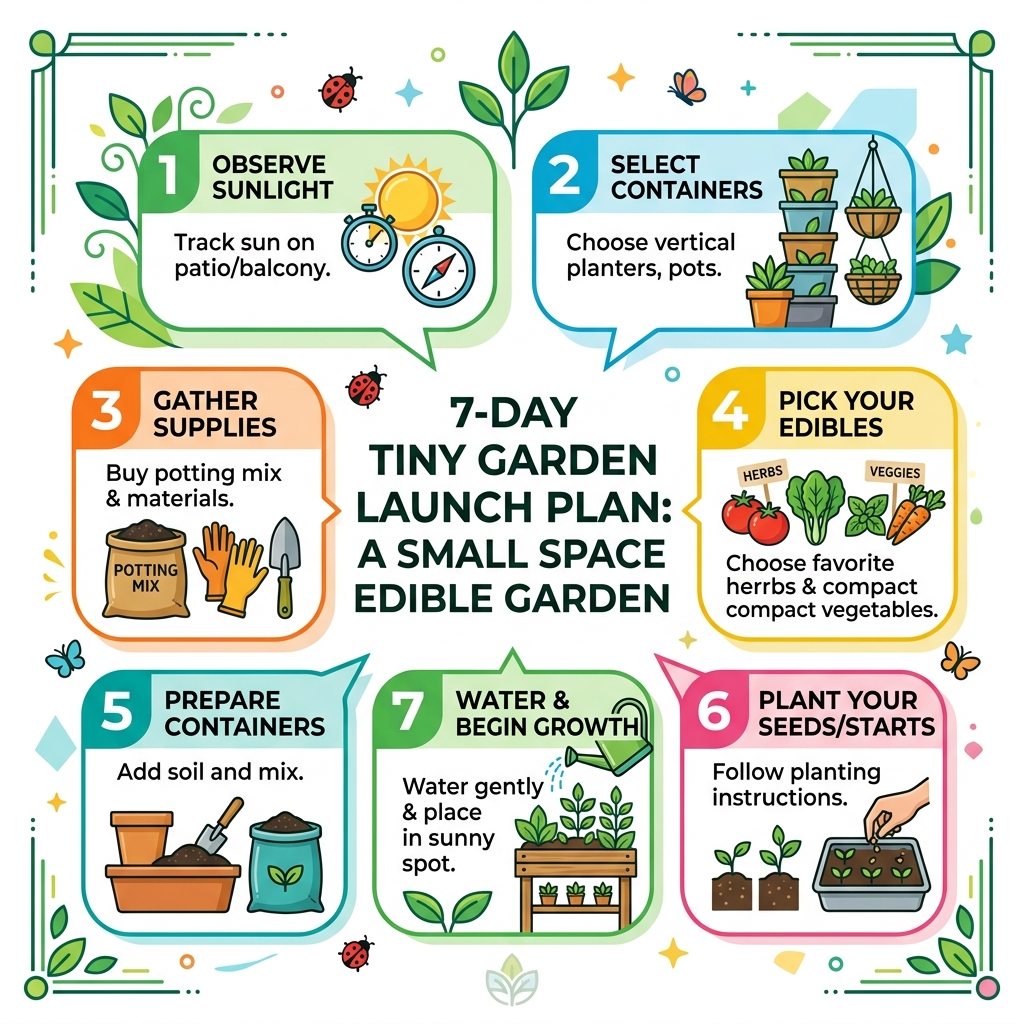
Here’s a quick guide to kickstart your small edible garden planning:
- Assess Your Space: Check how much sunlight your chosen spot gets each day.
- Choose Your Plants: Pick edibles you love to eat and that grow well in small spaces.
- Select Your Setup: Decide if you’ll use containers, vertical planters, or hanging baskets.
- Prepare Your Soil: Get good quality potting mix for healthy plant growth.
- Start Planting: Use seeds or small plant starts for your chosen edibles.
More and more people are turning to gardening, even in cities. With smaller living spaces becoming common, growing your own food offers many benefits. It’s not just a hobby anymore; it’s a smart way to get fresh, healthy produce.
Research shows that almost half of Americans are now growing some food at home. For apartment dwellers, growing just a few edible plants can lead to eating 37% more vegetables daily. It also helps reduce worries about food. Imagine biting into a tomato picked fresh from your own balcony!
Essential Requirements for a Small Space Edible Garden
Before we tuck our first seed into the soil, we need to talk about the “big three”: light, soil, and structure. In a small space edible garden, these factors are amplified because there is less room for error.
Sunlight Patterns
The most common mistake new urban gardeners make is overestimating their light. Most fruiting vegetables—like tomatoes, peppers, and cucumbers—require at least 6 to 8 hours of direct sunlight daily. If you only have 4 hours of sun, don’t despair! You can still grow leafy greens like spinach or kale. We recommend tracking the sun every two hours for a full day to see exactly where the shadows fall. If you are struggling with light on a balcony, Growing Tomatoes in Containers on a Balcony offers specific strategies for positioning your pots to catch every stray beam.
Soil Quality and Potting Mix
Never use “garden soil” from the ground in your containers. It is too heavy, lacks drainage, and may carry pests. Instead, we use a high-performance potting mix. A great DIY recipe includes 40% quality potting soil, 25% compost, 20% perlite, 10% vermiculite, and 5% worm castings. This ensures the soil stays airy and nutrient-rich. The quality of your soil directly impacts the flavor of your harvest; it’s why peppers can vary in heat and tomatoes in sweetness from one balcony to the next.
Drainage and Weight Capacity
Every container must have drainage holes—at least a half-inch hole every six inches. Without them, your plants will literally drown in “perched water tables.”
If you are gardening on a balcony or old deck, weight is a serious safety consideration. A standard balcony typically has a weight capacity of 40-50 lbs per square foot. Wet soil is incredibly heavy! To stay safe, we suggest using lightweight fabric or plastic containers and keeping the largest pots near the building’s support beams. For a deeper dive into managing these logistics, Andrea Bellamy’s book Small-Space Vegetable Gardens is an excellent resource for urban growers.
Maximizing Yield with Vertical and Intensive Techniques
When you can’t grow “out,” you must grow “up.” Vertical gardening is the secret weapon of the small space edible garden. By utilizing the vertical plane, we can increase our harvest without taking up another inch of floor space.
Vertical Solutions
Vertical pocket walls made of breathable felt are fantastic for herbs and leafy greens. In Tokyo’s Shinjuku district, residents have used these to achieve 4.2 lbs of produce per linear foot annually! You can also use trellises for climbing plants like pole beans or peas.

Intensive Planting Strategies
- Block Planting: Instead of traditional rows (which are designed for tractors), we plant in “blocks.” This crowds out weeds and keeps the soil moist.
- Succession Planting: This is the art of never leaving a pot empty. As soon as you harvest your radishes, sow a new crop. Re-seeding quick-growing crops every 2 to 3 weeks ensures a steady supply of food.
- Companion Planting: Plant your basil next to your tomatoes. The basil benefits from the tomato’s shade, and some believe it even improves the tomato’s flavor. For those interested in hardy greens, Urban Balcony Gardening for Kale explains how to tuck kale into small gaps for a year-round harvest.
The 15-Degree Secret
Here is a pro tip: if you use tiered plant stands, try to find (or build) ones with a 15-degree tilt. Research shows this slight angle can increase photosynthetic efficiency by 22% in confined spaces because it reduces the “shading” effect of the upper tiers on the lower ones.
Choosing the Best Plants and Varieties
Not all vegetables are created equal. In a small space edible garden, we prioritize “high-yield density”—plants that produce a lot of food on a tiny frame.
Compact Cultivars and Dwarf Varieties
Look for keywords on seed packets like “patio,” “pixie,” “tiny,” “compact,” or “dwarf.” These plants are bred specifically for containers. For example, the ‘Micro Tom’ tomato grows only 8 inches tall but still produces real cherry tomatoes. If you love summer squash but hate the 6-foot vines, check out Compact Zucchini Varieties for Apartments.
| Vegetable | Minimum Container Size | Ideal Depth |
|---|---|---|
| Leafy Greens | 1 Gallon | 6-8 inches |
| Herbs | 2-3 Gallons | 8-10 inches |
| Peppers | 5 Gallons | 12 inches |
| Tomatoes | 15-20 Gallons | 18-24 inches |
| Beans | 3-5 Gallons | 10 inches |
The National Garden Bureau provides a list of 25 compact edibles that are perfect for beginners.
The Power of Microgreens
If you want the highest return on investment, grow microgreens. These are harvested just 7-21 days after planting. They contain up to 40x the nutrients of mature plants and can yield 4-8 oz of food from a single 10×20 tray.
Top Vegetables for a Small Space Edible Garden
- Cherry Tomatoes: These are much more prolific in pots than large slicer tomatoes. Learn the specifics in our guide on Growing Cherry Tomatoes in Limited Space.
- Peppers: Varieties like ‘Pot-a-peno’ are designed to hang over the edge of a pot, saving space. For more tips, see Urban Gardening Tips for Peppers.
- Dwarf Carrots: Varieties like ‘Parisian’ or ‘Atlas’ grow into small, round globes, making them perfect for shallow containers. Check out Growing Dwarf Carrots in Containers for more.
- Bush Beans: Unlike pole beans, bush beans don’t need a trellis and stay in a tidy mound.
Essential Herbs and Fruits for Limited Areas
Herbs are the “gateway drug” of gardening because they are so expensive at the store. One basil plant can save you over $100 a year!
- Basil: It loves the sun and fits perfectly in small pots. How to Grow Basil in Small Pots covers the essentials.
- Strawberries: These are perfect for hanging baskets, which keeps the fruit away from ground pests. See Balcony-Friendly Strawberries for Urban Gardeners.
- Chives: These are perennials, meaning they come back every year. How to Grow Chives in Small Pots explains how to keep them thriving.
- Columnar Apples: These trees grow straight up like a pillar (only 2 feet wide!), making it possible to grow apples on a balcony.
Creative Ideas and Maintenance Strategies
Gardening in a small space requires a bit of “MacGyver” energy. We love seeing people upcycle items to create their small space edible garden.
Unconventional Setups
- Repurposed Containers: In Berlin, a community co-op turned 47 decommissioned microwaves into “GrowBoxes,” yielding 38 lbs of greens a month! You can use old buckets, tires, or even kitchen drawers lined with pond liner.
- Aquaponics: Desktop aquaponic units use fish waste to fertilize plants. A unit occupying just 1.2 sq ft can provide 12-15 servings of greens weekly.
- Under-Sink Micro-Groves: You can grow mushrooms or microgreens in the dark space under your sink using a 10W LED grow light bar.
High-Tech and Safety
For those with zero natural light, modern LED grow lights consume 40% less energy than models from just a few years ago. If you have the budget, AI smart gardens can even send a notification to your phone when your plants need water.
If you are gardening on a fire escape, be careful! In NYC, 72% of fire escape planters met safety standards only when they were narrow and non-combustible. Always ensure your Balcony Railing Planters for Vegetables are securely fastened so they don’t become a hazard during a storm.
Maintenance and Care
In a small space edible garden, nutrients leach out of the soil quickly because of frequent watering. We recommend using organic liquid fertilizers (like fish emulsion or compost tea) every two weeks.
To prevent pests without using harsh chemicals, we use Integrated Pest Management (IPM). This means inspecting your plants daily. If you see aphids, a simple spray of neem oil or insecticidal soap usually does the trick. For more beginner-friendly tips, see Easy Vegetables for Small Urban Spaces.
How much food can I realistically grow in a small space edible garden?
You might be surprised! A well-managed 8×10 patio can produce between 120 and 200 pounds of food annually. In grocery terms, that is a value of roughly $600 to $1,200. One client managed to produce 180 lbs of vegetables on her balcony, effectively paying for her entire garden setup in the first year. The key to these high yields is intensive management—never letting a square inch of soil sit idle.
Managing Pests and Soil Health
Since we can’t practice traditional crop rotation in a small space, we have to be extra vigilant about soil health.
- Fungus Gnats: These are common indoors. Let the top inch of soil dry out between waterings to kill the larvae.
- Soil Amendments: Every spring, we “recharge” our old potting mix by adding fresh compost and worm castings.
- Pathogen Suppression: Using biochar or nano-biofilm coated inserts in your pots can help suppress soil-borne diseases that would otherwise thrive in permanent container setups.
Conclusion
At Finance Growth X, we believe that a small space edible garden is one of the best investments you can make for your health and your wallet. Whether you are starting with a single pot of basil on a windowsill or a high-tech vertical farm on your balcony, the journey toward sustainable living and food sovereignty starts with that first seed.
The flavor of a sun-warmed tomato you grew yourself is something no grocery store can replicate. Don’t let the lack of a backyard hold you back. Embrace the challenge, utilize your vertical space, and start growing today!
For more tips and specialized guides, check out more info about container gardening services to help you design the perfect urban oasis.
