
The Quickest Way to Grow Food in Tight Spaces
5 gallon bucket gardening ideas are one of the best ways to grow real food when you have limited outdoor space. Whether you’re on a balcony, patio, or driveway, a simple plastic bucket can become a productive mini-garden — no yard required.
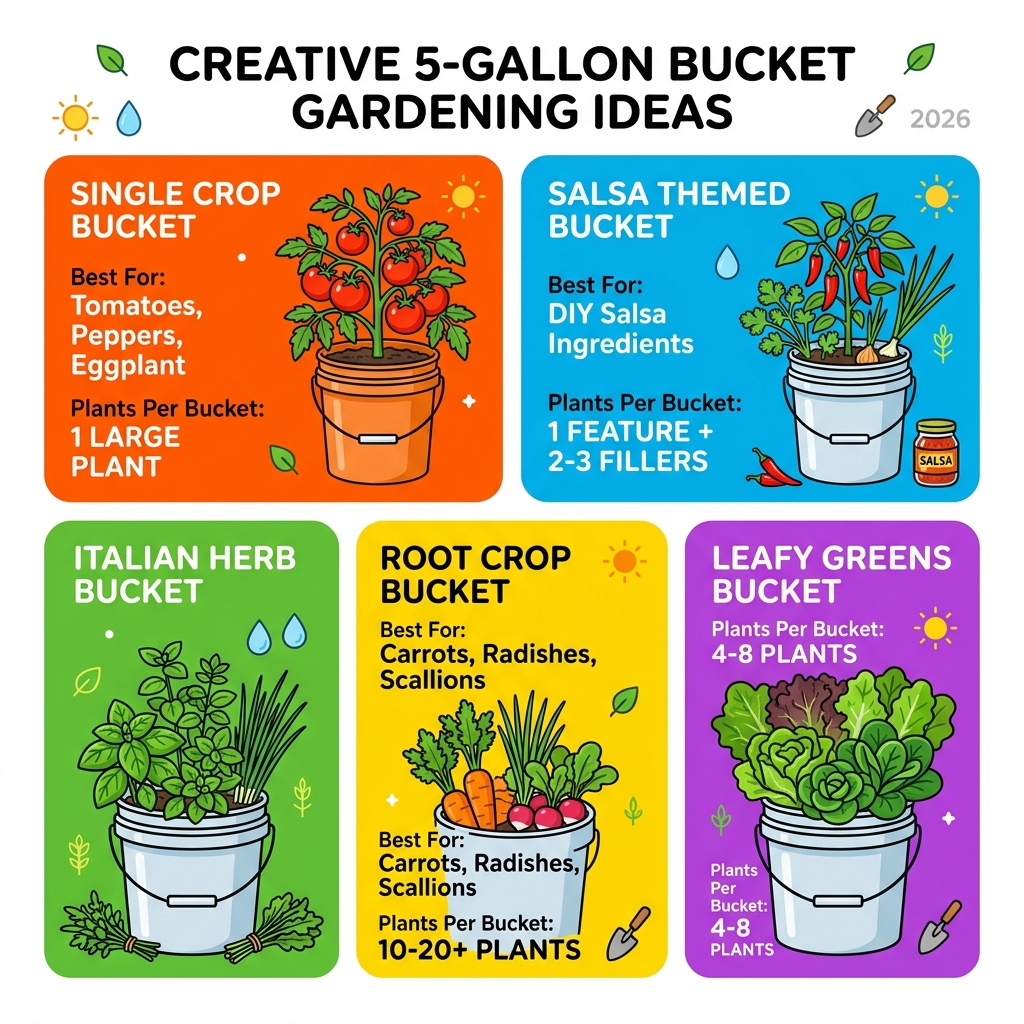
Here are the most popular and effective 5-gallon bucket gardening ideas to get you started:
| Idea | Best For | Plants Per Bucket |
|---|---|---|
| Single crop bucket | Tomatoes, peppers, eggplant | 1 plant |
| Salsa themed bucket | Tomato + cilantro + chili | 1 feature + 2-3 fillers |
| Italian herb bucket | Basil + oregano + garlic | 2-3 plants |
| Leafy greens bucket | Lettuce, spinach | 4-8 plants |
| Root crop bucket | Carrots, radishes, scallions | 10-20+ plants |
| Self-watering SIP bucket | Any vegetable | Varies |
| Vertical trellis bucket | Cucumbers, pole beans | 1-2 plants |
The appeal is straightforward. Buckets are cheap, portable, and work almost anywhere that gets 6-8 hours of sunlight. You can move them to chase the sun, drag them inside before a frost, or rearrange them to make your balcony look great.
One gardener described transforming a modest patio into a “mini-farm” starting with just three buckets of herbs. That’s really how it tends to go — you start small, see results, and keep adding buckets.
This guide covers everything: how to set up your buckets correctly, what to grow, how to water and feed your plants, and creative ways to scale up or decorate your setup.
Why 5 Gallon Bucket Gardening Ideas are the Ultimate Small-Space Solution
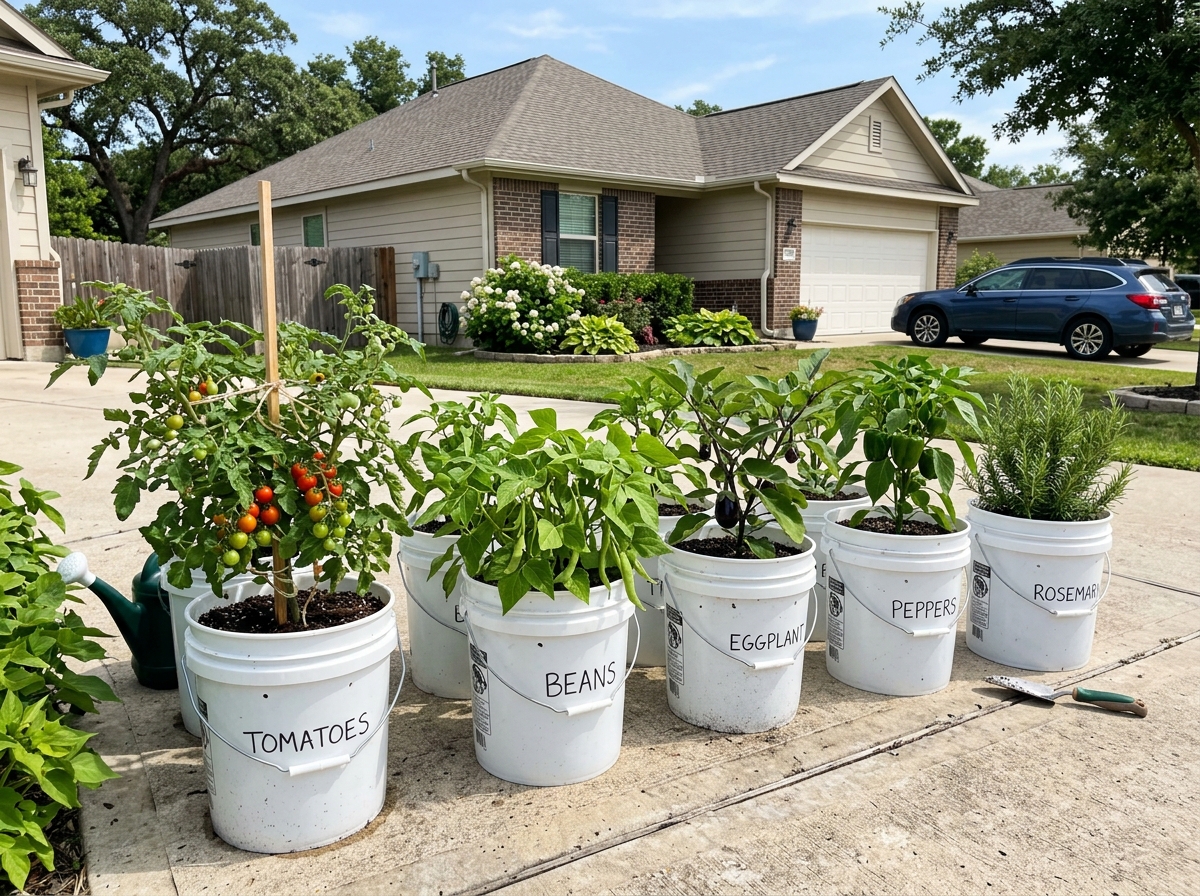
We often think of gardening as something that requires a sprawling backyard and a heavy tiller. However, 5 gallon bucket gardening ideas prove that you can be incredibly productive with just a few square feet of concrete. A standard 5-gallon bucket holds approximately 0.67 cubic feet of soil, which is the “sweet spot” for most vegetable root systems.
The primary advantage we love is portability. If a heatwave hits, you can move your peppers into the shade. If an early frost is predicted, you can tuck your tomatoes into the garage. This mobility extends your growing season significantly compared to in-ground plants that are at the mercy of the elements.
Furthermore, buckets offer superior weed control and pest reduction. Because the plants are elevated and contained, you aren’t fighting invasive grass or soil-borne diseases as often. It’s also much easier on your back; you can place buckets on benches or stands to avoid constant bending.
| Feature | Bucket Gardening | In-Ground Gardening |
|---|---|---|
| Initial Cost | Very Low ($3-$7 per unit) | Variable (Tools, soil prep) |
| Mobility | High (Portable) | None |
| Weed Pressure | Minimal | High |
| Water Needs | High (Dries faster) | Moderate |
| Soil Control | Total Control | Depends on native soil |
Advantages and Limitations of Plastic Containers
While plastic is convenient, we need to be mindful of what we use. Most 5-gallon buckets are made of HDPE #2 (High-Density Polyethylene), which is generally considered stable and safe for food. However, dark-colored buckets (like the common orange or black ones) can absorb intense solar heat, potentially “cooking” the roots in mid-summer.
To mitigate this, we recommend using light-colored buckets or wrapping them in burlap to reflect heat. Also, plastic doesn’t breathe like terracotta, so drainage is non-negotiable. For more tips on eco-friendly container choices, check out our guide on going green by growing vegetables in recycled containers.
Sourcing Safe Food-Grade Buckets
Safety first! We always look for the recycling symbol with a “2” on the bottom. The best way to get these for free or cheap is to visit local bakeries, donut shops, or delis. These businesses often receive frosting, pickles, or brine in food-grade buckets and are usually happy to give them away to keep them out of the landfill.
Once you bring them home, sanitize them thoroughly. We suggest a simple solution of 1 part bleach to 9 parts water. Scrub them well, rinse, and let them air dry in the sun before you even think about adding soil.
Essential Setup: Preparing Your Buckets for Success
You can’t just throw dirt in a pail and hope for the best. Proper preparation is the difference between a thriving harvest and a soggy, rotted mess.
Proper Drainage and Lining Techniques
The most common beginner mistake is neglecting drainage. We recommend drilling 6 to 12 holes in the bottom of the bucket using a 3/8-inch or 1/2-inch drill bit. To take it a step further, drill a few “overflow” holes on the sides, about one inch up from the base. This ensures that even if the bottom holes get pressed against a flat surface, the water has an exit strategy.
To keep your soil from washing out of these holes, line the bottom with a mesh screen, a coffee filter, or even a layer of landscape fabric. Expert Tip: Forget the old myth about putting rocks or gravel at the bottom for “better drainage.” Research shows this actually creates a “perched water table,” where water pools right above the rocks, increasing the risk of root rot. Just use high-quality soil all the way down!
The Best Soil Mix Recipe for Healthy Plants
Never use native garden soil or “topsoil” in a bucket. It’s too heavy and will compact into a brick, suffocating your plants. Instead, we use a “soilless” potting mix that stays fluffy and aerated.
A proven recipe for success is:
- 40% Quality Potting Mix (Peat-free is best)
- 40% Finished Compost (For nutrients and moisture)
- 20% Aeration (Perlite or pumice)
To give your plants a “turbo-boost,” add 1-2 cups of worm castings per bucket. If you’re planning on growing tomatoes in containers on a balcony, this rich, airy mix is essential for those heavy-feeding vines.
Crop Selection: What to Plant for Maximum Harvest
Not every plant is a candidate for bucket life, but many thrive in them. The key is understanding plant density. For large plants like tomatoes or peppers, stick to one per bucket. For smaller items like radishes or greens, you can pack them in.
Top Vegetable Varieties for 5 Gallon Bucket Gardening Ideas
When shopping for seeds, look for keywords like “bush,” “determinate,” “patio,” or “dwarf.” These varieties are bred to stay compact while still producing high yields.
- Tomatoes: Stick to determinate varieties like ‘Patio Princess’ or ‘Roma VF’. If you love snacking, growing cherry tomatoes in limited space is incredibly rewarding.
- Root Crops: You can grow 15-20 short-variety carrots per bucket. If you’re interested in underground treats, see our tips on growing dwarf carrots in containers.
- Leafy Greens: You can fit 4-6 leaf lettuce plants or 6-8 spinach plants in one bucket.
- Herbs: Chives are a fantastic choice for tight quarters; learn how to grow chives in small pots to maximize your kitchen garden.
Creative Themes and 5 Gallon Bucket Gardening Ideas for Beginners
Themed buckets are a fun way to organize your garden. We love the “Salsa Bucket” — one jalapeño or serrano pepper plant in the center, surrounded by cilantro and a few green onions.
Another favorite is the “Italian Bucket.” You can easily learn how to grow basil in small pots and pair it with oregano and a dwarf tomato. If you prefer Mexican cuisine, knowing how to grow cilantro in pots will allow you to harvest fresh greens all season long.
Advanced DIY Hacks: Self-Watering Systems and Vertical Supports
Once you’ve mastered the basic bucket, it’s time to level up. One of the most effective 5 gallon bucket gardening ideas is the SIP (Sub-Irrigation Planter). This involves nesting one bucket inside another. The bottom bucket acts as a water reservoir, while the top bucket holds the soil. A “wicking column” (usually a small perforated plastic cup filled with soil) connects the two, drawing water up to the roots as needed. This system can reduce your watering chores by 50-75%!
Building Vertical Supports and Trellises
Even dwarf varieties need a little help staying upright. You can create a simple “bamboo teepee” by lashing three stakes together at the top and pushing the ends into the soil. For vining cucumbers or pole beans, a piece of cattle panel or a simple string trellis attached to a nearby wall works wonders. Always install your supports at the time of planting to avoid damaging sensitive roots later.
Managing Pests and Season Extension
Bucket gardens aren’t immune to pests, but they are easier to manage. We use organic solutions like Neem oil for aphids and BT (Bacillus thuringiensis) for caterpillars. Because buckets are small, you can easily cover them with “frost blankets” or bird netting.
When the season ends, don’t throw your soil away! You can “recharge” it by dumping it into a wheelbarrow, removing old roots, and mixing in 30% fresh compost. This keeps your garden sustainable and budget-friendly year after year.
Frequently Asked Questions about 5 Gallon Bucket Gardening Ideas
How many drainage holes do I really need?
We recommend at least 6-8 holes on the bottom, each about 1/2 inch wide. Adding 4-6 side holes about an inch from the bottom acts as a safety overflow, preventing the roots from sitting in stagnant water if the bottom holes get blocked.
Can I reuse the soil from my buckets every year?
Yes, but with a caveat. Nutrients leach out of containers quickly. To reuse soil, mix it with fresh compost and a slow-release organic fertilizer. However, if a plant had a disease (like tomato blight), it’s safer to use that soil for non-related plants or flowers instead.
How often should I fertilize plants in a 5-gallon bucket?
Because you water frequently, nutrients wash away. We suggest a light feeding with a liquid organic fertilizer every 10 to 14 days once the plant is established (usually 3-4 weeks after planting).
Conclusion
At Finance Growth X, we believe that gardening should be accessible to everyone, regardless of the size of their home. 5 gallon bucket gardening ideas offer a low-risk, high-reward entry point into sustainable living. By following these steps — choosing food-grade buckets, using the right soil mix, and selecting compact varieties — you can enjoy a massive harvest from a tiny footprint.
Start with just one or two buckets this weekend. Before you know it, you’ll be enjoying the unmatched taste of a sun-warmed tomato grown right on your own doorstep. For more inspiration on making the most of your limited space, explore our More info about container gardening section. Happy growing!
