
Why the Best Plants for Apartment Balcony Gardens Are Closer Than You Think
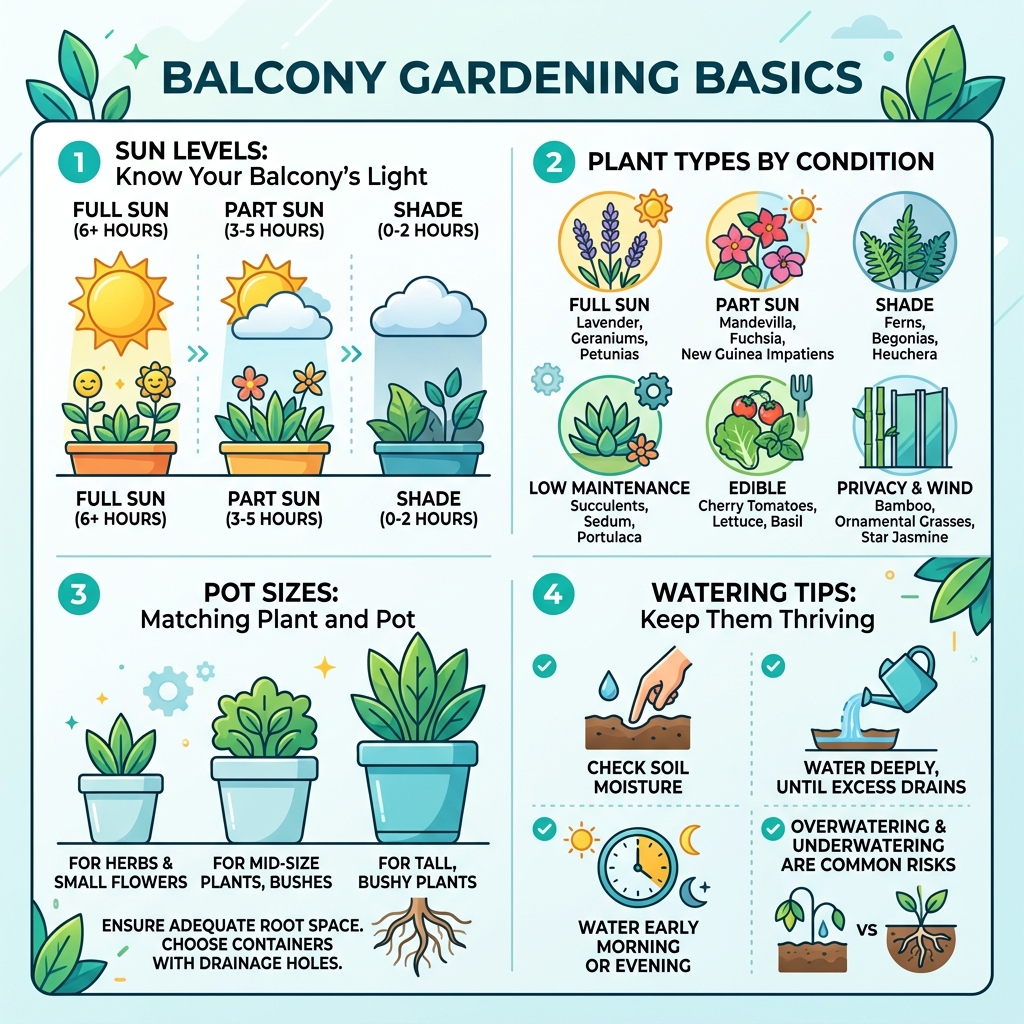
The best plants for apartment balcony gardens include lavender, geraniums, petunias, ferns, begonias, succulents, and herbs like basil, rosemary, and chives — chosen based on how much sun, shade, or wind your balcony gets.
Here’s a quick overview by condition:
| Balcony Condition | Top Plant Picks |
|---|---|
| Full sun (6+ hours) | Lavender, Geraniums, Petunias, Hibiscus, Basil |
| Part sun (3-5 hours) | Mandevilla, Fuchsia, New Guinea Impatiens, Chives |
| Shade (0-2 hours) | Ferns, Begonias, Caladiums, Heuchera |
| Low maintenance | Succulents, Sedum, Portulaca, Rosemary, Thyme |
| Edible | Cherry Tomatoes, Lettuce, Mint, Parsley, Basil |
| Privacy/wind | Bamboo, Ornamental Grasses, Star Jasmine |
You don’t need a backyard to grow something beautiful. Even a tiny apartment balcony can become a genuine green retreat.
Microgardening is one of the fastest-growing trends in urban living. Modern plant breeding now produces compact varieties of almost every flower, shrub, herb, and vegetable — purpose-built for containers and small spaces.
The challenge most apartment dwellers face isn’t a lack of space. It’s knowing which plants will actually survive on their specific balcony — and how to set things up so they thrive without constant fuss.
This guide covers exactly that. From assessing your sunlight and wind conditions, to picking the right plants, pots, and soil, you’ll have everything you need to turn your balcony into a lush outdoor sanctuary.
Assessing Your Microclimate: Sun, Shade, and Wind
Before we rush to the garden center, we need to play detective. Every balcony has its own microclimate—a unique set of environmental conditions that determines whether a plant will thrive or wither.
The Sunlight Test
Sunlight is the most critical factor. To find the best plants for apartment balcony success, you must know your numbers. On a clear day, check your balcony every hour.
- Full Sun: If your space receives six or more hours of direct sunlight, you have a sun-drenched paradise perfect for Mediterranean herbs and flowering tropicals.
- Part Sun/Part Shade: This is usually three to five hours of direct sun. Many “all-rounder” plants love this middle ground.
- Full Shade: If you get zero to two hours of direct sun (often due to overhanging balconies or neighboring buildings), you’ll need “shade-dwellers” like ferns or caladiums.
The Wind Check and Weight Limits
High-rise balconies are often windier than ground-level gardens. Try the “paper napkin test”: place a napkin on a table; if it immediately flies away, you have a high-wind environment. Wind dries out soil rapidly and can snap fragile stems, so you’ll want sturdy, flexible plants like grasses.
Finally, don’t forget the floor! Soil and water are heavy. A 5-gallon pot filled with wet soil can weigh over 40 pounds. Always check your building’s weight limits before installing large, heavy planters or stone features.
The Best Plants for Apartment Balcony Success
Creating a visually stunning display often follows the “Thriller, Filler, Spiller” rule. You choose one tall, eye-catching plant (the Thriller), surround it with mounded, colorful foliage (the Filler), and finish with plants that tumble over the edge of the pot (the Spiller).
Best Plants for Apartment Balcony Sun
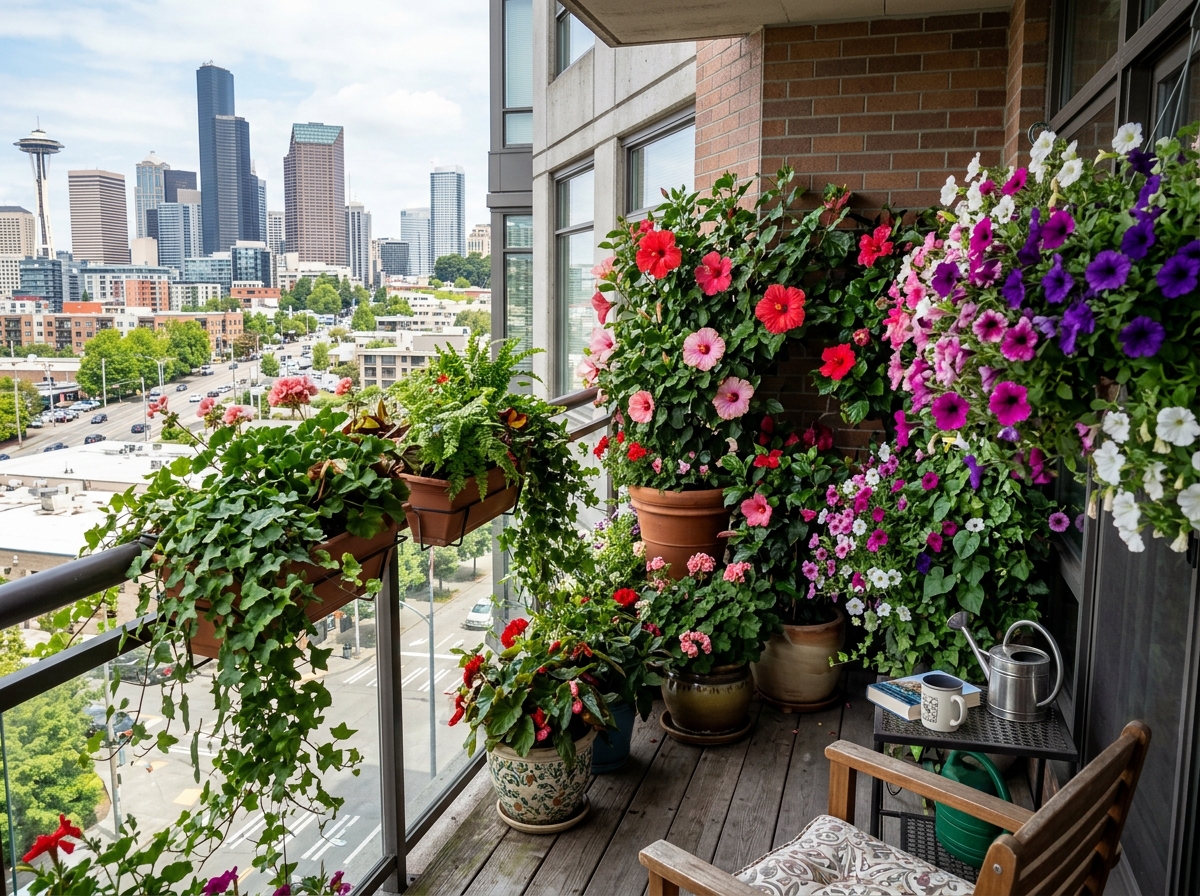
If your balcony is a sun trap, you have plenty of options. Lavender is a top choice; it evokes a Mediterranean feel and smells divine. Geraniums and Petunias (especially the “Easy Wave” varieties) provide non-stop color all summer. For a tropical vibe, try Hibiscus or the climbing Mandevilla, which loves to scale a trellis. If you want to start small with edibles, check out this more info about growing basil in small pots to add fresh flavor to your summer caprese salads.
Best Plants for Apartment Balcony Shade
Don’t be discouraged by a north-facing or covered balcony. Some of the most elegant plants prefer the shade. Ferns (like the Jurassic™ varieties) create a lush, prehistoric look. Begonias and New Guinea Impatiens offer bright pops of color without needing a single ray of direct sun. For stunning foliage, Caladiums provide heart-shaped leaves in shades of pink, white, and green, while Heuchera (Coral Bells) offers ruffled leaves in every color from lime green to deep purple. You can even grow food in the shade; see this more info about balcony-friendly spinach for a productive shady corner.
Low-Maintenance and Drought-Tolerant Options
For the busy professional or the “black-thumb” gardener, succulents are the ultimate solution. Sedum, Hens-and-chicks, and Yucca are incredibly hardy. These plants store water in their leaves, meaning they only need a drink about once a month. Portulaca (Moss Rose) is another fantastic choice; it produces jewel-toned flowers and thrives in the heat with very little water. If you want a low-maintenance herb, rosemary and thyme are tough as nails. You can find more info about growing chives in small pots for another “set it and forget it” edible option.
Edible Balcony Gardening: Herbs and Vegetables
There is nothing quite like harvesting dinner from your own balcony. Most people are surprised to learn that you can grow a full “salad bar” in just a few square feet.
The secret to success is choosing the right container. For example, Cherry tomatoes are a balcony staple, but they are heavy feeders. They require at least a 5-gallon pot (about 12–14 inches wide) to thrive. If the pot is too small, the plant will become stressed and produce tiny yields.
When choosing your crops, always look for “dwarf,” “patio,” or “compact” on the seed packet. These varieties are specifically bred to stay small while still producing plenty of fruit. For a complete list of the top performers, check out our guide on the Best Herbs to Grow on a Balcony and our expert tips for Growing Tomatoes in Containers on a Balcony.
Compact Vegetables for Small Spaces
You don’t need a farm to grow veggies. Lettuce is one of the easiest crops; you can simply snip the outer leaves as they mature for a continuous harvest. Check out these Balcony-Friendly Lettuce Varieties to get started. Other great options include Growing Dwarf Carrots in Containers (which only need about 6-8 inches of soil depth) and Compact Zucchini Varieties for Apartments. For those who love superfoods, Urban Balcony Gardening for Kale is a great way to ensure you always have fresh greens on hand.
Fresh Fruits and Herbs
If you have a sweet tooth, strawberries are the perfect “spiller” for hanging baskets. They keep the fruit off the ground and away from pests. We recommend Balcony-Friendly Strawberries for Urban Gardeners for the best results. For year-round flavor, explore the Best Herbs for Indoor Balcony Gardens or learn How to Grow Cilantro in Pots to keep your kitchen stocked with fresh aromatics.
Essential Care: Pots, Soil, and Watering
Your balcony plants are entirely dependent on you for their survival. Unlike plants in the ground, their roots can’t go searching for water or nutrients.
Choosing the Right Pot
The material of your pot affects how often you need to water.
| Pot Material | Pros | Cons |
|---|---|---|
| Terra Cotta | Beautiful, breathable, classic | Dries out very fast; can crack in frost |
| Resin/Plastic | Lightweight, retains moisture, cheap | Can look “plastic-y”; may blow over in wind |
| Fabric Bags | Excellent drainage, air-prunes roots | Dries out faster than plastic; less aesthetic |
| Metal | Modern look, very durable | Can overheat roots in direct summer sun |
The “Magic” Soil Mix
Never use “topsoil” or “garden soil” from the ground in your pots. It is too heavy and will compact, suffocating your plant’s roots. Instead, use a high-quality soilless potting mix. To make it even better, we recommend adding 20–30% perlite. This lightweight volcanic rock ensures the mix stays airy and drains quickly.
Watering Like a Pro
The #1 killer of balcony plants is overwatering (or underwatering!).
- The Finger Test: Stick your finger two inches into the soil. If it feels dry, it’s time to water.
- The Soak: When you water, do it thoroughly. You want to see about 10–20% of the water drain out of the bottom of the pot. This ensures the entire root ball is hydrated and helps flush out salt buildup from fertilizers.
- Drainage is Non-Negotiable: Every pot must have drainage holes. Use “pot feet” to lift your containers slightly off the balcony floor; this creates an air gap that prevents rot and staining on your balcony deck.
Overcoming Challenges: Privacy, Wind, and Weather
Living in an apartment often means living close to neighbors. You can create a living “curtain” using plants. Golden Bamboo is a fantastic privacy screen because it grows tall and dense very quickly. However, it must be kept in a sturdy, 24-inch deep container to prevent it from becoming invasive.
Wind and Heat Management
For higher balconies, wind can be a major foe. Star Jasmine or Ornamental Grasses (like Feather Reed Grass) are excellent because they are flexible and won’t snap in a gust. During intense heat waves (90°F+), your plants might need a “shade cloth” or to be moved 6–12 inches away from heat-reflective walls to prevent leaf scorch.
Protecting Your Plants in Winter
If you live in USDA zones 9a-10b, you can keep many plants outside year-round. However, for those in colder climates, you’ll need to “overwinter” tender plants. Tropicals like Hibiscus or Mandevilla should be brought indoors before the first frost. For hardy plants staying outside, wrap the pots in burlap or bubble wrap to protect the roots from freezing.
Frequently Asked Questions about Balcony Gardening
What are the most common mistakes when starting a balcony garden?
The biggest mistake is using undersized pots. Plants like tomatoes or shrubs need room to grow; a tiny pot leads to a stressed plant. Another common error is ignoring drainage. Without holes in the bottom of your pot, the roots will sit in water and rot. Finally, don’t forget the wind burn. Just because a plant loves sun doesn’t mean it can handle a 20mph constant breeze without a windbreak.
How do I maximize space on a very small balcony?
Think vertically! Use trellises for climbing vines like jasmine or peas. Hanging planters and railing boxes utilize space that would otherwise go to waste. You can also use tiered shelving units to create a “staircase” of greenery, allowing you to fit three times as many plants in the same footprint.
How often should I water my balcony plants?
There is no set schedule, as it depends on the weather and the pot material. Porous pots like terra cotta dry out much faster than plastic. Generally, in the heat of summer, you may need to water every morning. In the winter, succulents might only need water once a month. Always use the “finger test” before reaching for the watering can.
Conclusion
At Finance Growth X, we believe that sustainable living and personal wellness start right at home—even if that home is twenty stories up. Turning your balcony into a green oasis isn’t just about aesthetics; it’s about creating a space where you can breathe, relax, and reconnect with nature.
By choosing the best plants for apartment balcony conditions and following these simple care tips, you can enjoy a lush, productive garden all year round. Ready to dive deeper into urban landscaping? Explore more Urban Garden Design ideas and start your journey toward a greener lifestyle today!
