
The Urban Pest Problem Every City Gardener Needs to Know About
Pest control urban environments is one of the biggest challenges for apartment dwellers trying to grow a beautiful balcony garden. Here’s a quick overview of what works:
Quick answers for urban pest control:
- Seal entry points – Use caulk, steel wool, or metal mesh around pipes, cracks, and gaps
- Remove food and water sources – Store food in airtight containers, fix leaks, empty standing water
- Keep it clean – Wipe surfaces, empty bins regularly, clear plant debris
- Use Integrated Pest Management (IPM) – Combine prevention, monitoring, and least-toxic treatments
- Call a professional – For active infestations, especially in multi-unit buildings
City gardens are a joy. But they also attract uninvited guests.
Urban environments are ideal for pests. Cities offer an enormous supply of food, water, and shelter packed into a small area. And pests reproduce fast. A minor problem on your balcony can spread through an entire building in days or weeks.
Rats, cockroaches, ants, and other common urban pests don’t just damage your plants. They can threaten your health, your home, and your neighbours’ homes too.
The good news? With the right approach, you can protect your balcony garden without harsh chemicals or expensive repeat treatments.
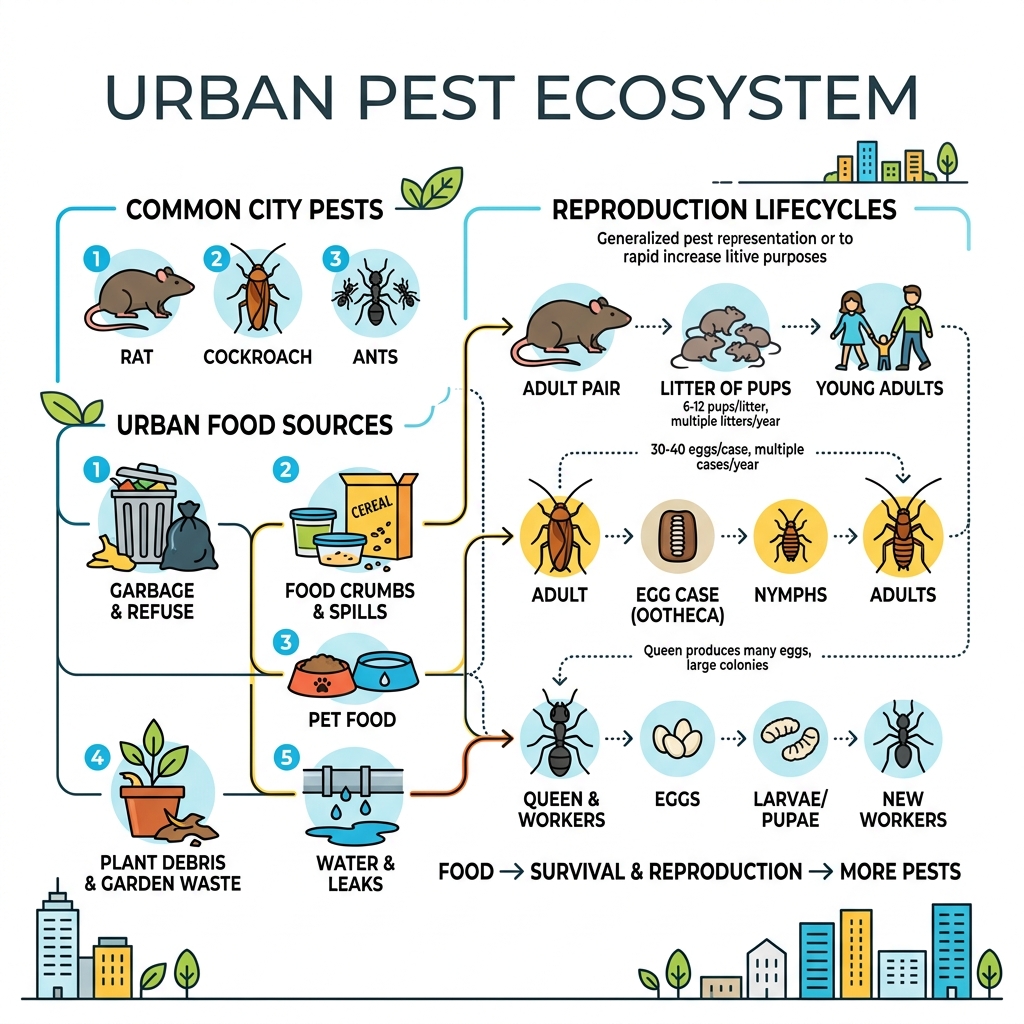
Why Urban Environments Foster Pest Infestations
If you’ve ever wondered why your third-floor balcony seems to be a magnet for critters, you’re not alone. Urban areas are essentially a “five-star resort” for pests. According to Rodent Control in Urban Areas, rodents and insects have evolved to depend on us for their three basic needs: food, water, and shelter.
One of the primary reasons cities are so pest-prone is high density. In a suburban setting, a mouse might have to travel across a field to find its next meal. In a city, it just needs to squeeze through a dime-sized hole into the next apartment. This structural interconnectedness means that if your neighbor has an issue, you likely do too. Pests can travel through shared walls, plumbing stacks, and even trash chutes with ease.
Then there’s the issue of waste management. Cities produce a staggering amount of garbage. If bins aren’t secured or if litter accumulates in alleys, it creates a massive “carrying capacity”—the maximum population of a species an environment can support. When food is abundant, pests don’t just survive; they thrive and multiply at exponential rates.
Furthermore, cities are often “heat islands.” The concrete and asphalt trap heat, creating a microclimate that is warmer than the surrounding countryside. This extra warmth allows pests like cockroaches and ants to remain active and reproductive for longer periods throughout the year, rather than going dormant in the winter. For those of us trying to maintain a city garden, this means Pest control urban strategies must be a year-round commitment, not just a springtime chore.
Common Urban Pests and Associated Health Risks
Before we can fight back, we need to know who we are up against. Urban pests are more than just a nuisance; many carry significant health risks that can affect your family and pets.

The “Big Three” of City Living
- Rats (Norway and Roof Rats): The Norway rat is the heavy-set, brownish-black king of the Northeast and many other urban centers. They are incredibly hardy. A single rat only needs about one ounce of food and half an ounce of water a day to survive. They are also prolific breeders; a female can have six to 12 pups per litter, up to seven times a year!
- Cockroaches (German and American): The German cockroach is a frequent uninvited guest in urban kitchens. They love the moisture of your garden pots and the crumbs under your toaster. Beyond being “gross,” they are major asthma triggers, especially for children, due to the proteins in their droppings and shed skins.
- Ants (Carpenter, Pavement, and Odorous House Ants): Carpenter ants are particularly concerning because they don’t just eat your food; they can damage the structure of your home. They range from 1/4 to 1/2 inch in length and seek out moisture-damaged wood.
Identification Table: Is it a Mouse or a Rat?
Knowing what you’re dealing with helps you choose the right traps and baits. Here is a quick guide based on their “calling cards”:
| Feature | House Mouse | Norway Rat |
|---|---|---|
| Dropping Shape | Pointed, like a grain of rice | Dark, blunt, like a raisin |
| Entry Gap Size | Can fit through a dime-sized hole | Needs a quarter-sized hole |
| Adult Size | 2.5 – 3.5 inches (excluding tail) | Up to 18 inches (including tail) |
| Physical Ability | Can climb and jump well | Can jump up to 3 feet and climb pipes |
Health Risks You Shouldn’t Ignore
Pests are efficient vectors for disease. Rodents can spread hantavirus (particularly in Western states like Colorado and New Mexico) through their urine and droppings. They can also carry leptospirosis and salmonella. Cockroaches are notorious for spreading bacteria like E. coli as they crawl from sewers to your countertops. Even the “scary-looking” house centipede, while mostly harmless to humans, is often a sign that you have a high population of other pests like silverfish or roaches for them to eat!
Implementing Integrated Pest Management (IPM) for Pest Control Urban Success
In the old days, pest control meant “spray everything with chemicals and hope for the best.” Today, we use a much smarter approach called Integrated Pest Management (IPM). As noted in Management of Urban Rats and Mice | Pests in the Urban Landscape, IPM is a decision-making process that focuses on long-term prevention and poses the least risk to people and the environment.
The core of IPM involves several steps:
- Inspection and Monitoring: Regularly checking your garden and home for signs of activity (droppings, gnaw marks).
- Establishing Action Thresholds: Deciding at what point the pest population becomes a problem that requires intervention.
- Habitat Modification: Changing the environment so it’s less attractive to pests.
- Least-Toxic Methods: Using traps, baits, or biological controls before reaching for heavy chemical sprays.
One fascinating example of IPM in action is in Vancouver, where the city uses biological control by releasing Lady Beetles to manage aphid infestations on trees instead of using chemical pesticides. For your city garden, this might mean encouraging natural predators or using pheromone traps to monitor pest levels.
Effective Strategies for Pest Control Urban Apartments and Balconies
If you’re growing veggies or flowers on a balcony, you’ve created a tiny oasis. Unfortunately, pests see it as a buffet. To keep them at bay, we recommend following the advice found in our guide on Dealing with Pests in Your Balcony Garden: Effective Solutions.
1. Exclusion is Your Best Friend Pests can’t bother you if they can’t get in. Use silicone caulk to seal cracks around window frames. If you have gaps around plumbing pipes under the sink, stuff them with steel wool—rodents can’t chew through it! Ensure your balcony door has a sturdy door sweep. As a rule of thumb, if a ballpoint pen can fit under your door, a mouse can squeeze through.
2. Practice “Elite” Sanitation In a city, cleanliness isn’t just about aesthetics; it’s about survival.
- Airtight Containers: Never leave bags of potting soil or birdseed open on the balcony. Store them in heavy plastic or metal bins with tight lids.
- Moisture Control: Fix any leaky outdoor faucets or saucers that hold standing water. Pests need water just as much as food.
- Clean the Grill: If you have a balcony BBQ, clean it thoroughly after every use. Grease is a high-calorie magnet for rats and roaches.
3. Strategic Gardening Some plants actually help in the Pest control urban battle. Marigolds, mint, and rosemary are known to deter certain insects. Conversely, avoid leaving piles of dead leaves or “plant debris” in your pots, as these provide perfect nesting material for small insects. For more detailed tips, check out our follow-up article on Dealing with Pests in Your Balcony Garden: Effective Solutions.
Professional vs. DIY: Choosing the Right Approach
When do you handle it yourself, and when do you call in the pros?
If you see a single ant or a few aphids, DIY methods like soapy water sprays or sticky traps are usually sufficient. However, for “commensal” pests—those that live alongside humans like rats and bed bugs—professional help is often necessary.
Professional services offer several advantages mentioned by Pest Management | Boston.gov. They don’t just “spray”; they perform a multi-step process:
- Thorough Inspection: Identifying entry points you might have missed, like foundation cracks or attic vents.
- Initial Flush-out: A concentrated effort to eliminate the current adult population.
- Breaking the Egg Cycle: Many pests, like German cockroaches, have egg cases that are resistant to chemicals. Professionals schedule follow-up visits (often 30 days apart) to kill newly hatched pests before they can reproduce.
- Bi-monthly Maintenance: Regular “perimeter” treatments to ensure new pests don’t move in from the street or neighboring buildings.
In many cities, like Toronto or Boston, there are specific Rat Response Plans where the local government coordinates with residents and businesses. If you live in an apartment, reporting an infestation to your property manager is crucial. DIY “fixes” in one unit can often just drive the pests into the walls and into your neighbor’s kitchen, making the problem worse for the whole building.
Safety Precautions for Pest Control Urban Treatments
If you do opt for chemical treatments—whether DIY or professional—safety is the top priority, especially for those of us with furry friends or little ones.
- Read the Label: It sounds simple, but the label is the law. It tells you exactly how much to use and where.
- Chemical Drying Times: Most modern sprays are safe once they are completely dry. Keep pets and children away from treated areas for at least 2-4 hours, or until the technician gives the “all clear.”
- Avoid “Over-spraying”: More is not better. Using too much pesticide can lead to environmental contamination and may actually make pests avoid the bait you want them to eat.
- Tamper-Resistant Stations: If using rodent bait, always use locked, tamper-resistant bait stations. This prevents pets or wildlife (like birds or squirrels) from accidentally ingesting the poison.
- Local Regulations: Many urban areas have strict rules about what chemicals can be used. For example, California has banned certain “second-generation” anticoagulants to protect local wildlife. Always check your local city ordinances.
Frequently Asked Questions about Urban Pest Management
What is the most effective way to prevent rats in a city garden?
The “Golden Rule” is to remove food, water, and shelter. Use metal mesh to “harden” your garden beds, never leave pet food outside, and ensure your trash cans have tight-fitting lids. If you have bird feeders, use “no-mess” seeds to prevent hulls from piling up on the ground, which is a primary food source for urban rats.
How does Integrated Pest Management (IPM) differ from traditional extermination?
Traditional extermination often relies on scheduled, broad-spectrum pesticide applications regardless of the pest level. IPM is a more holistic, “detective-style” approach. It prioritizes non-chemical methods like sealing holes and improving sanitation first, only using targeted pesticides as a last resort. This makes it safer for the urban environment and more effective in the long run.
Are DIY pest control methods effective for apartment dwellers?
For minor issues like fruit flies or the occasional spider, yes. However, for “community-wide” pests like cockroaches, bed bugs, or rats, DIY methods often fail because they don’t address the pests living in the building’s infrastructure. In these cases, a coordinated effort between residents, property management, and professional services is the only way to achieve long-term success.
Conclusion
At Finance Growth X, we believe that living in a city shouldn’t mean giving up on your dream of a lush, green space. While Pest control urban challenges are real, they are not insurmountable. By adopting an IPM mindset—focusing on exclusion, sanitation, and smart monitoring—you can keep your balcony garden thriving and your home healthy.
Effective pest management is a community effort. Talk to your neighbors, keep your shared spaces clean, and don’t hesitate to seek professional help when a problem grows beyond your control. With a little vigilance and the right strategies, you can win the war against urban pests and enjoy the many rewards of city gardening.
Ready to take your urban oasis to the next level? Check out More info about container gardening for tips on choosing the best plants and pots for your space!
