
Why Balcony Garden Cherry Tomatoes Are Worth Growing
Balcony garden cherry tomatoes are one of the easiest and most rewarding crops you can grow in a small outdoor space. Whether you have a tiny urban balcony or a modest patio, a single well-chosen pot can produce handfuls of sweet, sun-ripened tomatoes all summer long.
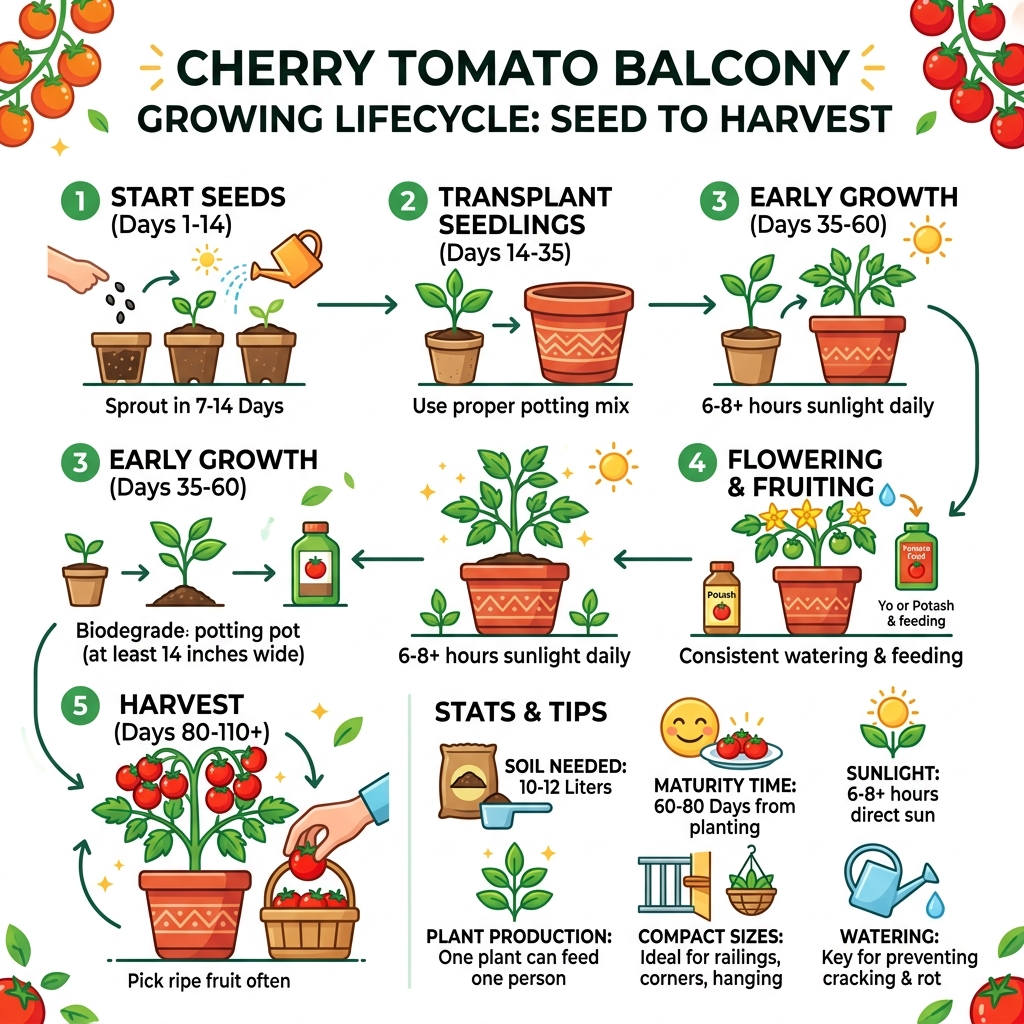
Here’s a quick overview of what it takes to grow cherry tomatoes on your balcony successfully:
- Choose the right variety – Compact or trailing types like Tumbling Tom, Tiny Tim, or Balconi Red work best in pots and hanging baskets.
- Use the right container – A pot at least 14 inches wide and holding 5+ gallons of soil gives roots enough room to thrive.
- Get enough sun – Cherry tomatoes need 6-8 hours of direct sunlight daily.
- Water consistently – Irregular watering causes cracking and blossom end rot.
- Feed regularly – Use a high-potash fertilizer once flowers appear.
- Harvest often – Picking ripe fruit encourages more production throughout the season.
Cherry tomatoes are perfectly suited to container life. They thrive in 10-12 liters of soil, mature in as little as 60-80 days after planting, and a single plant can feed one person fresh tomatoes all summer. Unlike larger tomato varieties, many cherry tomato types are compact enough to sit on a railing, hang from a hook, or tuck into a corner of your balcony without taking over your space.
The taste difference alone makes it worth it. Store-bought tomatoes can’t compete with a warm, just-picked cherry tomato eaten straight from the vine.
This guide walks you through every step – from picking the right variety to harvesting your first crop.
Choosing the Best Balcony Garden Cherry Tomatoes
When we start planning our balcony garden cherry tomatoes, the first and most critical step is selecting the right variety. Not all tomatoes are created equal, especially when they have to live their entire lives in a pot. Some tomato plants are like rowdy teenagers that will quickly outgrow their space, while others are perfectly content to stay small and productive.
For those of us growing cherry tomatoes in limited space, we need to look for “patio,” “dwarf,” or “determinate” labels. These varieties are genetically programmed to stop growing at a certain height, usually between 2 to 4 feet, making them manageable for an apartment setting.
Top Varieties for Pots and Baskets
If you are looking for specific names to search for at the nursery, here are our top recommendations:
- Tiny Tim: A true classic. It rarely grows taller than 12-18 inches, making it perfect for windowsills or small tables.
- Sungold: Frequently cited as the sweetest cherry tomato on the market. While it is a vigorous grower, it can be managed in a large pot with a sturdy cage.
- Sweet Million: Known for producing massive clusters of crack-resistant fruit.
- Black Cherry: For those who like a complex, smoky flavor and a beautiful dark purple hue.
- Tumbling Tom: Available in red or yellow, this variety has a beautiful cascading habit, making it the gold standard for hanging baskets.
- Hundreds & Thousands: This variety lives up to its name, producing a staggering volume of pea-sized, sweet fruits.
- Micro Tom: One of the world’s smallest tomato plants, reaching only 6-8 inches tall. It’s adorable and surprisingly productive for its size.
If you want a variety specifically bred for the balcony, we highly recommend Tomato ‘Balconi Red’ seeds. This variety is naturally bushy, requires no “side-shooting” (removing suckers), and stays around 30cm (12 inches) in height and spread. It’s basically the “set it and forget it” version of a tomato plant.
Determinate vs Indeterminate Varieties
Understanding the growth habit of your plant is the difference between a tidy balcony and a jungle. Here is a quick breakdown to help you choose:
| Feature | Determinate (Bush) | Indeterminate (Vining) |
|---|---|---|
| Growth Habit | Grows to a fixed height (2-4 ft), then stops. | Continues to grow and vine as long as the weather is warm. |
| Harvest Window | Fruit tends to ripen all at once over 2-4 weeks. | Produces fruit continuously until the first frost. |
| Space Needs | Compact; ideal for small pots and cages. | Needs tall stakes, trellises, or heavy-duty cages. |
| Pruning | Minimal to none required. | Requires regular removal of “suckers” to manage size. |
| Best For | Beginner balcony gardeners and small spaces. | Experienced gardeners with vertical room to spare. |
Essential Setup: Pots, Soil, and Sunlight
Once you’ve picked your seeds or seedlings, it’s time to build their home. Many beginners make the mistake of using a pot that is too small. While a cherry tomato looks tiny in a 4-inch nursery pot, it develops an extensive root system very quickly.

Ideal Containers for Balcony Garden Cherry Tomatoes
Size matters. A container that is too small will dry out in hours and leave your plant stunted. For a single balcony garden cherry tomato plant, we recommend:
- Minimum Width: 14 inches in diameter.
- Ideal Width: 18 to 20 inches.
- Soil Volume: At least 5 gallons (approx. 19 liters) per plant.
- Depth: At least 12 inches deep to allow for healthy root downward growth.
If you’re on a budget, you can easily go green: growing vegetables in recycled containers. Five-gallon plastic buckets from the hardware store work perfectly—just make sure to drill plenty of drainage holes in the bottom. For those with very limited floor space, balcony railing planters for vegetables or hanging baskets (at least 12-14 inches in diameter) are excellent alternatives.
The Perfect Potting Mix and Sun Exposure
Never use “garden soil” or “topsoil” from the ground in your pots. It is too heavy, it will compact and suffocate the roots, and it often carries soil-borne diseases. Instead, you must spend time choosing the best potting mix for your container garden.
A high-quality potting mix should contain:
- Peat moss or Coco coir: For moisture retention.
- Perlite or Vermiculite: To ensure aeration and drainage.
- Compost: For a steady supply of organic nutrients.
Regarding sunlight, there is no way to “cheat” this requirement. Tomatoes are sun-worshippers. They need 6 to 8 hours of direct sunlight every day to produce the sugars that make the fruit sweet. Proper sunlight exposure for balcony gardening usually means a South-facing balcony is best. If your balcony faces North or is heavily shaded, your plants might grow tall and “leggy” without ever producing much fruit.
Pro Tip: If your balcony has concrete floors, they can reflect a lot of heat. This is great in the spring but can cook your plants in the summer. Using “pot feet” or placing containers on wooden pallets can help with airflow and drainage.
Planting and Daily Care for Success
When the nighttime temperatures are consistently above 55°F (13°C), it’s time to plant! If you started your seeds indoors, don’t just rush them outside. You need to “harden them off” by placing them outside in a sheltered spot for an hour the first day, two hours the second, and so on, for about a week. This prevents “transplant shock.”
Supporting and Pruning Your Balcony Garden Cherry Tomatoes
Even “bush” varieties benefit from a little support when they are heavy with fruit. Insert your bamboo stakes or tomato cages at the time of planting. If you wait until the plant is big, you’ll likely stab the roots as you push the stake in.
For indeterminate (vining) varieties, you’ll need to manage their growth. This involves removing “suckers”—the tiny new shoots that grow in the “V” or crotch between the main stem and a leaf branch. By removing these, you help the plant focus its energy on growing upward and producing fruit rather than becoming a tangled mess.
Managing airflow is also vital. In the confined space of a balcony, humidity can lead to fungal issues. We recommend removing the bottom leaves of the plant once it reaches about 18 inches tall. This prevents soil from splashing onto the leaves during watering, which is a common way diseases spread.
Watering and Feeding Schedule
Watering is the most frequent task for a balcony gardener. Because pots are exposed to air on all sides, they dry out much faster than the ground. During the peak of summer, you may need to water your balcony garden cherry tomatoes twice a day.
We suggest using easy and efficient watering techniques for balcony gardeners, such as watering early in the morning. This allows the plant to hydrate before the sun hits its peak and ensures that any water splashed on the leaves can dry off quickly, preventing mold.
The Golden Rule of Watering: Always water at the base of the plant, not over the leaves. Aim for consistent moisture—the soil should feel like a wrung-out sponge. If you let the soil get bone-dry and then drench it, the fruit will likely “split” or “crack” because it expands too fast for the skin to keep up.
When it comes to nutrition, tomatoes are “heavy feeders.” While a good potting mix has some nutrients, they will wash out through the drainage holes over time. Using organic fertilizers in balcony gardening is the best way to keep your plants happy.
- At Planting: Mix in a balanced, slow-release organic fertilizer.
- Once Flowers Appear: Switch to a high-potash (Potassium) fertilizer. Potash is what fuels flower and fruit production. A liquid seaweed or fish emulsion feed every 10–14 days works wonders.
Troubleshooting Pests and Diseases
Even on a high-rise balcony, pests can find your plants. Aphids and whiteflies are the most common uninvited guests. If you see tiny green or white bugs on the undersides of leaves, don’t panic.
Dealing with pests in your balcony garden: effective solutions often start with a simple spray of neem oil or insecticidal soap. You can also use nature’s own bodyguards through companion planting. Growing basil or marigolds in the same pot (or nearby) can help repel pests and, in the case of basil, even improve the flavor of your tomatoes!
Another common issue is Blossom End Rot, which appears as a dark, leathery spot on the bottom of the tomato. This isn’t actually a disease; it’s a calcium deficiency usually caused by—you guessed it—inconsistent watering. If the plant doesn’t get a steady stream of water, it can’t move calcium to the fruit. Keeping your soil evenly moist is the best prevention.
Finally, be careful not to overwater. If your leaves are turning yellow and the soil feels soggy, you might be heading toward root rot. You can prevent root rot in pots: a how-to guide by ensuring your containers have excellent drainage and the soil is light and airy.
Frequently Asked Questions about Balcony Tomatoes
How many plants per person?
If you just want enough for fresh salads and snacking, we recommend 1 or 2 cherry tomato plants per person. If you are a tomato fanatic or want to try preserving them (like making sun-dried tomatoes or small batches of sauce), aim for 3 or 4 plants per person.
How long until harvest?
Most balcony garden cherry tomatoes are ready to harvest about 60 to 80 days after they are transplanted into their final pots. You’ll know they are ready when they have reached their full color (whether that’s red, yellow, or purple) and feel slightly soft to a gentle squeeze. To harvest, give the fruit a slight twist; a ripe cherry tomato should pop off the vine easily.
Can they grow in shade?
While they can grow, they won’t thrive. If your balcony is North-facing or gets less than 6 hours of sun, your harvest will be much smaller. You can try to maximize light by using reflective surfaces (like painting nearby walls white) or by using supplemental grow lights if you have an outdoor power outlet. Choosing “early” varieties like ‘Glacier’ or ‘Gold Nugget’ can also help, as they are bred to produce fruit in cooler, less-than-ideal conditions.
Conclusion
At Finance Growth X, we believe that urban living shouldn’t mean sacrificing the joy of a harvest. Growing balcony garden cherry tomatoes is more than just a hobby; it’s a way to reclaim a bit of self-sufficiency and enjoy flavors that you simply cannot buy in a store.
By choosing the right variety, providing a large enough container, and staying consistent with water and nutrients, you can transform even the smallest balcony into a productive green oasis. Whether you’re a beginner or a seasoned gardener, the sight of those first red fruits dangling from a vine you grew yourself is a feeling of pure satisfaction.
Ready to take your urban gardening to the next level? Explore our other guides on Urban Garden Design to see what else you can grow in the sky!
